
In a school of more than 2,700 students from prep to year 12, managing data and assessment is a significant undertaking. At Al-Taqwa College in Melbourne’s west, this work takes place on a single, rapidly growing campus serving a large Islamic community. With some year levels comprising 10 classes and over 200 students, building a clear picture of student learning and progress requires a coordinated, school-wide effort.
For Assistant Head of Curriculum, Noorun Nisa Abdul Wahid, her role includes curriculum design, assessment, and data-informed teaching. She works with leaders and teachers to ensure evidence collected across the school is meaningful and aligned to the college’s strategic direction.
This involves coordinating a wide range of assessments – from NAPLAN and Progressive Achievement Tests (PAT) to internal tasks and individual learning plans – to triangulate data and establish reliable benchmarks. For Abdul Wahid, this process is essential for understanding where students are at and how they are progressing.
‘I help to bridge the gap between assessment data and classroom practices, ensuring that every student's learning journey is visible and continuously improving,’ she tells Teacher.
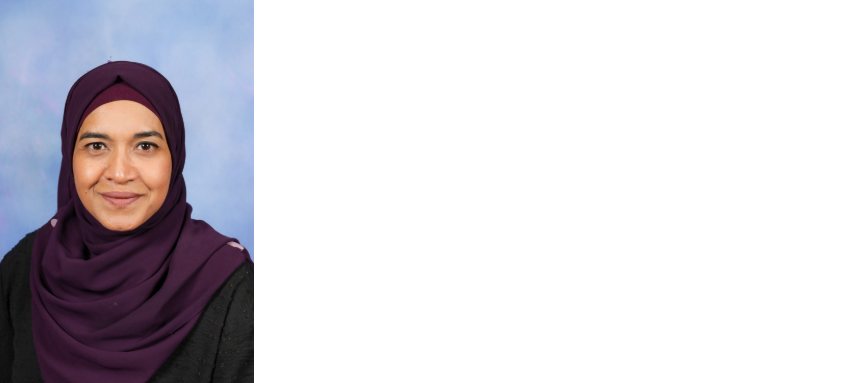
Assistant Head of Curriculum, Noorun Nisa Abdul Wahid. Image supplied.
Her role requires both whole-school oversight and attention to individual learners – identifying trends, guiding year level teams, and helping teachers analyse item-level data. She says her overarching goal is to make each student’s learning journey not just visible but actionable in the classroom.
Collecting the data
Abdul Wahid says the school collects a range of formative and summative assessment data to create a holistic view of each student’s progression and achievement.
‘If we don't triangulate the assessment results, how do we actually know the benchmark? How do we know that our students are performing to the standard? So that's where the standardised test assessments come into play. We use NAPLAN. We use PAT Reading, PAT Maths and PAT Science by ACER, and Star Reading by Renaissance,’ she explains.
The school also uses internal assessments and individual learning plans to build a full picture of how each student is performing throughout the school year. Abdul Wahid says the standardised assessments – particularly PAT which students take twice a year – guide instruction and intervention.
‘When we first do PAT, which is at the very beginning of the year in Term 1, we immediately analyse the results and find out where the gaps are. From there, we want to see consistent progress throughout the whole year.’
These tests also help the teachers determine which students may require extension programs, or additional support to meet the benchmarks.
Making sense of the data
Abdul Wahid says there is a very structured approach to making sense of the data – from a whole-school level, cohort level, class level and individual level.
‘We start with the whole-school approach,’ she says. ‘We have the visual reports. We identify the trends and the strengths and priorities as a whole school. So, this will align to our strategic plan and inform where we are heading. We will ask, as a whole school, are we heading in the right direction?
‘Then we go down to the cohort level. This is where the year level team starts to analyse at the cohort level. We see whether there has been growth and what the level of proficiency is against the benchmark.’
Using PAT and their own formative assessments, Abdul Wahid says staff are guided to look for patterns in literacy and numeracy achievement – the 2 major focus areas of student learning in the current strategic plan.
Zooming down to a classroom level, teachers use item analysis and each student’s profile to identify misconceptions, plan differentiated tasks and track growth. Abdul Wahid explains if the teacher notices particular gaps in student knowledge at a classroom level, they may be offered professional development to help them further support students in this area.
For individual students, teachers are looking for those who are at risk of falling below the benchmark. ‘For those students at risk, we want to support them or give them a nudge to bring them up to those benchmarks.’
For example, the school offers an early year reading intervention program to help students who are struggling and get them back on track.
‘In this program we analyse data from Foundation 1 and 2, where we look at their pronunciation, their articulation, their phonetical awareness. For those students needing additional support, they participate in the program, which is very games-based. They absolutely love it and we can see that it is making a difference.’
The program’s impact is seen in clear and measurable ways.
‘Students develop stronger pronunciation, clearer articulation, and improved phonemic awareness – all critical building blocks for reading success,’ Abdul Wahid says.
‘As students experience success in a supportive, games-based environment, their confidence grows. They are more willing to read aloud, attempt unfamiliar words, and participate in class discussions. The program is interactive and enjoyable, so students are more motivated to attend and actively participate, leading to better learning outcomes.
‘Ongoing assessment on a termly basis allows teachers to track improvement over time, ensuring that support is responsive and adjusted as needed. PAT is again administered at the end of the year to measure the performance and growth.’
Data driving curriculum decisions
Abdul Wahid is on the Curriculum team, which oversee the analysis, moderation and implementation of data across the school. The team also are responsible for the integrity of the data, and all the reporting.
The Leadership team – comprised of the heads of different learning areas – works with the Curriculum team to turn the data into actionable classroom strategies. Staff on this team always consider – now we have identified gaps, what can we do to plan forward? They set targets, plan strategies and communicate this with the classroom teachers.
For individual teachers, they engage in data discussions during their professional learning team meetings, and planning sessions. ‘They have professional conversations to ensure there is consistency and accountability across the whole school,’ Abdul Wahid shares.
The data and insights also drive curriculum decisions being made across the school. For example, when the PAT Reading analysis showed comprehension weakness when it comes to inferential or reasoning skills, they redesigned their English classes. This included embedding explicit comprehension strategies into lessons and tiered intervention.
Ongoing monitoring and professional conversations
Abdul Wahid explains it’s not possible to change these plans every year, so staff plan for 3-5 years ahead, depending on the goal.
‘We ensure that the curriculum is refined and is purposeful and responsive, and we monitor it. With any change, we need to be patient to see whether these changes are working or not. We aim to be progressively improving.’
Abdul Wahid says that all staff have ongoing professional learning to really understand how to identify patterns in item data. This involves conversations about the data being collected and the direction that they are heading.
‘Those professional conversations are so important. In fact, they are crucial for us. So, we have them every week.
‘For example, we use Octopus as our data dashboard. We use it to triangulate the data, see the gaps, look at benchmarking students, and for starting to design the teaching interventions and preparing for the following year.
‘So, professional development is crucial. Our Curriculum team is always on board to help teachers and to strengthen their confidence and collaboration,’ she adds.
Making data ‘part of the DNA of the school’
Abdul Wahid says that she’s ultimately striving to make data ‘part of the DNA of the school’.
‘We have embedded data into our planning meetings, our professional development, our PLTs and our leadership discussions.
‘With consistency, our teachers see data as empowering, rather than just more paperwork or just another job to do. They see the benefit of being able to measure class performance, know exactly where they’re headed and what their goals are for the future.
‘At our school, we ensure that data literacy is a shared language. We try to drive improvement while honouring each individual child’s potential and their diversity. We always take a collaborative, whole-school approach. That’s the DNA I’m talking about.’
For school leaders, in what ways do you currently analyse trends in the data at the whole-school, cohort, class, and individual level? How could you strengthen the consistency of this process to better inform your strategic direction?
For classroom teachers, how well do your current assessment practices support both intervention and extension for students? How do you ensure that every student’s progress, gaps, and strengths are visible throughout the year? What professional supports do you need to do this better?