Careful planning and preparation lay the foundation for strong teaching and learning, positive school culture, and sustained improvement throughout the year. Anthony Hockey, Principal of St Mary's Catholic Primary School in Williamstown, Victoria, shares how his school prepares for a successful start to each new year. From welcoming new students, inducting staff and completing essential maintenance, to refining improvement priorities – the work begins well before the first bell rings.
Dr Kay Oddone and Kasey L Garrison published research in the Australian Journal of Education that examines when and how information literacy skills are introduced to students. In this article for Teacher, they draw on that paper and further highlight the need for teachers to have the support of qualified teacher librarians to introduce and build students’ capacity to use information critically and ethically.
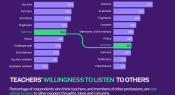
The third annual Australian Beliefs and Attitudes Towards Science survey asked 1,255 adult respondents about their beliefs and attitudes towards science and various professions, including teachers. Here, we share some of their responses.
In ‘Teaching Strategies in the 21st Century, Where to Now?’ Dr Loretta Bowshall-Freeman, Dr Rozi Binte Rahmat and Michael Colbung discuss the complex challenges faced by pre-service and early career teachers. This exclusive extract for Teacher readers shares strategies for preparing for a new teaching role.
‘Community collaboration does not need to begin with a new program or excursion. Often, the simplest starting point is creating a small, clear role for an organisation within something your school already does.’ Churchill Fellowship recipient Dr Luke Steller, Questacon Regional Leader for the NT, shares 6 practical ways educators can build stronger school-community partnerships.
Our 2026 reader survey opened today! Take a few moments to let us know your feedback on Teacher magazine and what you’d like to see from us in the future. If you’re based in Australia, you’ll also go into the draw to win a $550 book bundle from Amba Press.
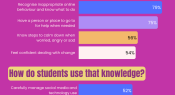
A survey of over 70,000 secondary school students across 313 schools in Australia has uncovered a gap between knowing what tools and skills can support their wellbeing, and taking action and using those skills in practice.
Recorded live at the National Education Summit in Melbourne, Dominique Beech sits down with Professor Miriam Tanti from La Trobe University to find out about the research she and her colleagues have been conducting into the science of learning and Generative AI which has culminated in a free, practical guide for secondary school teachers.
‘The most formidable change we have seen so far is consistency in AI use. Along with staff, students from years 5 to 12 are now working off the same scale and AI use is thought about before a task is set, not discussed after.’ In this article, Jill Fitzsimons, Director of Teaching and Learning at Loreto Toorak shares how staff and students have been supported to use AI, and how the impact of AI is shaping assessment.
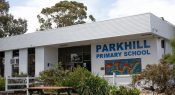
‘We are, as our staff and students say, building a culture of excellence where every learner can thrive, and this year we have the data to prove it.’ In today’s article, Jo Jolly – Principal at Parkhill Primary School in Melbourne, Victoria – shares details of the journey the school has been on for the past 3 years to shift culture and improve student outcomes.
Facebook
YouTube
SoundCloud
Apple Podcasts
Spotify
RSS feed
Linkedin