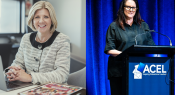
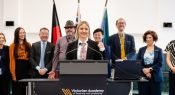
Day one of the Australian Council for Educational Leaders (ACEL) National Conference 2026 has kicked off in Perth with keynotes and presentations on the theme of Bold Leadership: New Frontiers in Education. Presented in partnership with the Australian Council for Educational Research (ACER), the conference has drawn delegates from around the world to explore complex leadership, the future of learning and the evolving role of educators.
‘Neuro-affirming practice requires us to genuinely examine our assumptions, our language, our pedagogical decisions, and our classroom design.’ In this StoryBoard article, Monash University shares how small adjustments and intentional shifts in how educators design learning environments, build relationships, and respond to learner differences can make a big difference.
Ahead of the 2026 ACEL National Conference – presented in partnership with ACER – Teacher editor Jo Earp is joined by Lisa Newland, CEO of ACEL, and Lisa Rodgers, CEO of ACER, to unpack the conference’s theme of bold leadership. Lisa and Lisa tell us about their approach to leadership, what they’ve learned over the years, and more.
The transition from being a 'good' teacher to an 'exceptional' one often requires more than just experience; it can be enabled by a deliberate, evidence-informed space for reflection and inquiry. This is the core mission of the Victorian Academy of Teaching and Leadership, whose flagship Teaching Excellence Program and Teaching Impact Fellowships are reshaping the professional landscape. Find out more in today’s article.
At Para Hills High School, Quality Teaching Rounds is more than a professional learning program. It’s part of how the school supports teachers to learn from one another, continually refine their practice, and ultimately, improve outcomes for every student. In today’s StoryBoard article, hear all about how it works in practice.
‘Our ambition was never a polished framework that looked impressive on a classroom wall. It was to strengthen the quality of teaching inside every classroom, every day.’ In today’s article, Michael Rosenbrock and Martine Gill unpack key lessons from Clover Hill State School’s journey to develop and implement a pedagogical model that impacts teacher practice.
Ahead of the National Education Summit in Melbourne this September, we sat down with Andrew Fuller – clinical psychologist, author and family therapist – to discuss his work on converting neurodiversity into neuro-advantage. In this episode, we explore transitions and regulation, school belonging and finding your people, and how educators can help turn neurodivergence into a genuine advantage for young people.
Keuka College, founded in 1890 as a private undergraduate and graduate residential college, is located on the shore of Keuka Lake in New York State’s Finger Lakes region. Keuka College's CSWE-accredited, fully online Master of Social Work (MSW) degree program builds on CSWE standards to help students gain the skills and confidence to meet the needs of a growing workforce.
If you’re a teacher, developing leadership skills through continued professional education can enhance your skills and build a legacy that goes beyond the classroom. Courses like Rockhurst University Ed.D. programs equip educators with the skills needed to influence educational practice, strengthen school communities, and leave a lasting mark.
Many Teacher readers have explicitly requested for us to publish content on curriculum implementation. New curriculum leadership resources have recently been released by ACARA – in this article, we explore the 8 key aspects covered and examples of how they can be used in various school settings.
Facebook
YouTube
SoundCloud
Apple Podcasts
Spotify
RSS feed
Linkedin