Education transformation lives in people
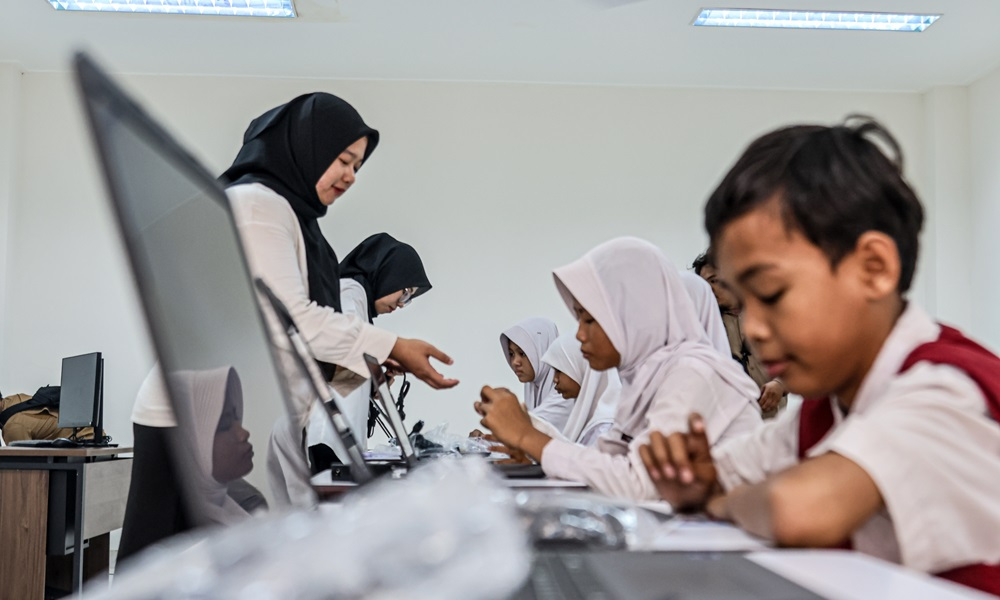
In his latest Teacher column, Professor Martin Westwell – Chief Executive of the South Australian Department for Education – discusses the book Students, Students, Students! by Dr Iwan Syahril. ‘It is a provocation and a powerful reminder that the test of any education system is what happens in the last 3 feet, between teacher and student, where trust is built, learning is risked and futures are made.’
I must admit I have a bit of a professional crush on Iwan Syahril. As Director General in Indonesia's Ministry of Education, he has been at the centre of one of the most ambitious education reform efforts in the world in a system with 53 million students, 3.4 million teachers and 440,000 schools across an extraordinary range of contexts.
And in such an enormous system where did he start? The title of his new book (Syahril, 2026) is a give-away: Students, students, students!
For teachers, the value of the ideas in the book is not that Indonesia offers a model to copy, but that it asks a question every system must answer: what would change if students were genuinely the organising principle of our work?
A system can say ‘students first’ while still designing work that puts reporting, programs and processes at the top of teachers’ priorities. That is the harder truth the book invites us to confront. For most, that commitment is already the reason they entered the profession and the reason they stay. The harder question is what happens when the daily machinery of schooling pulls in other directions: toward coverage, compliance, assessment cycles, programs, platforms, documentation and the next reform priority.
That tension sits at the heart of the book, a reflection on education transformation in Indonesia called Merdeka Belajar or ‘emancipated education’ – an education free from some of the limits imposed in the past.
The most useful ideas in the book are not limited to Indonesia, nor to system leaders. They speak directly to the need to keep returning to students when the system keeps pulling attention elsewhere, how to use evidence without becoming captive to measurement, and how to build change through trust rather than control. Merdeka Belajar indeed!
One idea runs through the book with particular force: transformation does not live in the blueprint. It lives in people. For teachers, this is both obvious and profound. A curriculum document matters, but it does not interpret a puzzled look, repair a relationship, adjust an explanation, or notice that a student who appears disengaged is actually protecting themselves from failure. That work depends on professional judgement.
This is not an argument against structure. Dr Syahril is clear that ‘a teacher who walks into a class unprepared steals something irreplaceable: the students’ time.’ Teachers know that good learning requires clarity, sequencing, routines and shared expectations. But structure is only useful when it serves the learner. The professional question is not ‘Did I deliver the lesson?’ but ‘What difference did it make for my students?’ That shift sounds small, but it changes the centre of gravity of teaching.
Ki Hajar Dewantara is thought of as the father of education in Indonesia and Dr Syahril draws on his 3-part conception of educational leadership: model the way when in front; build motivation when alongside; and empower when behind.
In classroom terms, this is a sophisticated account of teacher expertise. There are moments when students need explicit modelling. There are moments when they need guided practice, encouragement and feedback. And there are moments when the teacher’s most important move is to step back so students can take responsibility.
This matters because student agency is sometimes discussed as though it means leaving students to discover everything for themselves. It does not. Agency is built through carefully judged teaching. Students become more independent because teachers have made the learning visible, given them tools, created the conditions for productive struggle, and helped them understand what quality looks like.
A second idea is that measurement should guide learning, not define it. The book is sharply critical of schooling cultures where exams and credentials become the purpose of education rather than one source of evidence about it. That critique will resonate with many teachers. Assessment can illuminate learning, but it can also narrow it. It can help teachers respond more precisely, or it can push everyone into performance mode.
The implication is not to retreat from assessment, but to reclaim it. Teachers need evidence of learning: from discussion, observation, student work, questioning, formative checks and more formal tasks. With students truly at the centre, the strongest use of assessment is not ranking, it is responsiveness.
Another theme is trust. The book argues that systems move at the speed of trust – a truth teachers understand instinctively. Learning always involves risk: offering an answer, attempting a draft, showing a method, asking for help. Students take those risks when they believe the classroom is both demanding and safe. The same is true for teachers. Teachers’ own learning requires the confidence to admit uncertainty, test new practices, change their minds in light of evidence and, hardest of all, recognise when it is time to stop doing something that no longer serves students.
This has implications for how schools organise improvement. Powerful professional learning is rarely a one-off session detached from practice. It is the disciplined, collegial work of teachers examining a range of evidence, testing approaches, observing impact and refining together. The Indonesian idea of ‘gotong royong’ (mutual effort and shared responsibility) names something teachers, and John Hattie, have long known: improvement is sustained collectively, not individually.
That does not mean every teacher doing their own thing. Nor does it mean collaboration as another meeting. It means shared purpose with professional room to move. A team might agree on the learning that matters most, the evidence they will attend to, and the students they are most concerned about. Within that, teachers bring judgement, context and craft.
Perhaps the most important implication is that teacher agency and student agency are connected. Students are unlikely to become confident, self-directed learners in classrooms where teachers feel reduced to compliance. Conversely, when teachers are trusted as professionals, they are better placed to create classrooms where students are known, challenged and stretched.
The book’s title is a useful provocation: students, students, students. Not as a slogan, and not as sentiment. As a discipline. For all of us who work in education, it means returning again and again to the learner, while working with colleagues to build something larger than any individual classroom.
The challenge, then, is not simply to admire Indonesia’s reforms from a distance. It is to take seriously the discipline behind them: the relentless return to purpose, the refusal to let the system become more important than the student, and the humility to keep asking whether what we are doing is actually helping young people learn, grow and thrive.
Dr Syahril’s book is not a blueprint to copy. It is a provocation and a powerful reminder that the test of any education system is what happens in the last 3 feet, between teacher and student, where trust is built, learning is risked and futures are made.
References
Donohoo, J., Hattie, J., & Eells, R. (2018). The power of collective efficacy. Educational Leadership, 75(6), 40–44.
Syahril, I. (2026). Students, students, students! The human journey in leadership and system transformation.