
Thanks for listening to this podcast from Teacher magazine, the free digital resource for K-12 educators published by ACER, the Australian Council for Educational Research. I’m Rebecca Vukovic.
Hello and welcome to this episode of The Research Files, where we’re going to be talking all about improving induction – for both early career teachers and school leaders. My guest today is Tim Bullard, CEO of AITSL – the Australian Institute for Teaching and School Leadership. We’re talking all about their latest Spotlight evidence summaries. Part 1 – Improving Induction for Early Career Teachers explores evidence-based approaches to strengthening teacher induction. It outlines the Guidelines for the Induction of Early Career Teachers in Australia and examines how well-designed induction programs improve teacher wellbeing, retention, and professional growth. Part 2 – Improving Induction for School Leaders explores the benefits of good induction for school leaders, shares how leaders arrive in a leadership role via 3 different pathways, and provides evidence-informed practices to structure induction programs for new school leaders.
In this episode with Tim Bullard, we dive into some of the findings from those Spotlights. There are plenty of practical tips – around mentoring, support and adapting the induction for your specific school context. I’m excited to share this one with you, so let’s jump in.
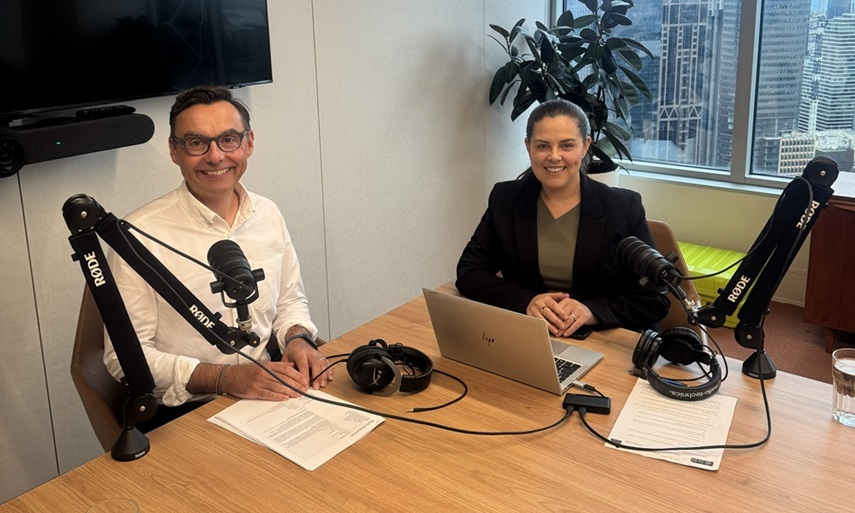
Rebecca Vukovic: Tim Bullard, thanks for joining me for this Research Files episode on improving induction. It's so lovely to be here in your offices here in Melbourne to record the chat today. Of course, we're here to talk about AITSL's latest Spotlight evidence summaries that look at improving induction for early career teachers and school leaders. So we're going to dive into some of the findings for both of those Spotlights. The Spotlight summaries are there to give an overview of the latest educational research and they cover different topics and generally between 2-4 are published each year. The latest 2 focus on induction. Why is induction such an important topic and why should it be on listeners' radars?
Tim Bullard: Well, first of all, thank you so much for having me on the show today and it's great that you can be in AITSL's head office in Melbourne. Induction is such an important topic for teachers and school leaders in Australia. And if you think about the teaching profession, there are very few other roles where you come out of university and you move into a very high level of responsibility, not only taking charge of 25 children and young people and their personal development, but actually their learning and growth.
And so we kind of see induction is how the profession welcomes individuals into that responsibility when it's done well. Across Australia, there are many different approaches to induction, but at the core, it's not only how we build the pedagogical knowledge of teachers, but also how we build that sense of personal responsibility and support them to make human connection, which we know is just so important.
RV: Okay so part 1 of the series looks at improving induction for early career teachers and I want to dig into that first. For early career teachers, if we think about a timeline, you've got initial teacher education, then they enter the workforce, and you've got the induction support, and then the ongoing professional learning throughout their career. How long should that induction support phase last for early career teachers?
TB: So we would say between 1 and 2 years. What we know is that at the 2-year point, teachers are thinking about becoming fully registered. So obviously, the recognition that when you leave university, you're only provisionally registered acknowledges you still have skills, capability, on the ground reality to build up in your sort of toolkit of being a teacher.
And at the 2-year point, that's when we see a move to thinking about full registration. So 2 years would be ultimate if we could see schools supporting teachers for that period of time. I think what we know though is that so many of our quality teachers and school leaders are on a growth journey for their entire career. And so there are elements of induction that are useful at different points throughout that career as you grow into different roles. And that's where we can talk about teacher induction, but we're also going to have a chat about school leaders induction as well.
RV: And of course, AITSL has produced a set of guidelines for the induction of early career teachers. And a reminder, as usual for listeners, I'll pop links to all of those resources that we're talking about today in the transcript of this podcast over at teachermagazine.com. Tim, there are 5 elements of effective induction programs, aren't there?
TB: There are 5 elements. And one thing that we see sometimes is that that idea of orientation gets conflated with the idea of induction. So sometimes people are shown where the photocopier is, how to make tea and coffee, what the rules and responsibilities are, and it stops there. And yes, that is a really important element of induction. We know that workplace orientation needs to be a starting point for teachers as they come into a school and into a classroom but there are 4 additional elements that AITSL has identified as being really important. The second of those is around workplace professional practice. And again, people would be familiar with that as an idea. So academically, I have an understanding of quality teaching and learning, but how is that actually going to work once I'm in a classroom? We know early career teachers need to be supported with their pedagogy; also strategies for student engagement, behaviour management, assessment and evaluation, and of course the documentation that surrounds all of that. So that feels really comfortable, but again, we would say not enough.
We've identified mentoring as being really, really important to this. I think many, many people that are listening will have been in circumstances where we've gone off and experienced some professional learning. But it doesn't happen just in time, doesn't necessarily apply to the challenge or area of growth that we're looking at. And what we can see is that skilled mentors, who are the guide at the side there to support you in your growth at the time that you need it, have a really, really big impact if they are quality and experienced in their mentoring.
And then 4th, we would talk about relationships. So teaching is such a relational profession. Of course, there are elements of technical skill, but we know one of the biggest drivers of student outcomes is feeling connected to their teacher. An adult that believes in a young person can have an amazing impact. So we want to be looking at how we can build that relational development of teachers with their students and young people, but also with their colleagues. It's a team game, teaching, and also with their communities and parents and carers. Some people are really natural at that, and other people need support in doing that. It is a skill that needs to be developed. So embedding those activities in induction that builds the opportunity to explore what good relationships look like and how to encourage and grow those is fundamentally important.
And the last one that I'm very passionate about is wellbeing. So where you see teaching become a burden on the individuals is where they feel that there's no control, no ability to take care of themselves. And I know teachers are very, very passionate in the work that they do and it's often really easy to put yourself last. But what I say when I'm talking to early career teachers, and also school leaders, is ‘if you're not well, you can't support the growth of learning in others’. You just can't. If you're trying to attend to your own feelings of despondency or disengagement. So make that space for you, because when you're feeling well, you can perform at your best.
RV: Yeah, definitely. That was a really nice summary of all those 5 elements of effective induction programs. Tim, I'd like to read a little bit from the Spotlight now. It notes, ‘the guidelines are intended as a resource for improving the planning and implementation of context-specific induction programs. They do not recommend a standardised program, but instead outline evidence-based practices that comprise interrelated characteristics of what constitutes effective induction. Ideally, induction programs incorporate a variety of mechanisms to support teachers in launching successful careers’. So in other words, it's about context, isn't it?
TB: It is absolutely, and that's a very long way of saying that AITSL recognises that school type, learning environments, rural and remoteness, the socioeconomic characteristics of your community, the age and capacity of your current workforce, and the initial teacher education course that early career teachers have been through, are just some parameters which look different all across Australia. So at AITSL, rather than saying, ‘here's the recipe or a specification and follow it’, we know that we have to attend to different contexts right across Australia.
And people might know that I actually come from Tasmania and we have a very different context to the Melbourne that we're looking out onto today. Very remote schools, a lot of teaching principals or small staff numbers, and a rural context often. So we can't say what's going to work in Melbourne is going to work in north-west Tasmania. So hence where we find that we have most impact with our guidance and our Spotlights is pulling out those really key threads of what quality looks like and then allowing systems, sectors, schools to contextualise that in their own environment.
RV: Yeah, let's dig into that a little bit further. What about considerations for teachers working with specific groups, like students with disabilities, those working in remote or regional schools?
TB: Yeah, great questions. And there's 2 examples of where a school might say, well, I don't have any students with disability or a very small number, or I'm an urban school, why would I be worrying about that? But we know that in contexts that have students with disability, for example, that teachers from day one, need to grow their capacity to ensure that those students and young people are included and have the opportunity to learn and grow. So there is a legal requirement around the Disability Standards for Education and of course we'd expect early career teachers to be across that. I think what we see as more valuable is how do I differentiate in a class of students to ensure that both those that have a disability or require additional learning support, as well as those that are talented and gifted in that classroom, can reach their full potential? So that best comes through understanding the application of your teaching practice. And often we would see that having a quality mentor who has worked with students with disability or gifted and talented at the side, showing how you can differentiate a lesson to ensure that it attends to the needs and capabilities of all students, is one of the most powerful things we can do.
RV: And for those working in remote and regional schools?
TB: So remote and regional schools is an area actually that I have a fair bit of experience –they are quite different contexts. So one thing that we actually know from the Australian Teacher Workforce Data Survey is one of the biggest complexities that teachers in those communities face is community interaction. You know, you are living in the community that you are teaching in. In an urban context, you can leave the school at the end of the day, go to the supermarket, and not necessarily have to interact with parents and carers or students, and that is actually an asset that we can build upon, that sense of connection, but we need to help teachers to navigate that. The other thing is there may be staffing pressures or there may not be a large cohort of teachers who can be mentors. So again, it recognises, our guidance recognises, that it needs to be contextually adapted to ensure that it's hitting the mark.
RV: Yeah, and another key message from this Spotlight is creating a culturally safe workplace to support the induction of Aboriginal and Torres Strait Islander teachers.
TB: We do not have enough Aboriginal and Torres Strait Islander teachers in our classrooms. I'm a very, very big advocate that our schools and learning environment should reflect the communities that they serve. And we need to be doing more as a nation to ensure Aboriginal and Torres Strait Islander teachers are seeing not only themselves within those school communities and aspiring to be in those workplaces, but that those workplaces are safe and effective places for them to be teachers. So, yes, there is the general supports that apply to all early career teachers, and we've discussed those 5 elements. But in addition, we've got to build that contextual awareness that recognises and responds to the histories, living cultures and experiences of Aboriginal and Torres Strait Islander teachers. Because ultimately what we know is that culturally safe induction supports those teachers to bring their whole selves and their whole knowledge into the workplace, which is something that we want to celebrate.
RV: Yeah, definitely. And Tim, before we talk about induction supports for school leaders, I know that it will be school leaders and the leadership team putting the induction program in place for early career teachers. One aspect, as you've talked about already, is mentoring. So as a leader, you think about preparing the mentors as well. So having professional learning supports in place is important too.
TB: It is, isn't it? And it's very easy to think, alright a mentor's my work buddy. We've all turned up in a new workplace and you're provided with a contact or a person who's going to show you where to get lunch, where the toilets are, how to use the photocopier, and give you a bit of an overview of the job. Mentoring that is quality needs to go well beyond that. So what we know is that we need to prepare mentors to be quality mentors in a role. It's not just about identifying someone who might have some capacity to pick that up.
Interestingly, we know it's currently a pressure point. So when we go out and speak to early career teachers, only 58% of them say that their mentor modelled good practice. And 43% of them say that they had regular check-ins with their mentor. So what we're perceiving might be happening might need a bit of additional scrutiny. We can't just provide someone who has a mentoring role with the expectation that they're also going to be able to do that without other support. So, our mentoring guidelines provide basically some guidance around what quality mentoring would look like.
And one of the things we know is that those mentors need time – time to spend with the person that they're mentoring, time to plan for effective mentoring, and also to check in with that person and support their wellbeing. If you think about where we were at the beginning of the conversation, induction and mentoring is about bringing your academic capability to life in the reality of a classroom. So to do that effectively, a mentor needs to be with you, that guide at the side, in your classroom and learning environment, and providing you with that just-in-time support that's going to help you to grow.
RV: Yeah definitely, and when you were talking about why this is such an important topic, you mentioned the benefits for school leaders. So who would fall into that role? Is that the principal or is that middle leadership?
TB: So school leadership as a concept has grown over time and we knew that we had principals and we also knew that we had maybe assistant principals. What we've seen over recent years is this idea of middle leadership grow. And it looks different in different systems and sectors, but I think conceptually people can think of a middle leader as someone who may still have elements of classroom practice and classroom responsibility, but are spending more and more time out of that classroom working alongside their peers and colleagues to grow their knowledge.
What we know is that these individuals need induction and mentoring as well. Especially when we're looking at something like school leadership, it's really important not to think that that is just ensuring you understand where your administrative tasks have grown or where your legal responsibilities have grown, that we're actually supporting you to change your disposition from being a classroom teacher to being a leader. And that has as much to do with what you do – so the policies, the procedures, the running and management of the organisation – as how you are. What's your internal disposition to leadership and how are you going to lead most effectively?
RV: Yeah, and that's exactly what I want to talk to you about now, because AITSL has produced guidelines for the induction of new school leaders, and the Part 2 Spotlight talks about the importance of leadership identity, that transitioning into a leadership role requires teachers to renegotiate their professional identity. So maybe moving from that classroom teacher identity, like you just said, to that more formal leadership role.
TB: Yes, I think that's such an important point around identity. So automatically you go from seeing yourself as a learning partner with students and young people, and you have to shift to being a learning partner with adults. And often in school environments, they may have been your peers for a period of time as well, so now you're leading them. How do you change your internal disposition? And that's about managing yourself as much as it is about managing others. How are you going to show up as a leader every day?
Of course, your level of accountability and responsibility changes too. So when you know that the buck stops with you, that has a slightly different feel to knowing that there's a point of escalation. And that takes some work on yourself to think, well, how am I going to respond when I have a parent who's not happy? Or how am I going to respond when I have a teacher who is struggling or needs additional support? So when we're talking about school leadership, it's really important that we come with that lens.
RV: Yeah, and I really enjoyed reading the evidence summary that explores the 3 common pathways to middle leadership and some strategies for adapting induction supports. Of course, we can't cover it all here and there's lots more detail and links to the resources in the Spotlight – so I do encourage listeners to head over and take a look at the full publications. The first is what's called the Accidental Leader. What might that look like?
TB: So the Accidental Leader is that person who finds themselves effectively catapulted into a leadership role. So often it can be someone highly competent and capable, but maybe hasn't ever aspired or seen themselves in that role, maybe a high performing middle leader. And then you find yourself with a situation where all of a sudden the principal announces, ‘well, I'm going to retire’, or ‘actually I've got an out of school position’, or ‘I've decided that I'm moving to a different school’.
And a system will say, ‘well, here's a competent middle leader. How about you take up that role?’ So you'll often find those people in terms of where they sit, haven't thought about what their disposition would be in terms of middle leadership. And so, whilst they will often have a really good understanding of the roles and responsibilities of a leader, they might not be quite so across what they actually need to do in terms of not only their own disposition and capability to lead, but also their own wellbeing.
RV: Yeah, and then the second pathway is Aspiring Leaders.
TB: Well, Aspiring Leaders really are what if you went out and asked the person in the street, they would probably identify Aspiring Leaders as being the leadership pathway. So Aspiring Leaders have seen themselves as people that would like to have an experience leading a school or learning setting into the future and so they'll often have been on a journey of leadership. They might have done an aspiring leaders course, or they will have done professional learning around capability or management or looked for experiences that provide them with additional firepower, I suppose, in their toolkit.
And actually, in reality, 60% of leaders do fall into that category. So they are sort of the common denominator. These leaders often turn up in leadership roles a lot more prepared because they've had that time not only to grow their technical capacity, they will have asked for opportunities maybe to act in a leadership role, they will have taken on additional responsibilities around school management or managing the school and undoubtedly will have done some work on self as a leader. So they come pretty well prepared for that leadership role.
RV: And then the third pathway is the Anointed Leaders.
TB: Anointed Leaders are an interesting category and I think we would see about 20% of school leaders falling into that category. Now they're people who have been on a leadership trajectory and are seen as the next most logical option in terms of leading a school. If you could have an Anointed Leader in a school or other learning environment who is highly capable, you've actually hit gold, because one of the things that we know is that leaders set the culture and tone of the learning environments that they lead. And often you'll see with the Anointed Leaders that they can pick up the baton from where the exiting school leader has left off, and you get that really great continuity. So often parents and carers, students, children and young people won't see a lot of change. They'll just see this great handover of one leader's leadership style to another leaders, and it does provide a lot of certainty and continuity to a school environment.
RV: So there's a lot to think about there about the importance of this, you know, the timing, thinking about different contexts, and then for the new leaders, as we've just heard, there are different ways that they'll find themselves in that position. And it's important to respond to that. And again, think about those pathways, the context and the needs.
TB: Yeah, absolutely. I think the first thing that we really wanted to promote through this Spotlight was the importance of induction. So the growth of a teacher or a school leader does not stop when they've undertaken that technical capacity building. And the second thing is that it takes time. So, as I said earlier, that orientation is not induction – that's orientation – that's getting you up to speed on the workforce. So what are those other elements that you can bring in?
And the third thing we really wanted to promote was the importance of quality mentoring and ask that question about how can we better support our mentors to be the best that they possibly can? For early career teachers, I also need to give a bit of a shout out. It's amazing work that you are going to be doing every single day. And a majority of early career teachers come with such a strong growth mindset. So entering into your classroom, recognising you're going to feel discomfort, but looking for the support that you need to grow your pedagogy, to grow your relational capacity, but also look after your wellbeing is so important, and so harness and take every single opportunity that you have to do that.
RV: Thanks so much for sharing those findings and insights with The Research Files today. Tim Bullard, thanks for sharing your work with Teacher magazine.
TB: Thank you so much for having me.
That's all for this episode. Thanks very much for listening. If you enjoyed this one, please take a quick moment to hit follow on your podcast app and leave us a review. Both of those things help more people like you to find our podcast and they're a really big support for the Teacher team. We'll be back with a new episode very soon.
Teacher magazine is published by the Australian Council for Educational Research.
References and further reading
Australian Institute for Teaching and School Leadership. (2025). Improving induction: Part 1 – Early career teachers. https://www.aitsl.edu.au/research/spotlights/improving-induction-part-1-early-career-teachers
Australian Institute for Teaching and School Leadership. (2025). Improving induction: Part 2 – School leaders. https://www.aitsl.edu.au/research/spotlights/improving-induction--part-2---school-leaders
Think about your own experience with induction when you first became a teacher. Which elements of effective induction (mentoring, wellbeing, professional practices, relationships and workplace and community orientation) have had the greatest impact on your development so far?
As a leader, consider the induction programs you have in place at your school. How intentionally is wellbeing addressed during induction, and what steps could you take to better support others as they transition into new roles?