‘I know how to teach about greenhouse gases and melting ice caps,’ one secondary school geography teacher explains, ‘but I have no idea how to calm a student who’s really upset because they think the world is ending.’
Climate-related content appears across the curriculum and teaching it can come with an added layer of emotional complexity. A new Australian study shines a light on how educators are responding to eco-anxiety in their own classrooms, including where they need more support.
Dr Robert MacNeil, Senior Lecturer in Environmental Politics at the University of Sydney, shares his research findings in the Australian Journal of Education (AJE) (MacNeil, 2026).
Sustainability and climate education
Sustainability is one of 3 cross-curriculum priorities in the Australian Curriculum and content relating to climate change appears in several subjects, including science, geography, history and civics and citizenship.
Dr MacNeil says climate education has ‘come to the fore in recent years as a primary context in which young people encounter in-depth discussions about global warming, biodiversity loss, and sustainability solutions…’
However, previous research suggests teachers face a double challenge of balancing factual information while considering student wellbeing. ‘Such emotional labour can extend to teachers, who manage not only their own climate-related worries but also those of their students,’ he notes.
His study was aimed exploring teacher views and experiences of the emerging issue of eco-anxiety (among teachers and students), how they respond to it, and the support they need.
Who was involved in the research?
Thirty primary and secondary school teachers from New South Wales, including those in generalist and specialist roles, took part in interviews during 2024. They were from a mix of locations and teaching contexts, and levels of experience ranged from those at the start of their careers to teachers with more than 2 decades in the profession.
‘A little more than half delivered science-based instruction focused on developing factual understanding of climate systems, emissions, and environmental impacts as part of either generalist teaching in primary schools or specialist teaching in secondary institutions. Others in the social sciences delivered climate education in the context of topics like global affairs, geography, business, economics, politics, local sustainability issues, civic engagement, ethics, and wellbeing.’ (MacNeil, 2026).
Overview of the findings – 5 main themes
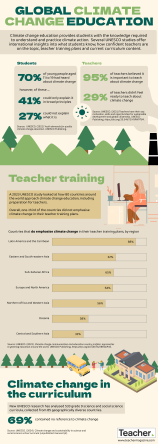
Insufficient teacher training
Many teachers felt they weren’t prepared enough to handle the emotional complexity of climate education. They talked about being confident and competent in teaching the content and agreed this had been developed in pre-service training and further professional development, but their training hadn’t included how to respond to student worries and anxieties, leaving them feeling like they’d been ‘thrown in at the deep end’. And several teachers said their own uncertainty and fear made the situation worse. ‘Sometimes I feel anxious myself when I read about rising sea levels and climate refugees... If I’m already on edge, how am I supposed to guide a 13-year-old through their own anxieties?’
Lack of mental health resources
There were concerns about limited mental health resources for students with eco-anxiety and teachers needing guidance on how to support them. ‘I have students who are genuinely distressed by what they read in the news about wildfires and floods. They ask, “Is this going to happen here? Are we safe?” And I know that’s a conversation that probably needs more mental health expertise than I possess”. Many study participants spoke about school counsellors already being burdened with other issues and unable to dedicate resources to this too.
Curriculum limitations
Teachers were supportive of the increased focused on sustainability in the Australian Curriculum but added while there was lots of emphasis on scientific data and geographical knowledge there was ‘limited guidance on how to incorporate hope or empowerment into their teaching’ and a lack of formal resources in this area. For example, one participant recalled a year 7 student who was almost in tears during a lesson where the class were discussing rising sea levels, asking ‘why bother studying if the planet won’t be liveable?’ The teacher responded by improvising a lesson on volunteer opportunities and small changes people could make to their lifestyle ‘just to show them that they aren’t completely powerless’.
Institutional barriers
A lack of time and other teaching priorities was another area of concern. ‘Strict timetables, limited class periods, and a general focus on measurable academic outcomes left little space for holistic discussions about students’ feelings,’ Dr MacNeil reports. Additional barriers included ‘political sensitivities’ around climate change, and many educators felt a lack of recognition of the emotional labour involved in teaching the content made them feel isolated and unsure about trying more open, emotionally focused approaches in the classroom.
Need for peer collaboration
There was a strong desire for collaboration, with teachers eager to share their own experiences, planning and resources, and coping strategies. Dr MacNeil says there needs to be greater visibility and awareness of existing forums and networks, perhaps as an embedded element in PD frameworks. ‘With limited official guidance, teachers see peer networking as one of the most effective ways to acquire new strategies, alleviate their own anxieties, and maintain a sense of purpose in teaching what many increasingly regard as one of the most pressing issues of our time. By pooling resources and experiences, participants believed they could build a stronger, more cohesive response to eco-anxiety in their classrooms, ultimately benefitting not only students but also the broader educational community.’
Effective strategies
Dr MacNeil says although there were significant areas of concern, not all teachers experienced difficulties and shared strategies that had been effective in their own context.
‘Several participants described adopting pedagogical strategies that anticipated students’ emotional responses and channelled them into critical thinking, discussion, or problem-solving activities,’ he reports. ‘These teachers often framed climate issues within broader themes of social responsibility and community action, which appeared to foster a sense of agency and resilience among students.’
Even so, teachers spoke about the ongoing emotional effort needed to keep students engaged and optimistic.
Find out more about the study, its findings, and read more of the interview responses from participating teachers in Dr Robert MacNeil’s Australian Journal of Education paper The Emotional Labour of Climate Education: Addressing Eco-Anxiety in Australian Classrooms, which is available online and open access.
References
MacNeil, R. (2026). The Emotional Labour of Climate Education: Addressing Eco-Anxiety in Australian Classrooms. Australian Journal of Education. Advance online publication. https://doi.org/10.1177/00049441261447991
As a school leader, how are you supporting staff to manage the emotional aspects of climate education, not just the content knowledge?
In what ways do you encourage collaboration within your school or across networks, to give staff opportunities to share experiences, resources and successful strategies?
If you’re teaching climate-related content, what small, realistic changes could you trial in your next unit of work to better support student wellbeing?