Jo Earp is the Editor of Teacher.
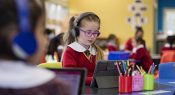
We know that early literacy development is not uniform. Understanding students’ strengths and identifying gaps to plan for the next steps, including targeted support where needed – and doing this as early as possible – is a challenge for teachers. A new assessment program from ACER aims to spot literacy difficulties before children fall behind and these gaps widen.
In this episode of The Research Files, Teacher editor Jo Earp is joined by Mason Zhou and Professor Dot Dumuid to talk about a South Australian study into the impact of secondary school transition on student wellbeing. One of the key findings is it’s not a short-term dip – students may be struggling in their second year, too.
Earlier this year, Mosman Park School for Deaf Children (MPSDC) unveiled their new school uniform. Based on the colours of the Deaf Flag, it was designed to promote pride, visibility and connection for the school community. We speak to Principal Monique Smith to find out more about the design process and the impact on student belonging.
In this episode of The Research Files, editor Jo Earp is joined by Professor Sandra Gattenhof and Dr John Nicholas Saunders who share findings from their study exploring declining enrolment numbers in year 12 arts subjects in Australia. They also talk about the implications for schools, including the arts educator pipeline, and practical supports for out-of-field teachers.
Absent students miss more than just lesson content; they miss the opportunities to build the habits and skills to succeed at school and in life. New OECD research shows ‘school attendance problems are no longer a marginal issue; they have become a challenge affecting classrooms in nearly every country’.
In assessment, AI tools offer new possibilities for feedback while also raising important questions about quality, accuracy, teacher oversight and, crucially, whether the feedback improves the learner, not just the piece of work they’ve been tasked with completing.
Climate-related content appears across the curriculum and teaching it can come with an added layer of emotional complexity. A new study published in the Australian Journal of Education (AJE) shines a light on how primary and secondary teachers are responding to eco-anxiety in their own classrooms, including where they need more support.
A new insights report on the latest assessment cycle of the Trends in International Mathematics and Science Study (TIMSS) investigates how much curriculum content is actually covered in classrooms, and whether differences are linked to student achievement.
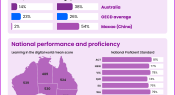
The results from the second cycle of the OECD’s Early Learning and Child Well-being Study (IELS 2025) have just been released. Here we share more about the focus and innovative assessment design of IELS, and an overview of the findings on how children are faring at the very start of their learning journeys.
Media and Artificial Intelligence Literacy (MAIL) has been announced as the innovative domain for PISA 2029. The OECD has already released the first draft framework, offering an early understanding of how media literacy and AI literacy intersect and link to other curriculum areas, the key concepts and big ideas, and how to nurture the related competences.
Facebook
YouTube
SoundCloud
Apple Podcasts
Spotify
RSS feed
Linkedin