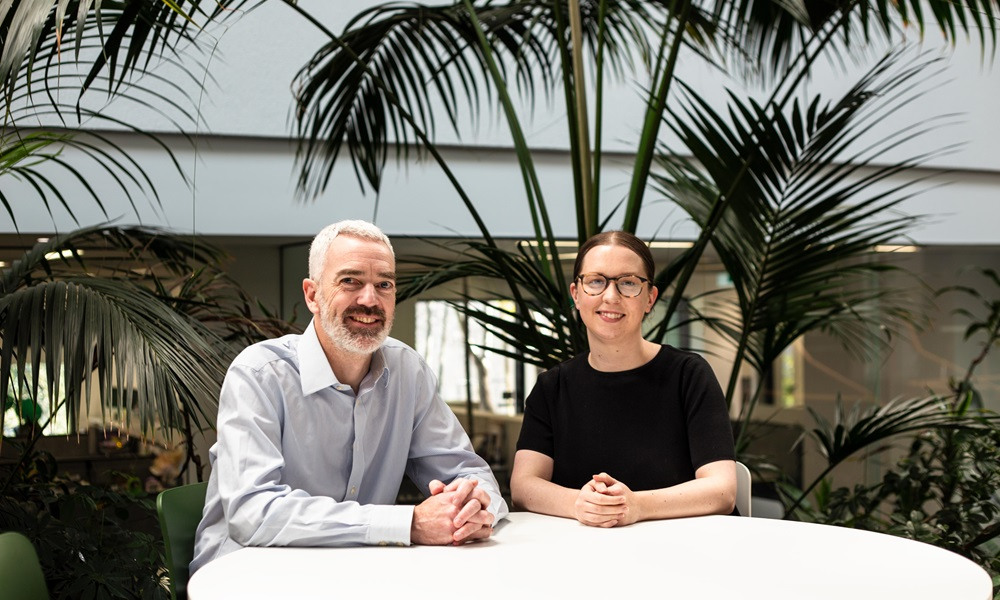
Thanks for tuning in to this podcast from Teacher Magazine, the resource for K-12 educators published by ACER, the Australian Council for Educational Research. I'm Dominique Beech.
In today's episode, I sit down with Dr Dan Edwards, Acting Head of ACER's Student Learning and Progress Division, to talk about the future of assessment. Assessment is a topic respondents to our annual reader survey told us they wanted more content and support on. It's also an area that's constantly evolving and innovating, so there's plenty to talk about today, and I'm excited to hear from Dan with all of his experience and expertise in educational research and assessment. Let's jump in.
Dominique Beech: Dr Dan Edwards, thanks for joining us on the Teacher Podcast. I'm really excited to talk to you today all about the future of assessment across the K-12 space in advance of your upcoming appearance at the EDUtech Conference in Sydney on the 3rd and 4th of June. You're appearing on a panel where the topic is ‘Assessment reimagined: Charting the future for learners’. Before we get into all of that, though, I'd love for you to tell me a little bit about your role at ACER.
Dr Dan Edwards: Thanks, Dom. Great to be here. I'm actually just stepping in today into a new role at ACER, which is Acting Head of ACER's Student Learning and Progress Division. That division looks after a lot of our assessments in the school K-12 area, and we cater to students and schools in Australia and across the world. There's a huge range there and I'm actually still getting my head around it, but I'm really excited about the opportunity and where we're going and sharing it with everyone through the [EDUtech] Conference as well.
DB: Great. So as you've said, you're currently head of ACER's Student Learning and Progress Division, but you have also spent quite a while leading the Education Research Policy and Development Division here at the organisation, where you have many researchers that are working all across the early years, all the way up to the vocational and education and training space. A lot of that work really has involved looking at some of those key transition points for students. So, for example, when they enter formal schooling for the first time or when they leave secondary school. If we start to look at the future of assessment, then, for how students can best be supported during some of those key transition points, what might that look like? Where does assessment really come into the picture?
DE: Yeah, great question. So, I have worked in ACER's research divisions for the 18 years that I've been at ACER. And I really started and one of my passions has been transition and particularly transitioning the senior years of schooling into the next phase of young people's life, be that higher ed, vocational ed or the workforce.
So, over the years I've done a lot of thinking, and we've been looking a lot at the different ways in which students make those transitions and we've thought about it in terms of a workforce transition. We've also thought about it in terms of a vocational ed transition. I thought maybe for this purpose I'd talk about the higher ed transitions which I'm most familiar with and have worked a lot with over the years.
We've seen in teachers, students, parents, universities, have talked about the role of the ATAR and the diminishing role of that or the questions around the ATAR for years and years. It comes up very heavily in October to February each year and then drops off again. But it's a constant. And so the future of assessment that I see for the higher ed area and for school transitions is around how we provide universities with data that understands the students who are coming into their universities and gives them the equipment and the ideas and the diagnosis, for want of a better word, of how to support those students to be successful. ATAR is a good measure of doing certain things and has been successfully used for years, but there is an increasing need for more nuanced and better understanding of the students who are entering universities, especially with our current government having a high, ambitious target for tertiary attainment across Australian populations. So that means we need more young people going through higher education and vocational education. So, giving universities/vocational ed providers better understanding of the skills that students have and that are bringing to their university allows them to better support them as they work through.
So, we're thinking about broad things like some of the university entrance tests that ACER looks after – STAT and uniTEST and some others like that – they're very useful tools, especially as alternative entry pathways, but also increasingly universities and employers are asking about other things. How do we understand other things around what we're calling at ACER the essential skills? And we've applied essential skills right across a whole range of levels, and particularly in schooling. And you might have; we'll talk a bit about Claire Scoular’s work a bit later. But how do we understand the skills of young people going into higher education or into a key transition point from the perspective of things like critical and creative thinking, from communication, from collaboration, from self-regulation. Are these things useful and how can universities understand them and understand the skills of their students who come through and work into that? So, I think that it's a challenge that there's a lot of work that been happening around the world in this area and that we're still grappling with, but it looks like that's something that we're also really keen on working out. How do we make it easier for these transitions?
DB: Yeah, that's certainly something that I know our Teacher audience are really interested in learning more about. And some of our listeners might be familiar with the Essential Skills Framework that you just mentioned. We, as you said, we spoke with Dr. Claire Scoular, another ACER colleague, in episode 97 of our podcast series, The Research Files. In that episode, she went quite in depth on 2 of the 5 essential skills. So those 2 were communication and self-regulation. So I'd really encourage anyone listening to this episode to scroll down a little bit in our feed and find that episode to understand what these skills actually are, what sort of things that teachers would be looking for in the classroom in terms of those 2 skills. The other 3 – as you briefly mentioned, Dan – the other 3 are critical thinking, creative thinking and collaboration. Now, when we think about those 5 skills and just the names of those 5 skills, it sounds like it could be quite a tricky area for teachers to assess. So I'd love if you'd be able to give me a bit of an idea on what the assessment of those essential skills might look like.
DE: Yeah, look, firstly, Claire is the expert and we've got an amazing team here working and really thinking very hard about these skills and how we do that. And they've actually run – as Claire would have said – we've run trial assessments across a number of schools working through this idea of looking at all 5 of these essential skills and how we can, not only not only measure for (in inverted commas), but also monitor the skills over time and their proficiency, identifying different levels of proficiency within those skills. So that is happening and that is measurable. We've worked out how to measure it, but we're still learning and we're still trying to apply it.
One of the key things that Claire and the team have been doing and working with schools is building essential skills out of problem-based learning and problem-based learning problems. So using real-world problems, real-life problems, getting students together, having them collaborate, having them work through these things, having them articulate the issues and the potential solutions and working through that way. So that framework and that application, it's not new, it's been used in the classroom before. Obviously, it's something that our teachers will be very familiar with. One of the key things, though, that the team is working on is how do you then – how do you pull things out of those problems and be able to say things about critical thinking or collaboration? Separate those concepts and be able to say something about the progress of your students and how we work towards getting that into a way that informs teachers of what they might want to do next.
So we're working at the moment through some of the work we've already done face-to-face and testing that out in a traditional manner like paper and pencils kind of stuff. Now we're trying to translate this into a digital piece. And how do we measure that? How do we continue that digitally? There are some things about translating things online or into a digital space, which mean you can collect a lot more data, and it can be really important and really interesting, but you have to be able to know what it is you're collecting and why, and then build things off that. So that's the kind of process that we're in at the moment. It's really exciting, it's really innovative, but working in that domain at the moment. And that plays into a whole range of different aspects of life, but certainly in schooling, that's where the future is, I think.
DB: Yeah, it's really interesting to hear about the digital future of assessments like that. And I know that that's such a big part of the conversation. And I am wanting to ask you about AI, but not quite yet. We'll get to that a bit later. So yeah, we've spoken about that key transition through senior secondary students when they're getting ready to leave school and go into higher education potentially. But of course, the other major transition for students right at the very beginning when they are first entering formal schooling. I know that ACER is focusing a lot of research into the early years at the moment. What's being done in this space in terms of assessment then?
DE: Yeah, you're right, Dom. There's heaps and heaps being done at the moment. It's a real focus. And it's also, it's an innovation cutting-edge area of our work.
We've got a whole range of different things going on. I mean, teachers will be aware of and familiar with PAT (Progressive Achievement Tests), and we have a PAT Early Years that's burgeoning at the moment and really there, and it's designed in quite a different way to what you would see other assessments on.
We also have off the Better and Fairer Schools Agreement, there's a lot of work going on an early numeracy screener. There's been some work, some news around ACER's work in that in the last few months. That's a really important and exciting area that we're working very closely with different jurisdictions on to build, to really provide that information early on. And I'll talk about that a bit more in a tick or in relation to that.
And then also there's been the work across Australia on the Preschool Outcomes Measure that ACER has been working with the Commonwealth Government and with all the states and territories around. And that, again, is a very different assessment to what we would traditionally think of as assessment. And that's about looking at the progress and the outcomes of students before they go into schooling. And thinking about things and measuring things like the executive function, oral language and literacy, which are very difficult to measure, but they're also really, really important and they correlate so highly with the next stages of learning for students. And thinking about assessing those things in a really different way. So, not sitting down with a kid in an iPad and just talking through it in 20 minutes and going, ‘you're done’, but really structuring this way of collecting data about a child's progress through a whole range change of different activities, be it in a group over in a corner playing in a sandpit or having a conversation one-on-one, or from teacher observations of how that child is working. And then being able to pull all of that together and then be able to say something about where they are right now and where their progress is, I think is really innovative and really important.
And we're sort of really breaking new ground right now working with preschools across Australia on this particular job. The work that we're doing there is – and it fits in with the work that we do with PAT and the work in the early numeracy screener too – is that it's (and it links to what the future assessment is about), it's not about how, it's not just about how you assess and what it is you're assessing. It's what do you do with the data that you get as a teacher? How do you then utilise that to make a difference and improve students' learning? And so that's really sort of, in the early years – I mean, it comes through all of our work – but in the early years, that's where a lot of that focus is. It's not just about having a screener that says you're above or below a certain benchmark. It's about having information about a student or a young person to be able to say, this is the next steps for this person. This is the next steps for improving or helping or making them gain and supporting them in their learning. So it's a really important element that we often lose, is that, what are we measuring? Why are we measuring it? Let's measure this, how well can we measure it? But then what are we doing with the measurement? And that's what we want to be focused on with helping teachers.
DB: I want to get to AI now. We mentioned at the top of the episode that your panel at EDUtech is on ‘Assessment reimagined: Charting the future for learners’. I think AI is something that comes to mind immediately. I'd love to hear your perspective on AI and the future of assessment. What's really emerging in this space at the moment?
DE: Wow, it's a huge question, Dom. Like, this is like question 5 of a short podcast. AI is everywhere. We know it's everywhere. It's permeating everything that we do, everything we think about. It's certainly in assessment. We're working very closely and very carefully here around trying to understand how that works best in the way that we want to be running assessment in ACER and putting that out. There's so many different ways we could go down.
But one of the things that comes to mind immediately for me is again around the reporting aspect and how can we provide that information, the insights back to teachers in a personalised and quick way so that they can see what the next steps might be or they can use as a tool, alongside their own judgement, as to what the next steps might be in the teaching of individuals or teaching of classes? So, I think that there could be quite a lot of interesting gains in using AI in that way. When we set things up properly and when we have that ability to balance teacher judgement with what's coming out of an algorithm or what's coming out of an AI system – we're working on it and I think that, yep, there's no part of our lives right now that isn't sort of permeated by AI. So, of course assessment is going to be and of course we need to be thinking about it and not burying our head in the sand. So, I don't have a great answer for you there, but everything is emerging in this space and we're trying to be on top of it and we're looking forward to seeing how it goes.
DB: Finally then, Dan, without giving too much away, of course, can you give listeners a bit of a sense of what you'll be sharing on the panel at EDUtech?
DE: Yeah, Dom, it's going to be really good. It's a really interesting panel full of people with really different perspectives from being there in the school as a principal, running senior secondary board, boards of studies and quality assurance agencies, as well as our work in ACER, which sort of spans all of those stakeholders.
I think I would like to be talking a bit about some of our work that we're doing in early years that I spoke about before a little bit because it's quite innovative and quite moving towards the future. Also, we'd like to sort of talk about PISA (Programme for International Student Assessment) and what's coming up in the next PISA cycle, which again feeds back into AI, feeds back into some of these things. It's going to be very interesting to see what they call the innovative domain for PISA in the next cycle in 2029 and the work that's been happening there. So I think we'll be talking a bit about that, giving that perspective that is from the ACER perspective. It's a bit different to what people are experiencing elsewhere and hopefully that kind of works with the mix well.
DB: Wonderful. Thank you so much, Dan, for sitting down with us today. It's been a pleasure.
DE: Thanks, Dom.
That's all for this episode. Thanks for listening. Don't forget to visit our website to access the transcript for this podcast, where we've included any and all relevant links to further reading and listening from our conversation today, including a Teacher article on that PISA Innovative domain that Dan mentioned at the end of the episode. If you enjoyed this chat, please take a moment to follow our show on your podcast app if you haven't already, and leave us a review. Both of those things help more people like you to find our podcast, and they're a really big help to our team. We'll be back with a new episode very soon.
Teacher Magazine is published by the Australian Council for Educational Research.
References and related reading
Earp, J. (2026, April 29). PISA 2029: Media and AI Literacy – key concepts, curriculum links and competences. Teacher magazine. https://www.teachermagazine.com/au_en/articles/pisa-2029-media-and-ai-literacy-key-concepts-curriculum-links-and-competences
Russell, D. (2025, March 6). The Research Files Episode 97: A framework for building communication and self-regulation skills in the classroom. Teacher magazine. https://www.teachermagazine.com/au_en/articles/the-research-files-episode-97-a-framework-for-building-communication-and-self-regulation-skills-in-the-classroom