Thanks for listening to this podcast from Teacher magazine, the free digital resource for K-12 educators published by ACER, the Australian Council for Educational Research. I'm Rebecca Vukovic.
Understanding how children learn and develop in the early years is key to supporting strong educational outcomes and lifelong wellbeing. Last month, the OECD released findings from the 2025 Early Learning and Child Well-being Study, or IELS, the first internationally comparable study designed to measure how children are learning and developing at age 5. The study looks across 3 key domains: foundational learning, executive function, and social and emotional skills. As we know, the early years from birth to age 5 are a critical period for building the foundations children need to communicate, regulate their emotions, concentrate, solve problems and engage with others.
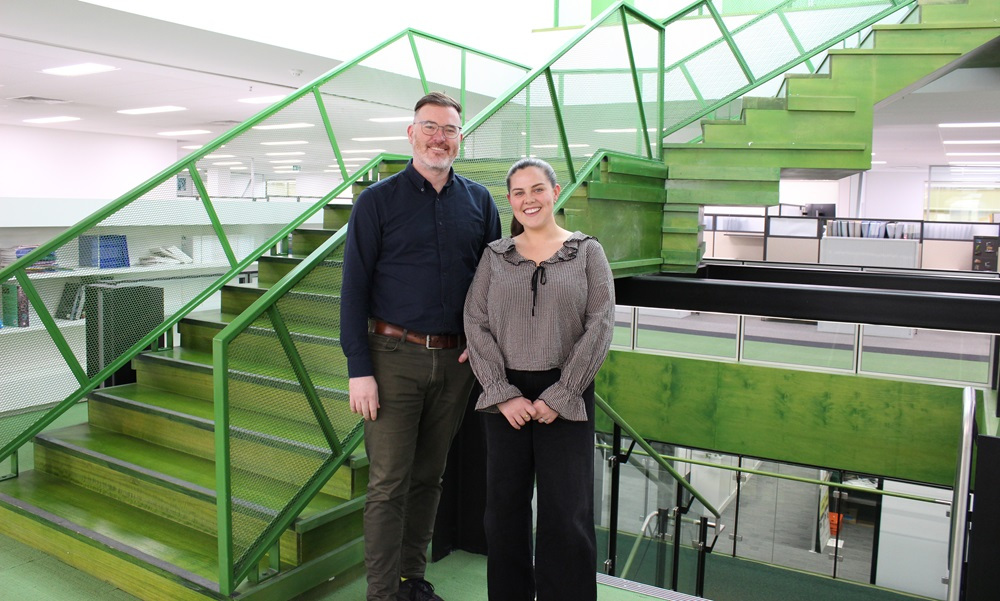
In today's episode, I'm joined by Dr Dan Cloney, Senior Research Fellow at the Australian Council for Educational Research and Lead Researcher for IELS here at ACER. We unpack some of the key findings from the study, explore what made the assessment design unique, and discuss why it's so important to ensure every child arrives at school with the strongest possible foundations. Let's jump in.
Rebecca Vukovic: Dr Dan Cloney, thanks for joining us today for this Teacher magazine podcast. Of course, as I just mentioned in my intro, you're the Lead Researcher for IELS at ACER and the survey is exactly what we're here to talk about today. But before we do, I know your area of expertise is in early childhood education and care and quantitative methods. Can you tell listeners a little bit about your work in this area and some of the research programs that you've been a part of?
Dan Cloney: Thanks, Rebecca. It's a privilege to be here and really exciting to talk about the IELS study. I've been an early years researcher for probably 20 years now and I was really fortunate to start my research career working on the E4Kids study, which was run out of The University of Melbourne. It was the first large-scale piece of work in Australia that really tried to unpack: What is the quality of early learning programs and how does that support children's learning? And it did something really important – it looked at the system at scale and our findings there about the role that not just the quality of programs, but access to them, family background, community resources, advantage and disadvantage. That had a lot of input into the strengthening of the National Quality Standard and the Early Years Learning Framework in Australia.
And so, since then I've just been really focused on and interested in how do we measure young children's learning and how can that help us know about when children are flourishing and when the early childhood system is supporting that to happen. And so recently I've been leading a team to help the Australian Government design the Preschool Outcomes Measure, which is a national formative assessment program for children in the year before school. It's all about giving teachers and educators a way of collecting evidence about what children can do and planning to meet them where they're at and to support them to be ready for school.
RV: Fantastic. So, you bring a lot of experience to this study. And of course, the results of the International Early Learning and Child Well-being Study were published last month. Focusing on 5-year-olds, IELS is the OECD's first international comparative study of early childhood learning and development. Can you tell me a little bit about why this survey was developed and its key aims?
DC: Yeah, absolutely. IELS was developed because we're in a part of policy reform where we've realised that early childhood programs have this potential to support not just all children's learning, but to support children to close the gap, particularly relative to their more advantaged peers. We know governments have bought into this because we've seen massive expansion of early childhood programs. In Australia, for example, more than 90% of children attend preschool programs now. But what we don't have is robust data about children's learning and development. We certainly don't have any internationally comparable data.
And IELS is designed to fill that gap by providing evidence about not just literacy and numeracy, but children's holistic learning, including their cognitive skills, their social and emotional skills. And it's designed to generate data that's internationally comparable, that can be used by governments to monitor trends. And the exciting part is if countries now participate over many years, they'll be able to understand how children's learning and development changes over time, and they can use that to effectively write policy and target investments where it's needed most.
RV: Yeah, and Dan, I've heard you say before, ‘one of the most important questions in early childhood assessment is not whether to measure learning, but how’. I know that traditional test formats aren't necessarily appropriate or all that informative for children aged 5. Can you tell us a little bit more about the assessment design that IELS used?
DC: Yeah, absolutely. And it was a massive challenge because you're right, the traditional kind of testing formats don't work well for young children. We know that many 5-year-olds, they're not yet reading and writing independently. And so, one of the key design considerations was: How can we get good quality evidence about what children can do? And we decided to build that around one-on-one interactions.
So that's a trained researcher working one-on-one with children, talking to them, engaging them in stories and games, based on a tablet with plenty of visual and audio supports. And the idea there is that children can respond by listening and by speaking and by pointing – and that meets children where they're at, and we can still use that to generate the kind of data we need to produce these really high-quality measures.
RV: Yeah, that's really interesting. And so IELS measures 3 dimensions of learning and development across 10 domains. Can you tell us more about them?
DC: Yeah, absolutely. I should go back one step and tell you that not only do the children work with a researcher on the tablet, but we also ask teachers and educators to tell us about what the children can do. So, we have this important triangulation about what children can do. And that's important because we are measuring 10 aspects of children's learning. So, the 3 broad domains are: foundational learning, executive function, and social and emotional skills. And within each of those there are specific learning domains that we assess.
So, inside foundational learning is emergent literacy and numeracy. Inside executive function is working memory, inhibition and mental flexibility. And inside social and emotional skills we access 2 things – one is empathy, and we measure that directly on the tablets. But we also measure aspects of children's behaviour, so their pro-social behaviour, their non-disruptive behaviour and trust. And those we rely on teachers and educators giving us information about what they see children doing in their settings.
RV: Yeah, okay, so let's dive in a little deeper now. For the foundational learning dimension, how do you actually go about measuring both emergent literacy and emergent numeracy?
DC: Yeah, really interesting question and one of those things that it took us a little bit of time to work out. We obviously trial these things in 3 or 4 countries before we settle on the final design. When we're measuring children's emergent literacy, we're mindful that we're not building an assessment around children's reading. And so, the assessment design is built around children listening to stories and telling us about what they hear, what they can remember, what might happen next. And we also get them to play around with the sounds in words and the meaning of words.
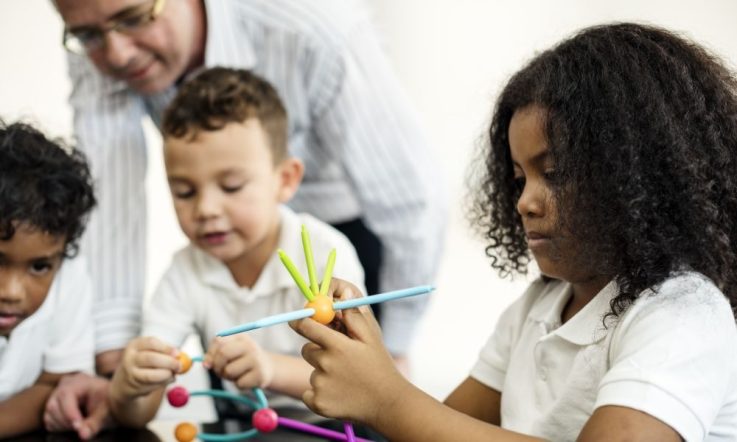
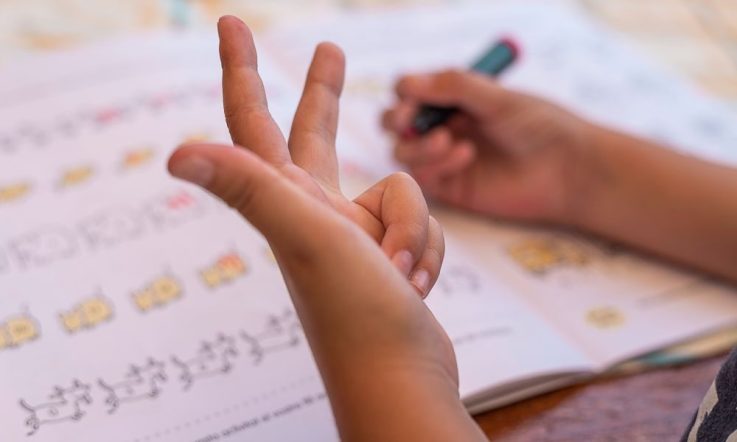
Numeracy is a little bit different. That's much more built around short problems that children solve. So, we get them to think about, for example, can they take a group of buttons or marbles on the page and separate them into 2 equal groups? And they have to use their finger to drag the marbles around and when they're ready, they can then say ‘I'm done’ and submit that as a response to the assessment. So, we're trying to build it around authentic interactions, the kind of activities that children do day-to-day in early learning settings.
RV: Yeah, and Dan, I'm really curious. So, what does it look like for a 5-year-old to already be mastering some of the skills in this domain? Are there any kind of skills or attributes that they're able to demonstrate?
DC: Yeah, it's a really good question as well. One thing that we observe in IELS is that children come to the start of school – these are 5-year-old children, typically around the start of school – with quite a range of abilities. So, there are children who are in literacy, for example, quite confident speakers. Others are just beginning to use their expressive language. What we do is we really want to make sure we have an assessment that can meet children where they're at.
And so, in literacy, for example, we introduced an adaptive design in 2025. It means that children who are just emerging in their literacy skills tend to work with shorter sentences and more simple ideas. Children who are more capable have more literacy skills; they're working with longer texts, listening to longer, more complex stories. And we're asking them to do things like draw inferences about what they've heard, even though the information is not obvious or just there on the page for them.
RV: Yeah, that's really interesting. And then again, for executive function, how did you go about measuring areas like inhibition, working memory and mental flexibility? And then again, what also does that look like for a 5-year-old to be doing well in these areas?
DC: Executive function is one of those domains that everyone is thinking about. Early educators know it's one of those really important skills. It's all about children being able to manage their attention, hold on to information and apply strategies. So, you can see why it's a natural skill that is then related to later learning in other domains. For the executive function assessment, we built that around much more like a game or a set of game activities. And it's all about asking children to respond quickly and to adapt in the moment.
You'd be familiar with things like matching games or memory games – those kinds of activities. And again, we introduced routing here to make sure that the level of challenge is appropriate for children who are just emerging as well as children who are more advanced. In this case, executive function, the assessments get more difficult over time, the items within the assessment. And so, what we do is, over time we ask children to hold on to more information, to inhibit a stronger learned response, or to hold on to a couple of different rules at once and be able to switch between them really quickly.
But what we do is we end the assessment once children are starting to top out that skill and no longer are able to engage with the material. So that's how we meet children where they're at and provide an assessment that's appropriate for children of a range of different abilities.
RV: And we know that it is so important to meet students where they're at. And then Dan, for the third dimension – social and emotional development – how did you measure these against those 5 domains? What did the assessment look like? And of course, what does it look like for a 5-year-old old to perform well on these assessments?
DC: The social and emotional stuff is perhaps my favourite part about IELS. It's the kind of outcome domain or learning area that we often ignore. It's quite difficult to think about, what is it? How would we possibly measure it? I think it's really impressive that the OECD has backed in a design that prioritises that as one of the key learning aspects. And I mentioned before, we do it 2 ways.
So, in part, we ask teachers and educators to tell us about what children can do. And some of it is done through that direct assessment. The empathy assessment is done directly. It's on the tablet. We ask children to listen to stories and the characters in those stories have an interaction with another character, which creates an emotional response. Maybe they get tricked into eating a mud pie, thinking that it's a piece of cake or a cookie. And that assessment's all about us asking children whether they can identify emotions. Can they name the emotions that were present in the story? And importantly, did they have a concordant, a similar emotional response? And can they attribute that to the fact that the character in the story was ‘angry’ or ‘surprised’ that they had that kind of emotional response?
The other aspects of social and emotional learning are more about children's behaviour. And so there we ask teachers and educators to tell us: Are children open to helping in the early learning setting? Do they help negotiate conflict or settle things down? Can they form warm relationships with adults in the setting? And those sort of align with those aspects of pro-social behaviour, non-disruptive behaviour, and trust.
RV: Yeah, it's really fascinating to hear about how the study was designed. But of course, let's talk a little bit about the findings now, because the findings from the first survey show that differences in a child's learning and wellbeing are already evident by age 5, including associations with gender and socioeconomic background. The report also highlights the important role of home learning environments and strong partnerships between families and early learning settings, alongside access to high quality early childhood education and care. Were there any findings or recommendations in the report that were particularly surprising to you?
DC: Yeah, I'm going to go back to empathy for a moment because I think one of the findings that really interested me was that one of the things that children found more difficult was to identify and talk about emotions like ‘surprise’. We found that children who had less empathy found it much easier to talk about what we now think of as simple emotions, ‘happy’, ‘sad’. But when children were listening to a story where one of the characters was surprised, they found that harder to identify. They found it harder to name that as a concordant emotion that they experienced and to attribute it to the story. So, for me that was one really, really interesting finding.
But I think if I'm more thinking about my kind of research interests in what does an effective system look like, without a doubt, the biggest headline finding there was that some of the patterns that we see in school-age education, they're already present in the early years. So, it's probably not surprising to find that socioeconomic gaps have already emerged by the time children are age 5. It's particularly true in the emergent literacy and numeracy domains. But what we're seeing is that the kind of early educational experiences, the availability of early childhood programs in the local community, and the kind of activities that families do with children at home are related to family socioeconomic status.
And so, children are arriving at school already behind as a function of the investments that have been made in them. And it's really reinforcing that idea that if we want to reduce socioeconomic gaps that we certainly see in secondary and primary education, we're going to have to come back much earlier in order to intervene on those, certainly by age 4, but probably in the first 3 years of life.
RV: And that leads me to think of a quote from you that I'll actually read back to you now. You said, ‘As global attention on early childhood continues to grow, strengthening how we measure learning before school will be critical, not to label children or rank systems, but to ensure every child arrives at school with the strongest possible foundations, because by the time learning becomes visible in formal assessments, the most important years have already passed’. It's a really powerful message to leave listeners with, Dan.
DC: Yeah, I think that's absolutely true. And I think if people listening to this were going to take away one thing from our discussion, it really is that the early years, the learning that happens there is not a prelude to school-age learning – it's part of the same trajectory. And if we want children to engage and get a lot out of school education, that we need to make sure that they're not behind by the time they already come to school. And a study like IELS fills a gap where, really, we don't know about the things that children can do when they're 4, when they're 5 and that makes it really hard to think about what kind of investments, what kind of policy that we could target to support all children to succeed. And I think most importantly, to support the narrowing of those gaps between children from less and more advantaged backgrounds.
RV: Yeah, fantastic. Dr Dan Cloney, it's been such a pleasure speaking with you today. Thanks for sharing your work and your insights with Teacher magazine.
DC: Absolute pleasure.
That's all for this episode. Thanks very much for listening. If you enjoyed this one, please take a quick moment to hit follow on your podcast app and leave us a review. Both of those things help more people like you to find our podcast and they're a really big support for the Teacher team. We'll be back with a new episode very soon.
Teacher magazine is published by the Australian Council for Educational Research.
References
OECD. (2026). Building Strong Foundations for Life: Results from the 2025 Early Learning and Child Well-being Study. OECD Publishing. https://doi.org/10.1787/02bf8efe-en.
Dr Dan Cloney stresses the importance of ‘meeting children where they’re at’ in their learning. In your current work as an educator, how do you ensure that you design lessons and tasks that are appropriate for each child’s varying level of ability? Do your assessment practices also reflect this?
How are you working with families and your wider community to strengthen children’s early learning experiences? Do you have any strategies or practices that have proved to be successful in engaging families in their child’s learning?