Hello and welcome to this podcast from Teacher magazine, the resource for K-12 educators published by ACER, the Australian Council for Educational Research. I'm Rebecca Vukovic.
I have a very special episode for you today. I'm joined by Andrew Fuller, a renowned clinical psychologist, author and family therapist. Ahead of the National Education Summit in Melbourne this September, where he'll be presenting 2 sessions, Andrew and I sat down to discuss his work on converting neurodiversity into ‘neuro-advantage’. In this episode, we explore 3 key themes – transitions and regulation, school belonging and finding your people, and how educators can help turn neurodivergence into a genuine advantage for young people. This is a highly practical conversation where we move beyond theory and into real-world examples. Andrew tells stories, provides scripts, and even role-plays scenarios that are likely to resonate with teachers and school leaders. Let's get started.
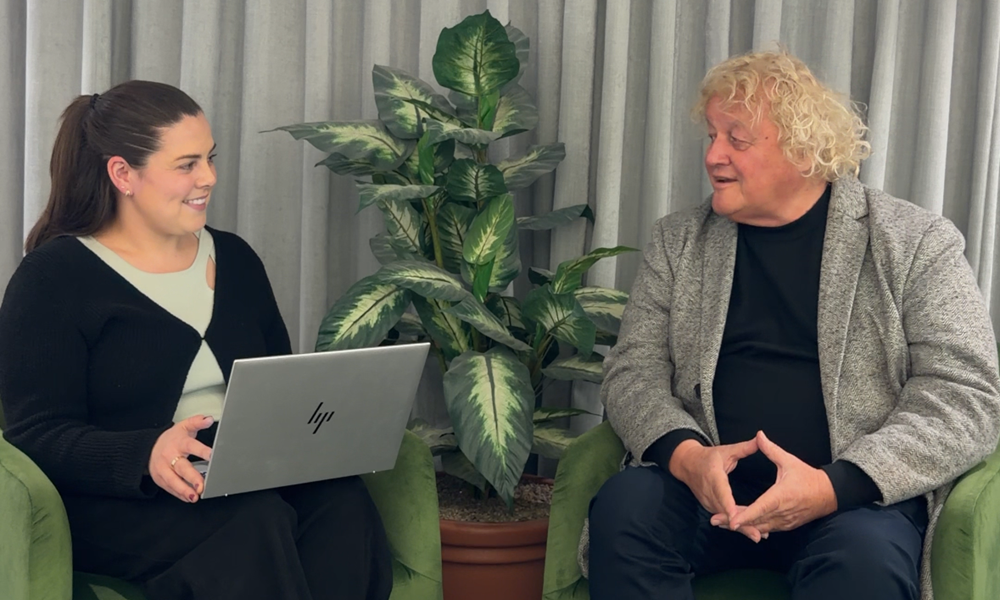
Rebecca Vukovic: Andrew Fuller, it's so lovely to have you here in our Melbourne offices today. Welcome to the Teacher magazine podcast.
Andrew Fuller: G'day, Rebecca. It's great to be with you.
RV: I'd like to start with transitions. We know transitions are often difficult for neurodivergent children. What might seem like a simple change from one lesson to another can often involve navigating uncertainty, managing emotions and shifting attention all at once. Let's say a teacher notices a student becomes anxious or resistant every time it's time to stop one activity and move to another. What might be happening for that student and what could a teacher say in that moment to alleviate some of that stress or apprehension for the student?
AF: I reckon the first thing to realise is that when kids, any kid is really having trouble with a bit of transition, it's not that they're trying to give you a hard time, they're having a hard time. And the reason they're having a hard time is they're trying to work out, you know, what's the changing rules here? What have I got to do differently now than what I was doing a couple of minutes ago? And that's tricky business for anyone at times, particularly if you were engrossed or immersed in something. I mean, jolting people out of things (and schools are full of jolting people out of things) basically becomes a bit of a shock. And so, we see this quite often – I'll just give you a classic example – when a parent comes into a room fed up, usually, nostrils steaming after a kid's been playing computer games for way too long, and, you know, ‘get off that game’... And of course, it's almost like the kid is in this sort of deep trance state, really, playing this computer game. And it's like, goodness me ...
So, in a way, we have to be much more mindful that we don't try to rush transitions. It's a really important thing at homes as well as at school that we just take our time. Because, of course, if you rush a transition, then you dysregulate the person. And once you dysregulate the person, you can't have them learn because they're just out of sorts, right? And so, it becomes counterproductive. And so, clearly we just have to allow those windows of change, of movement. I mean, in some ways, transitions are good for us all because when we enter a new room or a different phase of our life or meet someone new and spend time with them, we become partly different people. But that requires a bit of adjustment as we go through it. It's a fascinating thing. It's like going across a crossroads or entering a threshold, I suppose, we would talk about in ethological terms.
RV: Yeah, could you talk us through a practical example of how a teacher might prepare a neurodivergent student for a difficult transition, such as, you know, moving from recess back into, say, a maths lesson?
AF: Well, it could easily be, I mean, and schools obviously do use the music and so on, but of course, the idea I think is really to try to have somebody who is a bit of a timekeeper. We know that lots of kids generally, but neurodivergent kids particularly, are pretty blind to time which is kind of a lovely thing about them in a way, but they're not good at kind of going, ‘in 5 minutes basically, I've got to do that’. You might say that, but if you ask one of them, ‘how long do you think 5 minutes is?’ It could be 3 hours or 2 seconds, it's hard to kind of know where it is. And so, either you basically pre-warning and so ‘in a bit of time I'm going to basically signal and that's the time to start to move in’ or having another student do that for them as well is a really good thing to do. So, one of the ways is to build that supportiveness in a class group by basically helping people to get ready for what's the next step.
RV: Yeah, fantastic. And let's imagine a teacher says, ‘I've got a student who melts down every time we switch tasks’. What would your coaching conversation with that teacher sound like?
AF: I reckon we'd be basically starting off to go, okay, so obviously life is changing all the time. So, it's probably not true that they're melting down every time things change. So, what's different about the times when things don't melt down? And there will be some times, even though they can … so initially people don't see the exceptions to the rule. So we basically have to then go, okay, maybe it's not always true. So what's different when it's not occurring? And this is the basis of a lot of my therapeutic work, of course, as well. And so then, what's different then? And often it's because it was slower, it was primed, there was perhaps an activity that was fun to do.
So, it's not that neurodivergent kids don't like fast shifting, they don't like the uncertainty of not knowing what to do. Now, this is an interesting kind of mixed picture because in some ways, just as we all kind of like excitement and something, ‘wow, that's a bit different’ – if it's positive, it can be great. So having rituals that basically build in, not only signifying that a transition is about to occur, but once you come into the classroom there's a sort of ritual around what's doing. And that's worth thinking for any teacher in any classroom anywhere. So let me just describe the difference.
So quite often, educators are taught to just basically start the class by specifying the learning objectives for the class – and the first thing I've got to tell you is kids don't give a rats about learning objectives, they hate them, they can't stand them. Basically, this is not the age of learning objectives, this is the age of missions and challenges, you know, what's going on, right? So poor teachers are being badly advised from the setup. It's almost, ‘the learning objective is…’, ‘oh, no...’ So rather than doing that, you've got to think about how computer games are kind of designed, because computer game designers are such clever people, right? As you know, if you play a computer game, you don't read the manual to figure out how the game works. You play the game and learn it as it goes. So exactly the same thing we need to do in classrooms. So, basically, it's ritualised but it's kind of quirky at the same time.
So, kids come into a classroom and up on the board or on the screen or something, there's going to be a puzzle or a quiz or a guesstimation game or an illusion or something that it's just a bit kind of fun, right? And then try and work out the answer to this, whatever it is, not too serious. Turn to the person next to you, if you're up to it, and just tell them what you reckon it is.
And so, what you've done in that first part of any lesson is you've raised dopamine – because dopamine and challenge go hand in hand – and what you've done is broken the sort of circuit of silence. So in the morning, of course, am I going to speak to anyone today? But even after recess, it's sort of, who's the person I'm sitting next to? Is this where I wanted to sit? All that kind of stuff. Whereas if I turn to them and have to sort of share some thought about my favourite animal or whatever it might be – something that's pretty easy to do – it breaks the whole pattern. And so then what you're doing is changing the neurochemistry of that student.
So, what really drives most student behaviour is not their conscious thinking, it's the neurochemicals that are running their brain. And the neurochemicals that we are most interested in is lowering, of course, of cortisol, which is stress hormone. Adrenaline is a bit of a mixed picture because some adrenaline is really good, and we're actually regulating adrenaline – fast thinking and slow thinking. But dopamine's the big one because of course that relates to anticipation and motivation. So, if we can get that up and then socialise it through basically turning to the person next to you and tell them something, that then increases serotonin because of course we all are basically tuned in to kind of feeling social acceptance. And so, it's a really interesting kind of process.
So, it's reshaping education. And, of course, this is what's going to happen in the future as we see increasing numbers of neurodivergent kids needing to be catered for in our systems, our schools.
RV: Yeah, and that social acceptance is really important for the topic I want to talk to you about next, which is school belonging. We know that school belonging is such an important aspect of schooling. Students who feel that they belong are more likely to engage in things like learning, attending school regularly, forming positive relationships and even persevering through challenges. You've spoken a bit about the importance of helping young people find others with similar interests. Can you share a practical example of a school that has done this well and what teachers could learn from that approach?
AF: So, I did a large research project looking at precisely this and found that there were 3 major factors in successful schools – connected, protected and respected. And there's a book coming out later with Stephen Brown on that and school cultures. And so, thinking about how do we connect with our students? How do we make them feel safe, protect them? And how do we help them to be respectful of others but also respectful of their own potential? And so it's then thinking, how do you then do that? And so it's, in some ways you don't know what you don't know until you know it, right?
And so, I don't know that you and I could share a great interest in a particular thing (who knows what it would be) until we get a chance to do that. So activities like, basically, I want you to find somebody in the room who basically likes this type of music or has this particular interest in LEGO, or loves motor cars, or dinosaurs or whatever age, age-appropriate kind of things. And so you have a sort of treasure hunt of people. And so you're trying to really find then people who share some interests and passions with you. Literally, you're trying to find your tribe, because of course, once you find your tribe it's then a sort of safe base from which you can then broaden your social networking out, and that's helpful.
RV: And I know that in any given classroom, teachers' time and attention is often consumed by either the students who excel or the students who are struggling, but often there is like that middle band of students who are often, those quiet or compliant kids who are seemingly doing okay but may not feel connected or have that strong sense of school belonging. What are some signs teachers could look for and what are some of those everyday actions that could build school belonging for those students?
AF: So we know that about 45% of people have attachment issues. So that means 45% of our students at least are coming in basically not trusting adults, not because of you doing anything wrong, they just don't trust adults. They haven't had much experience of doing that. And then they don't really trust themselves. So that's a massive amount of students in a school, right? So, some of them will be anxious and worried all the time and trying to kind of seek reassurance. And, of course, they are people who need that reassurance because otherwise they just freak out. But at the same time, if we don't give them the chance to build their own autonomy and independence, then they don't grow. They just learn that, you know, you've got the answer and I don't have the answer.
So, with those kids obviously we start to build a trusting relationship and reassure them and try to calm them. And then what we try to do is to say, ‘look, I'd love to talk to you about this, but before we talk about it, I want you basically to think about this for a minute (or maybe 2 minutes) and come back to me with one suggestion and then we'll start the conversation’. And so that then kind of, in some ways, really encourages them to come up with a solution and start from there, which starts the independent thinking.
There's another group of kids, of course, in the classroom who may not be necessarily particularly noticeable because they have the art of invisibility. And this is a fine art form among students. We know those that basically are teacher magnets – they're legendary in my therapy room, I can tell you. They come in and we talk about the art of invisibility all the time. But there's a group who don't intend to be invisible but are. And they're the ones that avoid eye contact, that kind of almost drop their heads, who, you know, you're trying to get people interested.
And so, really being a teacher is a bit like being a conductor of an orchestra. And you've got, you know, you've got your main players who are often, you know, charged and doing things. You've got another group who are wondering what the heck this is all about and are basically going to struggle. And then you've got this great bulk of kids who basically are either trying to seek what's the right thing to do here? What's the right thing to do here? Just tell me the right thing to do here and I'll do it. They're sort of desperately, you know, worried and anxious about being correct. And there's another group who are thinking, if I can just tuck my head low enough, this too will pass.
And it's a very interesting, those groups of kids, and you learn a lot from them. I mean, I see them in my therapy room a lot. And they have mastered the art of school in a funny kind of way – not towards success, but in survival. Because they've learned, these are smart kids, and they've learned that if I wait long enough, the teacher is so busy that they'll go away. So I basically, if I drop my head, avoid eye contact, and basically when I'm asked to do anything, almost have become non-responsive, the teacher will give up. And they do. They do all the time. I see this. And so, but sadly of course the outcomes for those kids is they never kind of chance their hand in being successful, which is where my work as a therapist comes in with them.
So yeah, that orchestration of those different groups is going on all the time. So you can't really afford to have your attention drawn to one side of the room or one group only, you've always got to be thinking, how do I orchestrate this entire group? And if we come back to the neurochemistry stuff we were talking about earlier, of course groups often, behaviour is contagious. People often do what they see other people do. So, if we can then have activities that basically purposely raise dopamine, or lower cortisol, or do things that are very fast and then very slow, people then pick it up and do those things. Not everybody initially, but after a while it becomes a bit infectious.
RV: Andrew, I want to talk a little bit about those kids who are struggling socially. I'm wondering, can you role play what a strengths-based conversation might sound like between a teacher and one of those students who are struggling socially or find it difficult to connect with their peers?
AF: So generally, of course, the kids that have social issues, fear that they're going to be hated, hated by kids. So, the extreme version of that is in school refusal. So I wouldn't suggest that a teacher uses this language, but I'll just describe when I sit down with a kid who's school refusing through fear of basically alienation from peers – there's a lot of them – I'll say to them (depending on the age group of course), I'll say, ‘who wants to kill you?’ Now, the parents often sit and look a bit shocked, but the kids are never shocked. They've thought about it. They have thought about it. That's the way they see the world. These kids basically want me dead, right? And they'll name them.
And then I'll say, well, ‘who doesn't care whether you live or die?’ And they'll name those as well. ‘Who doesn't mind you? They don't like it, but they don't mind you.’ Okay, we get a list of those. And then ‘who are the people who you reckon basically you could build a bit of a friendship with?’ And it's a small number. And it may not be the group that you really want to hang out with, but that's your survival base in a way.
And so you've got to strategise with them, but you've got to strategise from the negative to the positive, because that's their fear base, right? So, they're attending to this group who are, you know, difficult. And they are quite often for these kids, poor kids. And so unless we address those fears, and work out strategies to protect them from that, then we're not going to get any manoeuvre or movement in terms of social skills. And then it's basically thinking, okay, how could we then basically formulate a way to get to know those kids better?
Now, what sort of stumbles kids up is not usually the first question they need to ask, it's the second and third. And so we've got to help them to learn that skill of basically going, you know, ‘hi, my name's Harry, what's yours?’ or something like that. And then it's that second and third question – extracting from the person's answer, a next question. And that's an art form that I think is well worth learning for lots and lots of people, not just socially isolated people, because it becomes the art of curiosity. And that ties in (sorry to give you a long answer about this) but it ties into the modern age because we're shifting. Our world is shifting from a world of the importance of answers, to the importance of questions. And so, to be somebody who can articulate really good questions not only gives you the great skill of being a good conversationalist – and therefore the social success that you're seeking – it also gives you the art of basically using AI and inquiry-based models really well in your life and using it deeply.
RV: And we all know those conversations we have with people where you're asking all the questions, and they never ask it back and that feeling. So, it's about trying to teach them how to have that 2-way conversation that builds trust and lets people get to know you, you get to know them and find that shared common interest that we spoke about earlier.
AF: That's right. We've all had conversations. We go, ‘oh, how was your weekend?’ ‘Alright’. It's like talking to a brick, isn't it? Scintillating.
RV: Okay, so of course one of your sessions at the National Education Summit is titled Converting Neurodiversity into Neuro-advantage. And that session is part of the Diverse Learners Symposium at the conference. So, I'd like to take a moment now to ask you more about that term ‘neuro-advantage’ and what it might look like in practice. Can you share a story of a student whose neurodivergence became a genuine strength once the right supports were in place?
AF: Oh, there's so many of those. I'll have to think about those for a moment. I'll give you … I'll just talk a little about the origins of my thinking around this. So, I think it was back in the early 2000s, I wrote a book called Tricky Kids which was really popular. And people like that term because it sort of, it was destigmatising; it was talking about some of the behaviours and we related them to domineering characters who basically were, had forceful personalities (most of them).
And then I was thinking about it and, in some ways, while that behaviourally was useful, it didn't truly describe the sort of style of thinking that they had. And so, and I was aware there was this current kind of emphasis on diagnosis. And look, diagnoses can be useful, but often the label doesn't help people very much. And it misses a lot. It might describe the problems that person's encountering, but it certainly doesn't encapsulate their strengths. So just to give you an example.
One of the people I saw many years ago was a rabid unicyclist, very socially isolated, would ride his unicycle around everywhere. He'd come to my therapy room with his unicycle. He had incredible balance, incredible skill on this thing. And his parents, of course, tearing their hair out thinking, what the hell are we going to do with this obsessed kid with a unicycle, right? And I had no idea either. I mean, what am I going to do with this kid, right? But you know I worked with him and supported him in terms of just, getting a couple of mates and then also learning a few tricks. And I think, it was that sort of learning a few of the tricks that people were riding on their 2-wheel bikes he could do on a unicycle so it became cool and skate ramps and things like that. So, it was a long story. Anyway, but eventually he got back in touch with me and he said, ‘guess what?’ And I said, ‘what?’ And he said, ‘I've got this job in a circus, on a high wire, on a unicycle.’ And I thought, isn't it amazing? I mean, you could never predict here's this guy's career now, you know, and he's probably world famous, I think. But, and it's so skilful.
So, I've learned that really, the limitations that we place on kids are our own limitations of imagination. And the more that we can lift those, the more we can start to see possibilities. And I think what's wonderful about that is in a world that does seem a little bit focused on draining the creativity out of our educators, sadly, I would love to have a school, I would love to have a profession that essentially sees itself as treasure hunters. My job is primarily to find out, Rebecca, what's great about you and help you make more of it. And to believe in you probably more than you believe in yourself. And that's that really cool gig to have when you think about it. That's a really great thing to be able to do.
And I can promise you that if educators listening to this take that on as their kind of primary kind of thing they will get, like I have been very honoured to get, messages back from kids who, probably without much real basis, I believed in, you know, despite the circumstances, despite the fears of everybody. And they often will get back in touch with you and go, ‘guess what? You wouldn't believe it. I've got whatever it is’, right? And so, time and time and time again, this happens. And I just think it's a wonderful, quirky part of the world.
RV: Yeah, I love that idea of teachers as treasure hunters. It's such a powerful message because it ties in again to that idea of kids finding their tribe. Having a particular skill and finding people who value that skill is so important. So, if a teacher wants to identify the strengths hidden behind a student's challenges, I'm wondering for that teacher, where should they start? What questions should they be asking themselves and the student?
AF: Well, in an attempt to make this easy I started a website called mylearningstrengths.com where you go on and you'll see a great photo of me (a lot of filtering had to happen to make that happen, I don't look that good in the flesh, but anyway). And then you can do a free analysis of your learning strengths, and you'll get an email from me that says, ‘Rebecca, congratulations. You're good at this and this, want to get better in other areas and here’s way of doing it’. And that's all based on research. And the reason I did that was I thought very few people get to hear something that's good about them from someone who's neither a teacher, nor a parent. And so that then becomes the starting point for developing whatever strengths you want to have, right?
It's been a really popular thing. Often schools will get parents to do it with their children and bring them in to parent-teacher meetings. And I was a bit hopeful that, I don't know, maybe if I was lucky 20,000 kids might do this (and it was a bit of a dream) – 200,000 a year across the world do it. And I get, again, beautiful emails from kids from Scotland and Argentina and South Africa and all over the place, basically saying, ‘wow, no one's ever told me that I'm good at this’, or ‘no one else sort of believes in me’, or, you know, ‘can you tell my mum she doesn't know I'm smart’. Or there's all sorts of really lovely messages. And I think sometimes we're a bit scared to tell people that they're great.
I don't know where that's come from but, in a way, I think that belief, you really want … there are stages of childhood, and I suppose that particular middle stage of childhood is really especially potent because kids really want to believe what the big guy or big girl says, really. And if somebody says, ‘you're great at this’, with some basis for it, then they go, ‘okay, that's good. I know that I can do that. So now how do I use it?’
And so, it's really quite simple. I think it's more powerful to do it a little bit at arm's length rather than to just sort of say, what are your interests and what are your kind of passions? Probably the web-based stuff has a little bit of a, the veneer of authenticity that often personal conversations don't, sadly. But, yeah, I think it's a good place to begin.
RV: Yeah, what a brilliant resource. We'll definitely link to it in the transcript of this episode over on the Teacher magazine website. Andrew, I'm wondering, can you walk us through one of those conversations with a student who does call themselves or see themselves as ‘bad’ at school (and I'm using inverted commas) because of their learning differences. How might you help them to begin to view those differences as genuine strengths?
AF: So alongside basically the finding out their learning strengths, I do a bit of neuro-advantage profiling, and I'll just talk about the research behind that briefly. There are 5 major pathways in the brain that are associated with learning. And one's basically attention and awareness, which relates to our reticular activating system in the base of our brain. Then there's anxiety and safety, which of course is pretty common, that's the amygdala. And then there's memory and pattern recognition, that's the hippocampus. Then there's thinking and reasoning, that's the prefrontal cortex. And then, is it worth doing? The motivation part of it, basically, which is the dopaminergic pathways and the anterior cingulate cortex. And so, if any of those pathways are blocked then learning becomes quite difficult. And so generally it's quite easy to identify which of them is the blockage point and then to think about how do you free that up?
So, in a recent conversation I had with a kid, was a really smart kid, pretty neurodivergent, but interesting character, as they all are. I love them because they're just wired differently and they'll see the world differently, which is their great strength as well, by the way. Nothing really seemed worth doing. Nothing. And I said, ‘okay, that's a real shame’. And school's just boring, absolutely boring. I said, well, ‘yeah, school might be boring, that's true’. I said, ‘so tell me a bit about this strength in spatial reasoning that you've got’. ‘Yeah, well, I'm good at kind of putting things together and I've designed this and I do some artwork on the side and things like that, but school don't like that kind of stuff’. Okay. I said, ‘wow, okay, so have you ever done 3D printing?’ He said, ‘oh, yeah, a bit, a bit’. This is sort of a, I don't know, older kid, teenager, school. ‘Wow, and so you're interested in sort of construction, and you're interested in that kind of stuff. Have you thought about what sort of homes, if you were to be a builder, what you'd sort of build?’ And he said, ‘oh yeah. I often design in my mind great houses’. I said, ‘wow, tell me about that’. And so, we started this conversation, right? And so, when this ends up in this sort of guy basically thinking about how he could 3D print and design houses in the future to make his career, right?
So out of understanding just where the blockage was, and then what the strengths were, you can then pick up a conversation that sort of combines the 2. And look, I might have got it seriously wrong. So, I had to hold my possibilities for that kid loosely, because I mean, he might have gone, ‘no, that's not it’. Okay, but then I've got to modify what's happening. But in a way, he walked out of that conversation just like, you know, ‘wow, I've never thought about this before in my life’. And it doesn't matter terribly much. I mean, and of course, what will happen is once you get a sense of purpose and meaning, then there are things in school, of course, that are going to be useful down the track for you. Maybe not all, but quite a bit of it. And so then, of course, his performance at school will lift and he'll see that it's worth completing school because I want to get into this field.
RV: Yeah, what a brilliant example of kids making that connection between the skills that they have and how school can support them to achieve that dream post-school. Andrew, finally, I just wanted to let listeners know that they will have the opportunity to meet you in person at the National Education Summit. Of course, you'll be presenting a Before the Bell session at 8.15am on that first morning of the conference. That session is titled, Setting Our Students and Ourselves Up for 2040. Delegates can come along before the expo opens, they can grab a coffee and meet you there at the time. You'll also be at the Book Nook at 10am before a book signing and a meet and greet. Andrew, what do you love most about the opportunity to meet educators at events like these?
AF: What I love watching – with kids, I love watching the pilot light go back in their eyes, but with educators too. And I just watch so many educators, and particularly, those people who come up to me and they go, ‘I'm just a learning support person’. ‘I'm just a teacher's aide’. ‘I'm just an integration aide’. And I want to, I don't literally slap them around the chops, but I say, ‘let's cut out the just, okay? You do really important work. And I want you to value what you're doing and actually be more playful and more creative. Because of course, once you're freed up to do that, changes life courses.’
And so, it's so wonderful to basically see people come in. And if I want to talk about converting neurodiversity into neuro-advantage, it's funny, people often come in and they go, you just described my partner, wow. I've never really understood why they did that particular thing. So, I'm sort of doing relationship counselling on the sly!
RV: Oh my gosh, I love that. Andrew Fuller, it has been such a pleasure speaking with you today. Thank you for sharing your work and your insights with Teacher magazine.
AF: It's been a joy. Thank you so much, Rebecca. Thank you.
That's all for this episode. Thanks for listening. For more details on how to attend Andrew Fuller's sessions at the National Education Summit in Melbourne this September and to meet him there in person, please visit the website, nationaleducationsummit.com.au. If you loved this episode, please take a quick moment to hit follow on your podcast app and leave us a review. Both of those things help more people like you to find our podcast and they're a really big support for the Teacher team. We'll be back with a new episode very soon.
Teacher magazine is published by the Australian Council for Educational Research.
In the podcast, Andrew Fuller discusses the importance of helping students ‘find their tribe’ and develop a sense of belonging. How well do you know the interests, passions and strengths of the students in your class? How could you create more opportunities for students to connect through shared interests?
Think of a neurodivergent student you teach. How might you reframe one of their perceived challenges as a potential strength or future advantage, and what support could you provide to help them develop that strength further?