Thanks for tuning in to this podcast from Teacher Magazine, the resource for K-12 educators published by ACER, the Australian Council for Educational Research. I'm Dominique Beech.
Last week, the latest 2025 results for the OECD Programme for International Student Assessment (or, PISA) were released. PISA is the world’s largest international assessment of student learning, and it shows how well 15-year-old students can apply their knowledge and skills in science, reading and mathematics to real-world situations. PISA 2025 involved 760,000 students internationally, and in Australia, more than 14,500 students from 766 schools participated in the assessment.
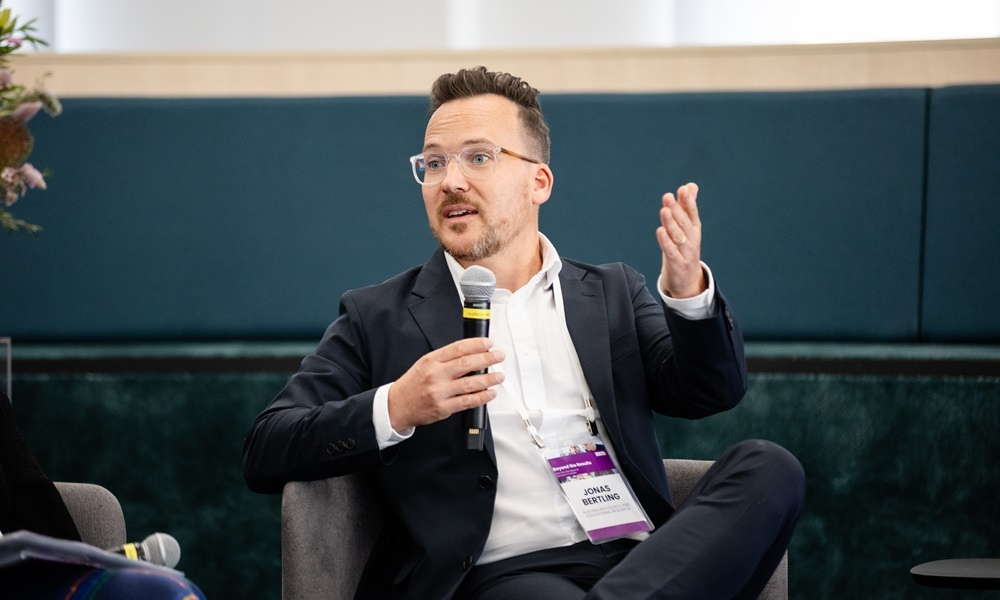
ACER is responsible for the design and implementation of PISA globally and it led the transition to a fully digital assessment platform for PISA 2025. In today’s episode, I’m delighted to be joined by Dr Jonas Bertling, Research Director of ACER Implementation and Reporting and co-author of the report sharing Australia’s 2025 PISA results. We’re going to talk all about what the results tell us about the specific knowledge and skills students possess across science, mathematics and reading; how teachers can think about and use the results in relation to their own school contexts, and have an interesting discussion about technology and AI. Let’s jump in.
Dominique Beech: Dr Jonas Bertling, welcome to the Teacher podcast. We are coming to listeners soon after the PISA 2025 results for Australia, and indeed the world, were released. And we're going to unpack some of the results in our conversation today. Before we dive into those results in detail, though, you have worked on PISA for many years now. I'd love to know what first drew you to this work.
Dr Jonas Bertling: Thanks, Dominique. It's great to be here. My journey with PISA actually started long before I joined the ACER PISA team. In 2009, I was working towards my PhD in psychometrics and became involved as a PISA quality monitor in Germany. At first, I was fascinated in the assessment itself, really from a measurement perspective. Then I visited schools to observe how the assessment was administered and helped to make sure that the same standards were applied consistently.
The interesting experience I made then was that the conversations with principals and teachers really stayed with me. Many of them were not talking about the evidence behind PISA, but they were talking about the headlines and the rankings. Some felt that PISA mainly told them what they were doing wrong. And so that made me realise 2 things. First, that a great measurement instrument doesn't realise its full value if the users don't know how to turn evidence into impact. And second, that context really matters if we want people to understand what stories and students experience in the classroom.
And this has really become a major part of my role with PISA now. I led the international questionnaire development work for PISA 2022, and I'm also leading that line of work for PISA 2029, and I'm overseeing the team that delivers PISA in Australia for the Australian government. So, for me, PISA has never been only about where countries rank. It's about building a richer evidence base that helps policymakers, school systems and practitioners look beyond the surface and understand the context that shapes student learning.
DB: As always, there is a lot to digest from these PISA results, and they've been out for a little while now on the day that we're speaking. So some of our listeners may have, like you said, they may have heard some of the headlines and read a little bit here and there about the results. But I'd love to hear from you if you could give us a brief overview of Australia's results and also where we do sit as a country in terms of the international results, because Australia performs quite well in terms of the OECD average, doesn't it?
JB: Absolutely. The balanced headline is that Australia remains a very strong international performer, but the results also highlight some important and persistent challenges.
Let me unpack this for you a little bit. So, Australian students performed above the OECD average – 27 points higher in science, 30 points higher in reading, and 15 points in mathematics, having us rank 11th, 11th, and 17th internationally. And for our listeners, 20 score points usually represent one year of learning for the average student.
Science performance was broadly stable compared with 2022, while reading and mathematics showed some further decline. So the story is not simply one of success or failure. It shows that Australia remains internationally competitive, but we cannot be complacent about the longer term trend or the substantial differences in outcomes between groups of students.
And one other thing I would like to mention here is that the context really matters. Achievement is only one part of students' experience at school. And the Australian results actually point to strengths such as very high levels of perceived teacher support – 8 in 10 students said their teacher cares about every student learning – but at the same time, challenges around classroom disruptions. Four in 10 students, for instance, say that there's frequent noise and disorder in their science class. So there's some strength, but really also some challenges to continue working with.
DB: PISA uses 2 main measures to describe student achievement, mean scores to show overall performance and also proficiency levels to give us an understanding of the types of knowledge and skills students can typically demonstrate. When results are reported, people often see average scores – that's often what's in the headlines – but why are proficiency levels useful?
JB: Great question. So the averages, of course, are important, right? We see that Australia is on top, right, almost on top. So that's great. But as you said, the average scores are really only useful to compare performance across groups and over time. It's still very abstract. It does not immediately tell a teacher, parent, or policymakers what Australia's students can actually do.
And that's where the proficiency levels come in. Proficiency levels translate the scale into descriptions of knowledge and skills. So they show the kinds of tasks students at different points on the scale can typically complete. And that makes the results much more tangible. It also helps us to understand that averages really can hide a lot of things. So 2 systems can have a similar mean, but have very different distributions. And for instance, one system might have many students reaching the highest level, but also many below the baseline. Another might have a narrower spread. And so looking at the proficiency levels can really give us a more nuanced and fuller picture.
DB: Yeah, I'd love to know a lot more detail about the proficient standards, actually. I'd love to ask you what they actually looked like in PISA 2025. Could you tell me what students performing at Australia's National Proficient Standard can typically do?
JB: Australia's National Proficient Standard is intended to represent a challenging but reasonable expectation for 15-year-olds. So this means not just elementary skills, but the point is where students can begin to apply, connect and explain what they know. In PISA reporting, Australia sets that standard at level 3 or above out of a total of 6 levels. And at this level, students can move beyond simply recalling a fact or locating one obvious piece of information. They can usually select relevant information, connect ideas, and apply their knowledge in a familiar or moderately unfamiliar context.
And many Australian students reach the standard – 60% in science, 55% in reading, and just short of half (49%) in mathematics. So this means there's a strong foundation, but also room to grow as a country. Would you like me to break this down a little bit more by science, math and reading?
DB: Please.
JB: In science, for example, students who reach the National Proficient Standards can use scientific knowledge and evidence to explain phenomena and make sense of real world situations. And that might involve reading information about one environmental or health issue, identifying the evidence that is relevant to a claim and explain how that evidence supports the conclusion.
In mathematics, it means recognising the mathematics embedded in a practical problem, choosing an appropriate strategy and interpreting the results and contexts.
Or in reading, it means understanding the main idea, integrating information across parts of a text, and making a reasoned inference rather than merely finding a word or sentence.
So, in a nutshell, we can say that students who reach the national proficiency standards are beginning to think scientifically, mathematically, and critically.
DB: And what distinguishes the higher performing students, then?
JB: In PISA, the highest performing students are those reaching levels 5 and 6. And so the main difference here is that they are not simply answering more questions correctly or memorising more context. What distinguishes them from those that are ‘just’ proficient is the level of sophistication and flexibility of their thinking.
So what this means, for example, is that high-performing students in PISA can apply what they know in complex and unfamiliar situations. They can integrate information from several sources, develop a strategy when the solution is not obvious, and evaluate evidence and reflect on whether their answer is reasonable.
So, in science, for example, a high-performing student might be presented with competing claims, several pieces of data. They can judge which data are relevant, recognise limitations in the evidence, consider alternative explanations, and reach a well-reasoned conclusion.
For instance, in PISA, 2025, students had to analyse how the fast fashion industry impacts the environment and what can be done to reduce that impact. And 12% of Australian students reached that level compared to only 7% across the OECD, which again shows that Australia stands strong. At the same time, we see that countries such as Singapore had 26% of high performers, so... we are strong, but we also have the room to grow.
DB: What about students below the baseline proficiency level?
JB: So the baseline proficiency level is important because it represents the point at which students begin to demonstrate the knowledge and skills needed to participate effectively in further learning in everyday life. Students below that level are struggling to show these essential skills and therefore demand particular policy focus. What these students can do is complete straightforward tasks with familiar content. They may locate an obvious piece of information, recognise a simple pattern, or apply a routine procedure when the steps are clear.
The difficulty arises when a task requires them to connect several pieces of information, decide which evidence is relevant, choose a strategy, or apply their knowledge in a less familiar context. For example, in reading, they may locate explicitly stated information, but struggle to integrate ideas across a text or evaluate the reliability of a source. In mathematics, they may perform a familiar calculation, but struggle to formulate the mathematics needed for a real-world problem.
So the biggest concern from my perspective here is that, as learning and life become more complex, these students really lack some of the basic skills needed for full participation in the labour market or being critical thinkers and lifelong learners. And in Australia, the proportion of low performers remains pretty high, with 18% in science, 23% in reading, and 29% in math. While this is lower than the OECD average, it's also around twice as high as Singapore.
DB: Really interesting. That's a great explanation of why the proficiency levels are so important for us to know and understand, because I feel like I have a much clearer picture of where Australia is at as a country. So that was really interesting to hear about. I'd like to also talk about the reading results specifically from PISA 2025. In a recent column for Teacher magazine, the OECD Director of Education and Skills, Andreas Schleicher, shared some insights from PISA 2025. And one thing that really stuck out to me when I was reading his piece was what he shared about the changing landscape of reading performance in PISA and the impact digitalisation has had on the nature of reading. You mentioned at the start of our conversation that reading is observing a bit of a long-term decline trend in PISA. What stood out to you most in the reading results for PISA 2025?
JB: Great question, Dominique. So what stood out for me is that if we look at today's readers, reading is really not the same activity as it was when PISA first began. Young people are no longer only reading a single linear text from beginning to end. They are navigating search results, hyperlinks, social media posts, multiple documents, and increasingly AI-generated content. And in that environment, reading is not simply about decoding words or retrieving information. It's about deciding what deserves attention and what can be trusted. And students need to compare sources, identify the author's purpose, distinguish evidence from opinion, et cetera, et cetera.
What stood out to me from what Andreas presented is especially the growing percentage of hasty readers, which are students who read very quickly but then give an incorrect response; 8% of Australian students, for instance, fell into that category. Which is lower than approximately 9% across the OECD, but larger also than, let's say, the United Kingdom with only 6.4% hasty readers. And in a world where AI can generate fluent and persuasive texts very quickly, fluency is not the same as accuracy. Speed is not the same as really carefully reading and understanding. And therefore, I think, yeah, we need to be concerned about these long-term declines in reading and need to really keep an eye on what we can do to support our learners.
The positive sign is girls have not declined in reading in Australia, so they've kept their levels pretty constant. And so that might be one thing to look into and see what is different for girls and for boys. Why can girls still perform stronger in these challenging and changing circumstances? We also saw that the performance went down in Australia for kids in the highest socioeconomic status bracket which is maybe surprising. We see these kids who have the largest amount of resources performed lower relatively to 2022. And really unpacking this and seeing how digital reading relates to use of technology, relates to how students use AI, for example, how much time they spend on devices. All of those, I think, are interesting starting points that the PISA data can further help unpack.
DB: Alongside the core subjects of science, mathematics and reading, PISA also includes an innovative domain that focuses on a key competency that's increasingly important in modern societies. For 2025, the innovative domain was Learning in the Digital World, which is described as the ability to learn effectively in technology-rich environments, use digital tools and technologies to find and evaluate information, solve problems, develop understanding and continuously improve learning through reflection and feedback when engaging with digital tools and resources. In this domain, Australia again performed quite well. Can you tell me about what the results were?
JB: Absolutely. This is indeed one of the most exciting parts of PISA 2025 because it looks directly at whether students can learn effectively in technology-rich environments. And Australian students performed very strongly internationally in this domain – 32 points above the OECD average.
The important point here is that it's not simply a test of whether students can operate a device or use a particular piece of software. Most young people use digital technology every day, and the assessment is asking a deeper question. Can they use digital tools thoughtfully, critically, and productively to learn something new? And the encouraging finding here is almost 8 in 10 Australian students (77%) reached the National Proficiency Standard and 38% were high performers. These strong Australian results are encouraging because these are the capabilities young people will need in further education, employment, in everyday life. So really promising findings here.
And to give you a little bit more context of what students actually had to do, like one scenario, for example, asked students to understand the computational principles behind a fitness app and then use it to analyse an astronaut's fitness. So, it's almost like a fun combination of like problem solving, self-regulation, and reflection that students need to demonstrate. And I really want to stress once more; it's a positive sign for Australian education that students perform so well.
And it goes hand in hand with another finding from the contextual questionnaires. What we saw there is compared to the OECD average, Australian students reported using digital devices at school more for learning and less for leisure – 2.6 hours for learning in Australia versus 1.7 hours for learning every day, kind of across OECD countries. And Australian students also reported using AI more frequently for learning and less frequently for generating text to copy into their homework assignments, for example. And while these are just like a few indicators, I do think that these indicators point to the fact that Australian students are starting to use technology purposefully, and really, my hope is that these findings can broaden the debate beyond the ‘devices are good/devices are bad’ debate, towards a debate where we can ask, are students using devices to support learning? Are students using technology to improve on their skills? And, yeah, that's an important nuance for teachers, I think, to keep in mind here as well.
DB: There is clearly a lot of data for educators to digest from PISA 2025, and I'm sure many of our listeners will be keen to turn their thinking to what this all means for their own contexts. How can schools use PISA results to identify areas of learning to address in their own schools?
JB: I think the main value for schools is really in the questions that PISA can prompt. Schools can look, for example, at the proficiency descriptions and ask whether students have regular opportunities to move beyond recall and routine procedures in their daily learning. Are they asked to apply knowledge in unfamiliar situations, explain their reasoning, evaluate evidence, compare sources and learn from feedback? And just looking at the proficiency level descriptions, for example, what students in level 5 and 6 can do, can really focus an educator's mind and allow [them] to check whether students have these opportunities in the classroom.
In addition, I really want to encourage schools and educators not to stop at the achievement results. As I mentioned before, one of the strengths of PISA and also my really areas of passion is that we have this rich contextual data and that we really learn so much more about students' learning environments and their experiences – variables such as students' sense of belonging, perceived teacher support, classroom disciplinary climate, access to learning resources, but also social and emotional skills like curiosity, perseverance, growth mindset. All of these variables really help schools to move from asking only, ‘how did students perform?’ to asking ‘what conditions may be supporting or getting in the way of their learning?’.
And that's, I think, one of the unique things about PISA, that PISA provides this rich data, not just for Australia, but for Australia in the context of now 91 other countries in PISA 2025. More than 750,000 students participated. And there's so much to unpack. And even without advanced data analytical or psychometric skills, there's so many products out there that the OECD puts out, that ACER puts out for Australia, where listeners, I think, can really dive in and just read up on the results and try to understand them. And one recommendation I would make here, maybe I mentioned the hasty readers that Andreas described, and I always think it's important that we don't become hasty readers ourselves. I think we need we need some time to read these findings, to really digest the findings, to really make sense of them, and maybe coming to very quick conclusions isn't the right thing to do. I think we need to digest and then everybody has to decide in their specific context, what the right next step is.
DB: That is a great reminder to not be hasty readers ourselves. Like you say, we really only just touched the surface of PISA 2025 in our conversation today. Jonas, if there was one message you hope teachers listening to this episode take away from PISA 2025, what would that be?
JB: Thanks for allowing me to share that, Dominique. So my main message would really be that the future of learning may be increasingly digital, but learning remains profoundly human. And that also means good teachers who can build strong relationships with students as humans matter now and will matter in the future.
PISA 2025 reminds us that students need strong foundations in science, mathematics, and reading, but they also need to use knowledge flexibly, evaluate evidence, solve unfamiliar problems, learn with technology, and reflect on feedback. And those capabilities do not develop through technology alone. They grow through purposeful teaching, rich tasks, high expectations, and supportive relationships. So I want to mention once more the fact that 8 in 10 Australian students says their teacher supports every student’s learning. And I think that's really an important message to take away here, that these teachers matter.
And for the teachers who listen, I think the results are a source of evidence that can help us ask better questions about what students can do, what opportunities they are receiving, and how we all can support what they need and improve their experience.
And yeah, let me put this in slightly maybe more scientific words here. I think ultimately producing the evidence is only half the job. I think the other half is turning that evidence into better learning opportunities for every student. And if PISA can accomplish some of this, I think we've come a long way, and I think future PISA cycles can probably do even better.
DB: A great message to end on. Dr Jonas Bertling, thank you so much for taking the time today and for joining the Teacher podcast.
JB: Thanks, Dominique. Thanks for having me, and my pleasure.
That's all for this episode. Thanks for listening. Don't forget to visit our website to access the transcript for this podcast, where we've included all the links to the PISA reports we spoke about so you can take the time to read into the details. If you enjoyed this chat, please take a moment to follow our show on your podcast app if you haven't already, and leave us a review. Both of those things help more people like you to find our podcast, and they're a really big help to our team. We'll be back with a new episode very soon.
Teacher magazine is published by the Australian Council for Educational Research.
References and related reading
De Bortoli, L., Underwood, C., & Bertling, J. (2026). PISA 2025: Reporting Australia’s results. Volume I: Student performance. Australian Council for Educational Research. https://doi.org/10.37517/978-1-74286-810-3
De Bortoli, L., & Underwood, C. (2026a). PISA in Brief Australia 2025: Student performance. Australian Council for Educational Research. https://doi.org/10.37517/978-1-74286-811-0
De Bortoli, L., & Underwood, C. (2026b). PISA 2025: A first look at student and school characteristics. Australian Council for Educational Research. https://doi.org/10.37517/978-1-74286-812-7
OECD. (2026). PISA 2025 Results (Volume I): Future-Ready Students. PISA, OECD Publishing. https://doi.org/10.1787/73451bc5-en
Thinking about the conversations taking place in your school about PISA 2025, are you using the information published to move beyond asking, ‘how did students perform?’ to ‘what conditions may be supporting or getting in the way of their learning?’
Australian students performed very strongly internationally in the PISA 2025 innovative domain, Learning in the Digital World. Thinking about your own school setting, how effectively can students use digital tools and technologies to find and evaluate information, solve problems, develop understanding and continuously improve learning through reflection and feedback when engaging with digital tools and resources?