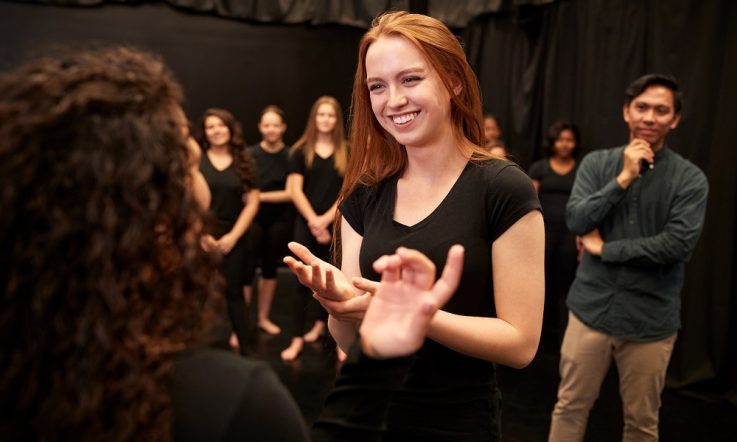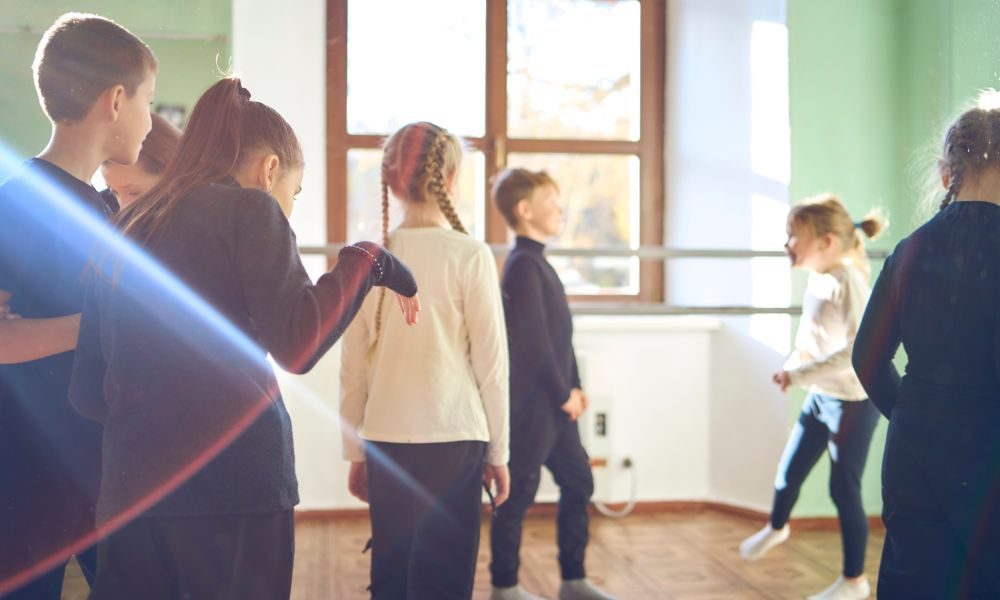
Drama has the ability to give students a voice in which to express themselves. It allows students from diverse backgrounds to explore different values and attitudes and is an educational tool which develops their capacity to understand perspectives which may be unlike their own (Backhouse, 2025).
Truganina P-9 College in Melbourne’s western suburbs serves approximately 2,000 students from Foundation to year 9 and has a diverse student population. Almost 3 years ago, as leader of the Arts team at the school, teacher Joseph Bough built the Performing Arts program. It now plays a key role in developing student confidence, sense of belonging and literacy skills.
‘It's had a really massive impact on our school,’ Bough tells Teacher. ‘And even since I've been here, the buy-in of staff and the happiness of the students; it's been a real noticeable impact.’
Participation as the core program principle
Bough shares that, when he first started teaching at the school, he began classes with a warmup activity requiring students to walk around the classroom and freeze in the same position he modelled. In the first lesson, only 4 students joined in, so he knew there was work to be done on getting them to feel safe participating.
‘So, if that means me at the front modelling a really strange freeze that’s obviously completely wrong … and making the children feel like the person in front of them can make mistakes as well. And it doesn’t just have to be by-the-book exact.
‘That started to create a safe space. And so, we went from, in my first couple of weeks, I had about 35% participation … by the end I was teaching almost 300 students per week, and there were only 4 students not participating.’
Over his years at the school, Bough has found success with simple lesson activities. For example, he starts every lesson in the same way – with a warmup activity that involves some sort of movement. With younger students, this might involve asking them to show what they might look like as a tree. As the students get older, he might ask them to show a facial expression of confusion, and older students might be fed a stimulus such as ‘I can’t believe I’ve just found…’.
‘Unless I did something like that at the start of a Drama session, I don’t think there’d be as much success, because it’s just getting that little element of competition; of “I want to be the best at this little loose movement”. And that’s, straight away, the buy-in,’ Bough says. ‘They know exactly what to expect every time they come in. It starts the same way.’
Another popular learning activity focused on younger students’ development of their imagination involves them sitting in a circle while the teacher finds a random object in the classroom.
‘So, say for example if I’ve got this pen – I would be looking at this pen; doing the classic drama game of “this isn’t a pen, this is my hairbrush”. And without saying a single word to anyone else, apart from that, I would then pass it onto the next child and they’re piecing it together and working out what I’m doing. And that builds that imagination.’
Developing literacy skills through drama activities
The school has also run a trial linking literacy with drama where Bough collaborated with a classroom teacher to support students with literacy skill development.
‘One student really couldn’t write neatly … and it was not really understandable what was going on. So, I took the class book that they were doing for literacy and what we did in the drama is we read a page, and then I closed the book. “Go and act it out. What is that character moving like?” … And just doing it step by step.’
Bough explains that the student was then able to do this same work in literacy with the classroom teacher. ‘That boy didn’t need to do a full sentence because he wasn’t at that level, but what he could do is he could show what he wanted to write … and so over time, that teacher was able to build the capacity of, “well, he’s able to show me this. I can match that to the word. So, we can now practise that one word and then get on to 2 words and then up”.
‘A lot of students can show you what they want to be perfect at. They can show you what they’re trying to do. They can communicate in different ways. … If you open a door, a different opportunity for them to display that, then it’s really empowering. And that student … they’re now in year 4 and they’re at level for writing.’
The work of the Performing Arts department at Truganina P-9 College, and other schools in regional Victoria, is profiled on the Drama Victoria website as part of its Art of Learning suite of resources.
References
Backhouse, L. (2025, April 2). All the world’s a stage – the power of drama in Global Citizenship Education. Teacher magazine. https://www.teachermagazine.com/au_en/articles/all-the-worlds-a-stage-the-power-of-drama-in-global-citizenship-education
As a teacher, how confident are you in using drama activities in your classroom?
Is there a Performing Arts teacher in your setting who could support you to integrate activities into your planning for 2027?
How could Drama support student engagement and participation in Performing Arts units and other areas of the curriculum?