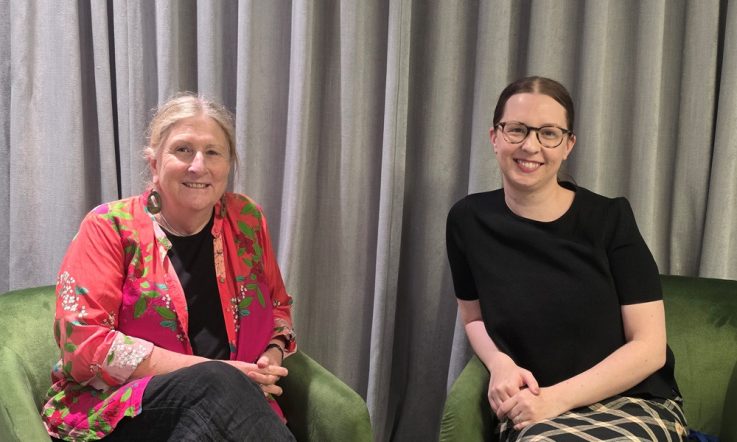
Our latest article in a series sharing evidence-based insights from experts at the Dyslexia-SPELD Foundation highlights some of the myths and misconceptions surrounding dyslexia. If you missed the first 2 instalments, you can catch up with our podcast episode and transcript discussing ways to support students of all ages to read successfully and an article on how reading difficulties can impact student wellbeing by clicking on the links.
Dyslexia is a specific, brain-based learning disorder. ‘It is characterised by difficulties with accurate and fluent word reading and by poor spelling and decoding abilities that do not progress as expected with the provision of well-intentioned and targeted intervention,’ (DSF, 2026).
While dyslexia is a lifelong condition, it can be managed through evidence-informed intervention programs that focus on the types of reading that a student finds challenging. Unfortunately, people's awareness of this sensible approach is often obscured by ‘myths’ about dyslexia and how it should be supported. Here are some of the most common.
Myth 1: People with dyslexia read and write backwards
Some people presume that if someone writes letters backwards (‘letter reversals’) then they have dyslexia. If a person is in the early stages of learning to read, this is a myth because it is a common mistake made by beginning readers (Bollig et al, 2026; DSF, 2021). However, if a person continues to reverse their letters long after their classmates have stopped, they may be ‘stuck’ at an earlier stage of learning to read. This can be confirmed using standardised reading tests that show which reading skills are falling below grade-expected levels.
Myth 2: People with dyslexia need a special font
Some people have tried to help people with dyslexia by inventing new fonts. One is called ‘Dyslexie’ which adjusts the thickness, slant, and length of certain parts of letters to make them easier to read (DSF, n.d.). Unfortunately, studies have found that the Dyslexie font does not make reading easier for children with or without dyslexia (e.g., Kuster et al., 2018). While wider spacing between letters and words may help somewhat (Marinus et al., 2016), intervention should target a learner's reading skills that are preventing them from reading words accurately at an appropriate pace.
Myth 3: Assistive technology is harmful for dyslexia
Technology specialist Jamie Martin has discussed 5 myths about assistive technology and dyslexia (Martin, 2022). One is that using assistive technology is cheating. Martin points out, ‘Students who struggle with mobility may need to use accommodations like wheelchairs or crutches to navigate school buildings. Students with vision or hearing loss may need access tools like braille or captioning in order to be successful in their classes. These students are not accused of cheating in school when they use their assistive technology tools. Yet, students with learning disabilities are often treated differently.’ He adds that this misperception is a dangerous one because wrongly questioning a student’s academic integrity can have a long-lasting impact.
Myth 4: Coloured glasses and overlays fix dyslexia
In the early 1980s, a Californian educational psychologist, Helen Irlen, suggested that dyslexia is caused by ‘scotopic sensitivity’ that can be treated using coloured glasses and overlays. Scotopic sensitivity is not a medical condition, and multiple systematic reviews have concluded that coloured glasses or overlaps have little or no impact on reading ability (e.g., Griffiths et al., 2016). While a person with suspected dyslexia should have their vision screened, ‘if no ocular or visual disorder is suspected, the child needs no further vision assessment or management (at least in the short-term) … [and] behavioural vision therapy, eye muscle exercises, or coloured filters and lenses are not recommended in the treatment of reading difficulties,’ (DSF, 2016).
Myth 5: People with dyslexia are very intelligent (or unintelligent)
The idea that people with dyslexia are unusually intelligent stems partly from anecdotes of highly successful people who have dyslexia, partly from a popular movement that claims dyslexia is a gift, and partly from studies that, for scientific reasons, exclude people with dyslexia who have lower IQ scores. In contrast, the myth that people with dyslexia are unusually unintelligent stems from the misperception that reading is a ‘natural’ skill that can be learned by anyone who applies themself. If they fail, they must be stupid. Both positions are refuted by systematic reviews of the evidence that show people with a wide range of IQ scores have dyslexia (Bollig et al., 2026; Swanson & Hsieh, 2009; Yang et al., 2022). Thus, intelligence should never be used to make decisions about whether a person should, or should not, pursue targeted intervention for the reading skills that are hindering their reading mastery.
Stay tuned: In the final article in this series, DSF share research findings on the benefits of spelling, reading and vocabulary instruction through word study.
References and further reading
Bollig, B., Coverdale, G., Bayliss, D., McArthur, G., & Badcock, N. A. (2026). What Parents, Teachers and Clinicians Know About the Features of Developmental Dyslexia and Its Intervention: A Scoping Review. Dyslexia, 32(1), e70017. https://doi.org/10.1002/dys.70017
DSF. (n.d.). Literacy Lowdown: Readable Fonts. https://dsf.net.au/families/telethon-family-support-hub
DSF. (2016, December 10). The Role of Vision in Reading. https://dsf.net.au/news/the-role-of-vision-in-reading-38d4db40
DSF. (2021, October 4). MYTH: People with dyslexia read and write backwards [Video]. https://www.facebook.com/dyslexiaspeld/videos/217704770342433/
DSF. (2021, October 5). MYTH: coloured glasses fix dyslexia [Video]. https://www.facebook.com/watch/?v=1850517648463836
DSF. (2026). What is dyslexia? https://dsf.net.au/learning-difficulties/dyslexia/what-is-dyslexia
Griffiths, P. G., Taylor, R. H., Henderson, L. M., & Barrett, B. T. (2016). The effect of coloured overlays and lenses on reading: a systematic review of the literature. Ophthalmic and Physiological Optics, 36(5), 519-544. https://doi.org/10.1111/opo.12316
Kuster, S. M., van Weerdenburg, M., Gompel, M., & Bosman, A. M. (2018). Dyslexie font does not benefit reading in children with or without dyslexia. Annals of dyslexia, 68(1), 25-42. https://doi.org/10.1007/s11881-017-0154-6
Marinus, E., Mostard, M., Segers, E., Schubert, T. M., Madelaine, A., & Wheldall, K. (2016). A Special Font for People with Dyslexia: Does it Work and, if so, why?. Dyslexia, 22(3), 233-244. https://doi.org/10.1002/dys.1527
Martin, J. (2022). Five Myths about Assistive Technology for Students with Dyslexia. https://dsf.net.au/CMSPages/GetFile.aspx?guid=f6abf5b7-819d-43f5-b5a2-6d5817d7c730
Swanson, H. L., & Hsieh, C. J. (2009). Reading disabilities in adults: A selective meta-analysis of the literature. Review of educational Research, 79(4), 1362-1390. https://doi.org/10.3102/0034654309350931
Yang, L., Li, C., Li, X., Zhai, M., An, Q., Zhang, Y., Zhao, J., & Weng, X. (2022). Prevalence of Developmental Dyslexia in Primary School Children: A Systematic Review and Meta-Analysis. Brain Sciences, 12(2), 240. https://doi.org/10.3390/brainsci12020240