Hello and thanks for tuning in to this podcast from Teacher Magazine, the resource for K-12 educators published by ACER, the Australian Council for Educational Research. I'm Dominique Beech.
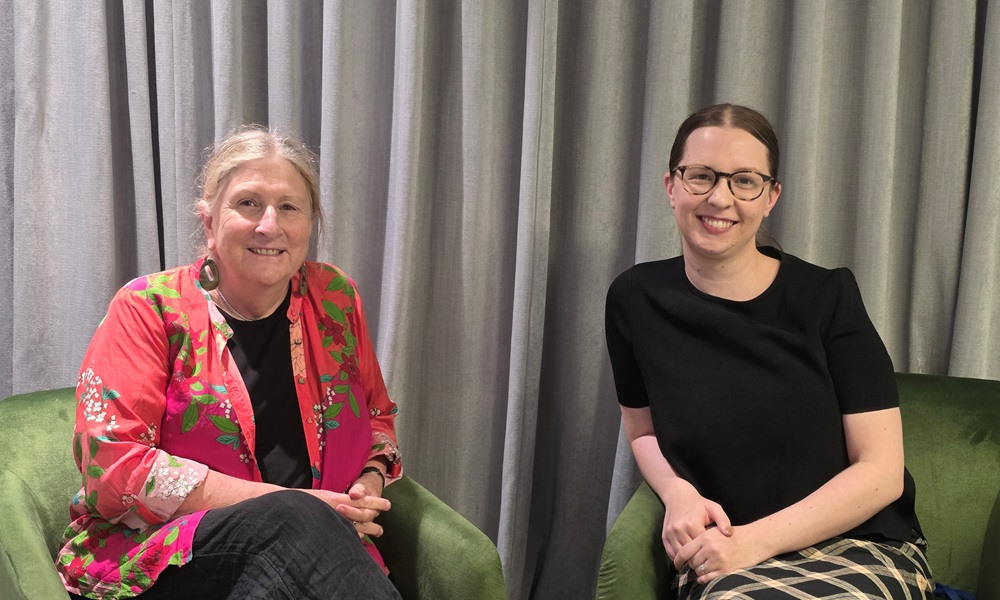
Today, we're delighted to welcome Mandy Nayton, Educational and Developmental Psychologist and Chief Executive Officer of the Dyslexia-SPELD Foundation. Our conversation is going to delve into all things phonics, word study, vocabulary skills, and more. Along the way, Mandy will share a range of practical examples, discuss how this work might look across K-12, and you might even learn a new word along the way, just like I did. Let's jump in.
Dominique Beech: Mandy Nayton, welcome to the Teacher podcast. Thanks for sitting down with us today. I'm really looking forward to our conversation. Firstly, though, I'd love to hear a little bit more about you. Can you tell me a little bit about your professional background, your current roles and what your work involves?
Mandy Nayton: Okay, well, thank you so much for having me on the podcast. I'm very excited about being part of this. It's very, I think, very important for teachers out there.
My background is I'm an educational and developmental psychologist and a primary school teacher. I think at the moment my role would best be described as a bit of everything, but I'm essentially the CEO of the Dyslexia-SPELD Foundation (or DSF) in Perth, and I'm also the CEO of SPELD Victoria in Melbourne. That means that I'm working with teams in both locations at different times, working on preventing literacy and numeracy failure wherever we can, but mainly I guess at the moment supporting schools to improve their Tier 1 education for particularly literacy and numeracy, supporting families who are struggling for various reasons, supporting teenagers, adults, and basically just doing whatever we can in terms of supporting those people who need additional help in their literacy and numeracy development so that we can see more young people reading successfully.
DB: And so, our conversation today is going to focus on discussing what comes after phonics instruction in the classroom. In other words – because we of course know that phonics instruction never really finishes, the work will never stop; as adults, you and I are both falling back on our phonics skills time and time again. So, in other words, how teachers can perhaps start to build on other skills with students. Before we do get there, though, it would be great to take a step back and actually hear from you about the importance of phonics instruction in the first place.
MN: Okay, so phonics is crucial. It is often described as essential but not sufficient. In other words, we need to have knowledge about our code in order to read, but reading is of course so much more than that. Phonics is a body of knowledge. It is not really a teaching method, although we've come to sort of talk about it in that way. But it's a body of knowledge that encompasses all of the letter-sound relationships that make up our code. English is an alphabetic system of writing, which means by definition that it is based on the sounds that we use when we speak. So, all words in every language are made up of discrete sounds, which are then kind of blended together – we don't actually hear the boundaries between those sounds – but they are a set of unique sounds to that language. Understanding and finding a way to code those sounds on the page in words is what makes it an alphabetic system of writing.
The difficulty for learners of English is that English is an incredibly complex code. It's what we refer to as an ‘opaque code’ – meaning that there are multiple ways of writing down the same sound. So, there might be 12 different ways of writing down the ‘e’ sound, but unfortunately, even within that set of 12, some of those ways of writing the sound down, the graphemes, might not always represent the ‘e’ sound. So, we might have an ‘ea’ that represents ‘ē’ in read, but then it represents ‘ĕ’ in head and it represents ‘ā’ in steak. So, there are so many different phoneme-grapheme relationships. It is essentially, as I say, this body of knowledge underpinning our written system that children need to learn in order to be successful readers.
DB: And so, we're likely talking about the early years context for a lot of work for our listeners out there, but it's certainly relevant to the broader primary school space. And you work with adults and teenagers – it's relevant to that age group as well, isn't it?
MN: It's absolutely relevant to anyone who is learning, well, to be fair, any alphabetic system of writing – you need to understand what the underpinning code is for that written language. And so, what we do see are students in upper primary and in secondary who are struggling to read accurately and fluently. And essentially that is what the code provides. It provides access into accurate and fluent reading so that we can look at a word on a page, we can lift it effortlessly from the page, and all of our attention and focus is on reading comprehension rather than decoding.
So, if we have a student in the upper primary years who is struggling with reading – and sometimes that is interpreted as a problem with reading comprehension – it may be that their underlying issue remains that they struggle to decode the words on the page. So yes, when we are supporting that student, we need to double check that they can read accurately and fluently, that they have acquired what we refer to as the alphabetic principle – meaning that they have developed their skills in phonic knowledge to automaticity, they're reading easily and effortlessly. Otherwise, it will appear that they have difficulties with reading comprehension when really their issue is poor phonic knowledge. So, our intervention for those students – whether they're in year 4, year 6, year 10 – starts with building that phonic knowledge as quickly and effortlessly as we can.
DB: And so, like we said at the top of the episode, there will be a point where teachers can start to shift focus to then build on other related skills, rather than focusing solely on phonics. I'd love to hear from you about what exactly this point looks like. When will teachers know when they're ready to begin to build on those other skills?
MN: When we think about how far we've come in our understanding and knowledge about reading and the associated kind of field of literacy, it has changed a lot in the last 2 or 3 decades in particular. There's been a real momentum to shift towards a more evidence-informed approach.
So, this has meant that vast amounts of research that has been conducted has sort of been collated, analysed, grouped into kind of areas. And we have now a very strong consensus of what high quality instruction in literacy looks like, and particularly when we're talking about the development of reading. And many people, very competent people who are working in kind of academics or education generally, have managed to sort of pull together, to synthesise that vast body of research and knowledge into really nice, tidy little frameworks that we can kind of look at to explore what we need to do in order to teach a child successfully to read. Those models, such as the Simple View of Reading or Scarborough's [Reading] Rope or the Cognitive Foundations Framework or Mark Seidenberg’s Four-Part Processing Model – there are multiple different frameworks – they all mention, as a really significant component of the framework, the importance of phonic knowledge.
But alongside that, there is an equally important, and to some extent even more important body of knowledge, because our reason for reading is not to demonstrate our prowess in decoding, it is to understand what we read. So, the other component of most of these frameworks is to build language comprehension. And that doesn't start when phonic knowledge is acquired, that starts from day one. That starts before children arrive in the door at school. The building of our capacity to understand what is said to us underpins our capacity to understand what we read.
So, it's not so much that we teach phonics and then we move on to something else. It's more that, alongside the teaching of phonics in those first few years of school, we are really emphasising the importance of vocabulary, of syntax, of understanding the knowledge about the world we live in, sort of pulling together these things, concepts of print and so on. This is really crucial for successful reading comprehension, and we're teaching it primarily in those early years orally.
We then shift, as students become proficient at reading and they've mastered the kind of phonic code, to shifting towards their capacity to not only understand what we say, but to understand what they're reading on the page. So, our shift moves to – around about year 3 – to really starting to build the capacity of students to engage with text, to access text, to love reading text, both fiction and non-fiction, at that point.
DB: There's lots of talk around morphology at the moment. So, I'd love to hear from you about where morphology fits into this picture of what we're talking about today.
MN: There's a very good reason for lots of chat about morphology. And I guess because what we have in English is a morphophonemic language. It is not a simple transparent code where we have ‘this sound equals, you know, that letter’ or ‘that letter is representing this sound’. It is built up of those phoneme-grapheme relationships, which are crucial, but alongside that it is also built up of morphemes – units of meaning.
So, when we think about a word like kicked, we know that that's made up of 2 morphemes. It's made up of the word ‘kick’ and it's made up of the -ed past tense, but that's not how we say the word. We say it as k, ɪ, k, t – 4 sounds. So, for a child starting to spell, they might think that's how I write it down, k-i-k-t. And that's a pretty good attempt, I would say. What they need to quite quickly come to terms with is the fact that we have morphemes, we have units of meaning.
And initially in the first few years of school, children are using those morphemes when they are speaking. They are talking about plurals. So, they might say, you know, there was one cat and this person's house but 3 cats in another. They understand the use of plurals. They understand the use of tense. So, they might talk about something that was kicked yesterday or they might talk about all of us kicking balls and so on. They might also talk about/use relative suffixes that tell us about comparison – so big, bigger, biggest, and there's lots of these morphemes that students/children are using in those first few years of school and even before they come to school. So, we need to be teaching those as part of our really well-developed, high-quality phonics program in those early years of school. And that's crucial. So, anyone looking at a phonics program and trying to decide what is it that I'm looking for, there's obviously a very carefully designed scope and sequence of those letter-sound relationships. But we also want to start introducing both multi-syllabic words and some of those really crucial suffixes that are referred to as inflectional suffixes or inflectional morphemes early.
So, we start at that point. But then, when I was talking about that sort of shift in around about year 3, we are then sort of moving into a world where we have a lot of multi-syllabic words, and many of these are derived from Latin roots and Greek combining forms. And in fact, by the time students are in middle and upper primary, well over 50% of the words they are using come from either Latin or Greek. It is a hugely influential part of our language. And if they're studying any maths or sciences or technology, then about 80% of the content words they encounter in those subjects are going to be Greek in origin. So, all of these words are made up of morphemes. They have very regular spelling patterns, but the morphemes in them are typically – if it's Latin, Latin roots, which are really key, and then prefixes and suffixes in some combination. Greek combining forms are more where we take 2 Greek morphemes and combine them into a word such as geology (‘geo’ plus ‘logy’).
So, morphemes are critical because, (A) they tell us a lot about a word. We might think of a word like ultracrepidarian, which is a complicated word in some ways. It essentially means somebody who speaks kind of confidently and sometimes quite loudly about a topic that they know very little. So, somebody who is an ultracrepidarian is very much somebody who's speaking well outside their knowledge base but doing it in such a way that they kind of present themselves as being very knowledgeable. When we think about that word, we've got ‘ultra’, which means beyond. We've got ‘crepis’ as the kind of foundation Greek that moved into Latin. We won't go down that path, but anyway, crepis, which actually means sandal. It's a kind of a Greek sort of sandal, but that's where it comes from. And then the ‘arian’, which is the final morpheme in our word, which means kind of one who does something or one who is engaged in a particular area, which is similar to the ‘or’ in doctor, for example. But what we find here is that those 3 morphemes together come from, in terms of their etymology, a word that was used to mean literally ‘shoemaker stick to your shoes’. So, the emphasis being that this person who knows a lot about shoes maybe doesn't know a lot about a whole lot of other topics that they're trying to speak very persuasively about. And I guess we've all met people like that. But the morphemes in that word are what build it. It's what kind of tells us about that word.
But I'm just going to say a tiny bit more about this because I think it's critically important because of the huge influence that these morphemes have on words. These are derivations – so they're not the inflectional morphemes I was talking about earlier, they're derivations of words. So, we start with one Latin root, for example, like tract, meaning to pull, and then we can build hundreds of words around that. It's very powerful and students find it really interesting and quite, as I say, empowering.
DB: Well, I’ve learned a new word in this conversation.
MN: Can you remember what it was?
DB: Ultracrepidarian?
MN: Beautifully said.
DB: Oh, thank you. I'm not going to forget that word now because I understand where it comes from and its origin and what it means. That brings me perfectly to some other skills that I wanted to hear you speak about – word study and vocabulary. Can you tell me about those?
MN: Yes, absolutely. And again, I guess this is where we're sort of pushing our emphasis in the middle and upper primary years. From around about year 4, we know that the greatest factor influencing variance in reading comprehension is vocabulary knowledge. And that coupled with topic specific knowledge is absolutely key to successful reading comprehension. In the very early years of schooling, when children are just starting to develop their phonic knowledge, then 80% of the variance at that point is actually their phonic knowledge. But we see a shift – again around that middle primary, as we're hoping and anticipating that students will have developed fluent reading, fluent and accurate reading, or at least they're getting very close to it. And then we're seeing this huge expansion of vocabulary.
And to expand our vocabularies is essential. By the time a student is in year 12 doing ATAR, they really need to have developed reading comprehension – in terms of their capacity to read the words on the page – of at least 50 to 60,000 words. It's a huge body of vocabulary that's needed. In order to acquire that huge vocabulary, they need to be learning probably 3,000 or more words a year – which equates to 6 or 7 words a day, 7 days a week, 365 days of the year. That is a lot of vocabulary that we're expecting students to acquire and it's not possible for any teacher to teach that much vocabulary every single day.
So, we need to provide ways of teaching vocabulary that is very productive. We want to give students access to lots of words. We want to teach them the vocabulary that is encased and embodied in the text that they are reading, because that's essential for reading comprehension. But alongside that, I think we need to give them access to the words that they are likely to encounter day-in, day-out in written text (both non-fiction and fiction). To do that, I think we need to take a fairly systematic approach to improving vocabulary. And part of that is looking at, what are the words that are most frequently encountered? What are the morphemes that are going to come up over and over again? So, teaching that body of knowledge is very useful.
The other thing I think we need to remember with vocabulary is that it's not just about knowing the definition of a word. We need to understand it, as you just referred to the fact that you probably will remember that word because you now understand a lot more layers of that word. And we do know that in order to develop what we call deep lexical quality – that is, knowing a word deeply – we need to have access to many of the layers of language. So, starting with, how do we say that word? So, if I'm talking about ultracrepidarian again, and then it would be saying, how do I say that out loud? Have I got in my long-term memory a representation – what's referred to as a phonological representation – of how to say that word? Can I actually hear that word in my head in order to retrieve it and say it out loud? So that phonological representation is really important. Very young children often have a slightly messy phonological representation when they're first starting to speak. They might say ‘basghetti’ instead of spaghetti. We gradually improve.
So, we need to have that phonological representation. We then need to know how to write that word down. And again, we were talking about people's names earlier, and realistically, teachers are faced with many, many variations of the way in which children's names are written. They have to hear how that is said, and sometimes they have to remember that for this particular child, they spell the name Rachel this way, for this child, they're going to spell it that way, and so on. So, we need an orthographic representation of the word. We need to know how to write it.
We need to know what the word means. So, we do need and children need to be given a student-friendly definition, and they need to learn that definition. They need to understand what that word means. But they don't just understand what it means in one definition. They look at that definition, they test that definition against multiple different contexts and identify where it does work and where, potentially, it doesn't work. We also find that students who know the morphemes inside that word are going to remember the word more easily, they are going to understand what the word means more efficiently, and they're also going to use that word more effectively, both in their writing and in their speech. So knowing that kind of morphological structure of the word is very, very powerful.
And then, as we talked about with ultracrepidarian, having a history of the word, knowing where it's come from, how it's changed over time, but fundamentally what the story behind that word is and how that word then connects to other words that we already have in our long-term memory. So, building strong lexical quality is really important for vocabulary and word study. And I would say that students of all ages, from young children through to adults, love learning about the stories behind words and they are more likely to remember the word, spell it correctly and use it effectively.
DB: Mandy, the last thing that I wanted to get your perspective on for this conversation was the fact that it's probably really important for us to mention that yes, while a lot of this work might be happening in the middle years in primary, like you'd mentioned throughout this episode, you've also mentioned that that's not the case for all students. And there's very likely a lot of listeners out there that, you know, may be reflecting that there is a point at which it's unrealistic for an older student to be able to catch up on all of these skills just in the school setting. Like you mentioned, vocabulary, they can't be expected to learn all 60,000 words by the time they get to year 12 just from their teacher. So, I'm curious then if we're thinking about this situation, I imagine that teachers then will start to prioritise what is important or most important for their student. How would you then shift your work with that student to focus on their specific circumstances?
MN: Okay, and that's such a good question because I think that it is front and centre for so many upper primary, secondary teachers who are working with students who have big gaps in their knowledge, who still struggle to read accurately and fluently, and who are now trying to embrace and work in multiple subject areas. So, it's challenging.
What I would say is that if we go back to those frameworks that I talked about earlier that really do try to kind of capture what the capacities are for us to read successfully, we are not going to ever get away from the fact that we need to read accurately and fluently. If we're actually going to read the words on the page and lift them from the page, then having an understanding of the code underpinning our orthography is critical; it's crucial. So, we need to still teach that. We need to find a way of teaching students as quickly as possible the phoneme-grapheme relationships that underpin English. We need to do that obviously in an age-appropriate way, using age-appropriate materials that are not covered in fluffy kittens or anything of that kind. And there are lots of great programs out there that do this. So, we mustn't forget that as being a crucial part.
But at the same time, we cannot delay working with students on the subjects that they are working with right now. We can't wait until they've kind of caught up in reading. We have to give them access to those subjects, and we have to teach some key vocabulary with almost every lesson that we take. So if we're teaching students about Romeo and Juliet in year 9, then at that point we might, over here have a Tier 3 intervention program where we're really trying very hard to teach that reading accuracy and fluency, but at the same time we are providing access to the text for those students who are struggling to read it. And this might include listening to the text, it might include other key ways of supporting them (using a reading pen and so on, those kinds of things). But that shouldn't be all we do, because even if you're using a reading pen and other kinds of technology and so on, there will be lots of words in that text that that student can't understand. And this will be the same in science, it will be the same in maths, it will be the same in art. All of these things that we're doing have at their heart a whole body of vocabulary that students need to have access to. So having really clear glossaries of terms for those students, actually pre-teaching vocabulary that is going to be crucial and making sure that students have access to that. Pre-teaching some topic-specific knowledge is also key.
We're sort of working at the moment on an idea around building what we call toolkits, which both encompass that really crucial phonic knowledge, but also create essentially like a template for identifying what it is we're going to need to teach year 9 electricity. And in that there are kind of some key ideas within that. Lots of people are doing some work in this space at the moment and it has real potential to make a massive difference for the older student.
I think what's key is that we want students to continue to have access to the same curriculum areas as their peers, and we want them to be successful in those areas. So, it's not enough just to say we want to provide access, we absolutely want to provide access and to ensure that all students are successful, having been given that. And nothing breeds I guess, motivation like success. So, the 2 things become a bit of a kind of cycle – we ensure that students are being successful, they're more motivated to continue in the work that we're doing.
So, I think capturing those 2 areas in the framework, there is no reading comprehension program out there I do not believe that actually just does the whole thing. What we need to do is be very targeted in the strategies we use to address the likelihood that a student is going to have reading comprehension difficulties in a particular topic with a particular novel, poem (whatever it happens to be that we're focused on at the time) and really address that often in advance of doing the work and also during the period of time that we're working with the students.
And what we'll find with that is that this is going to be a benefit for all students. We have a lot of students out there who are struggling with writing. We have a lot of students out there who continue to struggle with spelling. And we actually have more students than we like to believe who are struggling with reading. So actually, getting this right for those students in upper primary and secondary is really, I think, incredibly important.
DB: Well, Mandy, thank you so much for joining us today on the podcast. It was a great conversation. I learned A lot. Is there anything else that you wanted to mention just before we wrap up?
MN: Well, thank you, firstly, for the opportunity to have this conversation. It was focusing on all the things that I'm utterly passionate about. So, thank you. I will take the opportunity to just mention a little body of work that we have been engaged in over the last 4 years. And when I say little body, it's actually been a massive body of work. And that is the development of a very structured, sequential, but highly engaging morphology, etymology program for students from year 3 and above, which is actually having a huge impact. So, you know, if anyone wants to find out about that, then please get in touch in some way and I can tell you more about word origins.
DB: Wonderful. We'll definitely leave a link to your website, Mandy, for the Dyslexia-SPELD Foundation for all of our readers in the transcript of this podcast, which will be live on our website, teachermagazine.com. So, listeners will be able to find their way to Mandy and all of the work at the foundation that way. We'll keep an eye out for all of your future endeavours and those toolkits as well. You're certainly a very busy woman. Thank you again for taking the time.
MN: My absolute pleasure. Thank you.
That's all for this episode. Thanks for listening. Be sure to visit our website, teachermagazine.com, to find out more about the work of the Dyslexia-SPELD Foundation. If you enjoyed this episode, please take a quick moment to follow our show on your podcast app, if you haven't already, and leave us a review. Both of those things help more people like you to find our podcast, and they're a big help to our team. We'll be back with a brand new episode very soon.
Related links
Mandy Nayton says, ‘we need to find a way of teaching students as quickly as possible the phoneme-grapheme relationships that underpin English. We need to do that obviously in an age-appropriate way, using age-appropriate materials’. For older students needing support in this area, do you have access to age-appropriate materials?
Are you supporting students to develop deep lexical quality for new vocabulary? Does etymology form a part of this work? Do you share what works well for you with colleagues?