What happens when a school turns an overlooked patch of wetland into a living, breathing classroom? At All Saints’ College in Perth, Western Australia, the answer is an outdoor ‘water classroom’ designed to bring curriculum, culture and wellbeing together in one place.
Launched late last year, the new Ecology Precinct offers students from kindergarten to year 12 opportunities to learn in, with and from nature, while honouring the ecological and cultural significance of the site.
The College’s Outdoor Learning teacher, Katrina Goods, says that right behind the campus is a naturally occurring waterway which flows onto the school grounds. The team saw the potential of this underutilised space.
‘It was just a really natural opportunity to utilise the space on campus to really turn it into a classroom and an educational space for our students,’ Goods says.
All Saints’ College is a K-12, coeducational school that focuses on whole child development, providing students with lots of opportunities outside of the classroom in the real world.
‘We run a very comprehensive junior school outdoor program that includes camps and day trips off-campus, as well as the on-campus outdoor learning program,’ Goods explains.
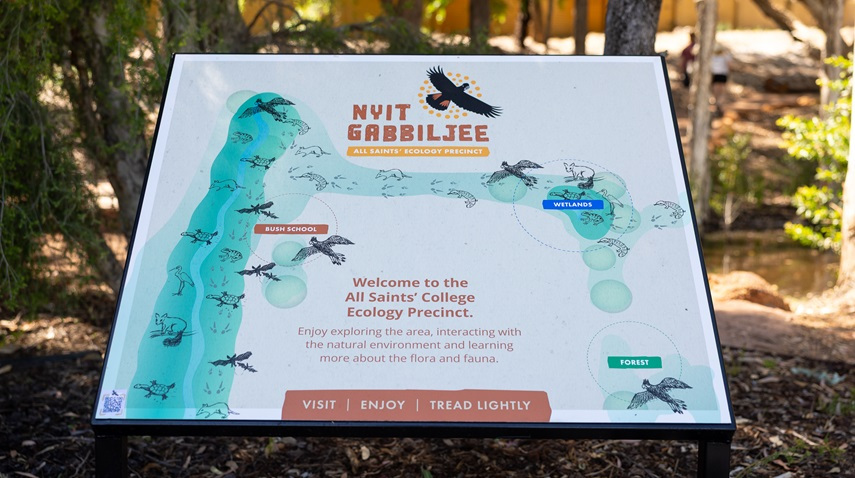
‘We have 3 on-campus outdoor learning classrooms. We have little Bush School, which is a little space for kindy students to start their on-campus outdoor learning program.’
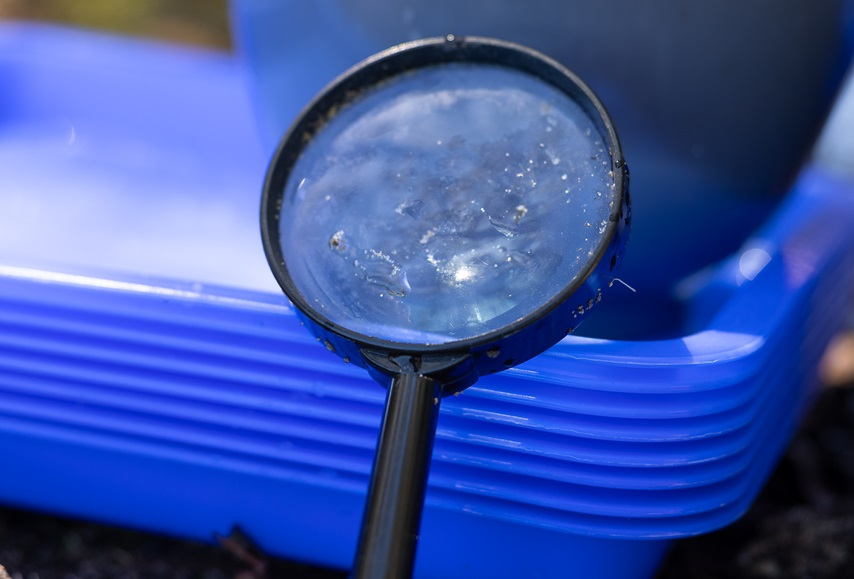
From little Bush School, students step into the bigger Bush School in around year 1, where they learn botanical literacy and tool use, use mud kitchens, and play with the natural environment. From there, students start using the new water classroom.
The learning environment
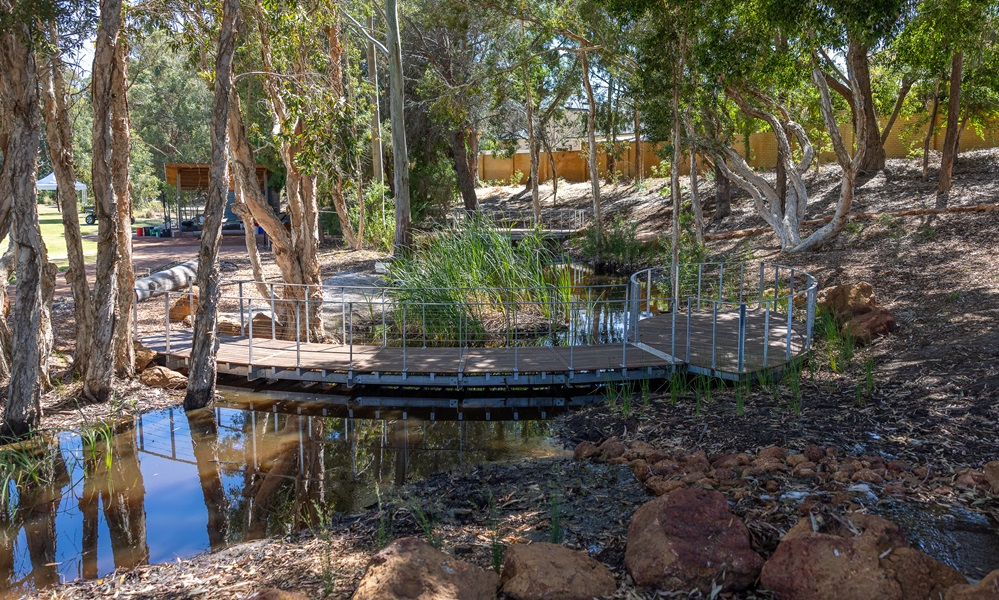
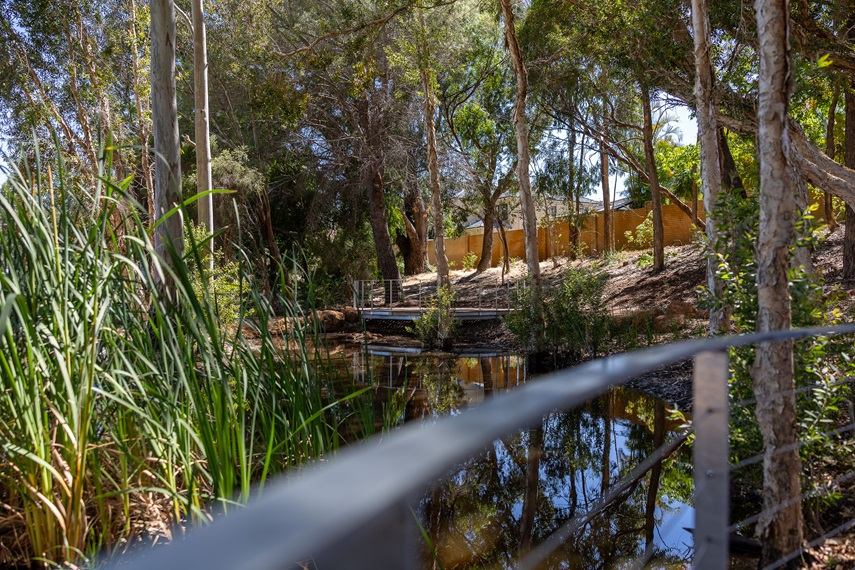
Designed by PLAN E Landscape Architects, winding walkways allow students to observe the native ecosystems, without disturbing flora and fauna, and a central shelter provides an all-weather gathering space.
‘We have a shelter with a yarning circle, and that's where we start our sessions,’ Goods explains.
‘So, there's always a minute of quiet, some mindfulness and some breathing and that's really starting to help the students transition from in the classroom to being in nature and starting to use that observation. So it's about being quiet and listening in the yarning circle as well as the Acknowledgement of Country.’
Close to the water, students are exposed to multiple sensory opportunities with rocks – including large river rocks and then crushed red rocks – as well as white beach sand which offers another texture for them to explore.
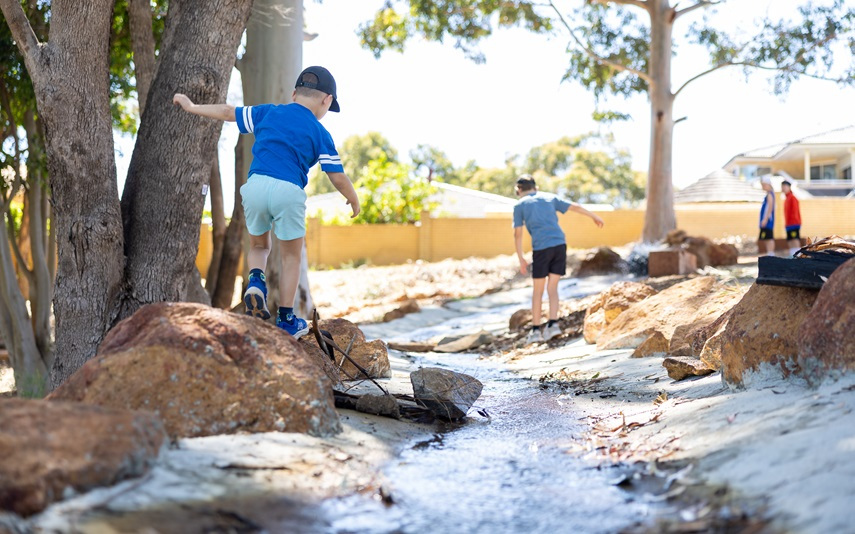
The water classroom enhances an existing flowing creek, providing walkways and viewing platforms.
‘There are 2 viewing decks so students can get over the water and lean down… the flowing water just allows for such a natural play opportunity for the students, as well as the sensory input from the sound of the moving water,’ Goods adds.
Students are encouraged to engage with the space by taking their shoes off, getting their feet wet and standing in the creek. ‘That's all part of what it was built for and the educational opportunities of the space,’ Goods explains.
The cultural and ecological significance of the site
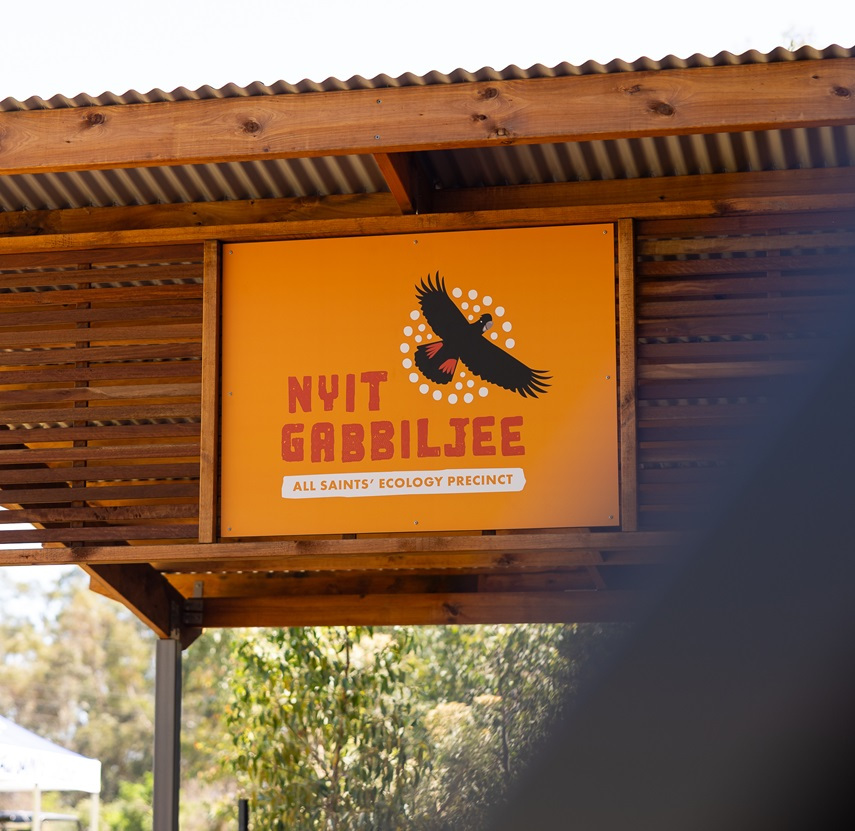
The Ecological Precinct is called Nyit Gabbiljee (meaning ‘Little Bull Creek’ in Noongar) to acknowledge the naturally occurring creek behind the school which has always been a very important part of Noongar culture.
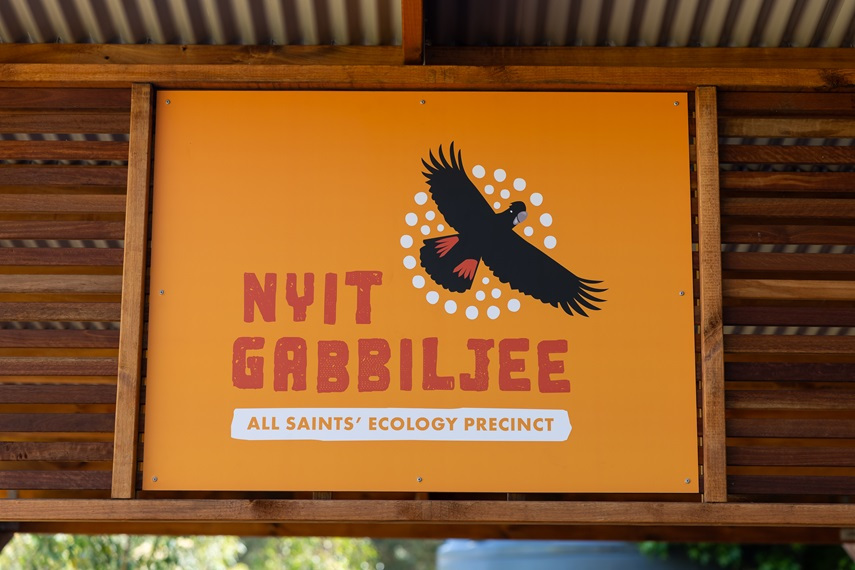
‘There are a lot of significant stories from around there. Currently, we work that cultural knowledge into our sessions and acknowledge the Traditional Owners and the stories from around that space and the ecological benefits of it,’ Goods says.
Native plantings enhance the flora of the area, attracting many species of birds, insects and other wildlife.
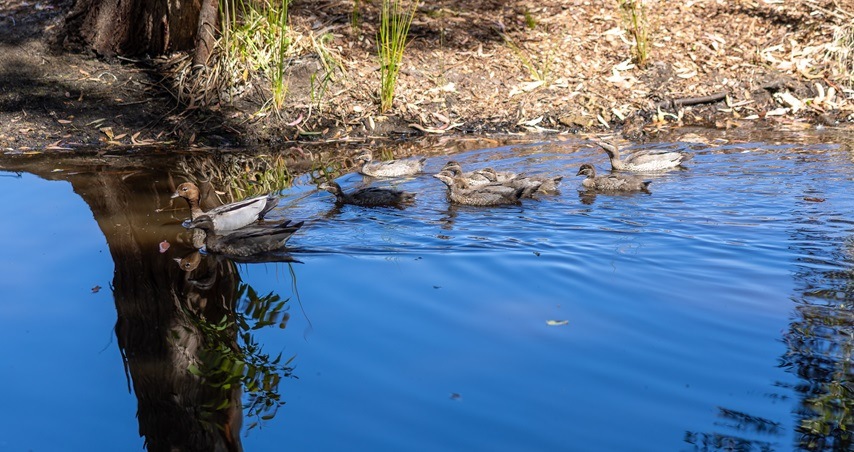
‘With that naturally occurring creek behind our campus, we have frogs coming into our bush school space, and they will eventually move down to the water classroom. We've had ducklings on campus in the water classroom this year that have grown up in front of the students. The red-tailed cockatoos are always a highlight – they’re such big, noisy, beautiful birds. They really are a privilege to see in our space.’
Student mental health and wellbeing
Goods says that when she takes students into nature, it provides them with the opportunity to do things they wouldn’t be able to do in traditional classrooms. There are so many benefits – from a personal development, building relationships, and pastoral care perspective.
‘In a natural environment, we often see students playing with different kids to what they play with inside of their classrooms. The imagination is so strong when they step out of the classroom walls,’ Goods shares.
‘Obviously, there's a lot of technology in a lot of students’ lives, so to get them away from the technology and into nature, we are actually fostering that creativity and that critical thinking. A really big part of our program is focusing on observation and slowing down, which only strengthens their neural pathways.’
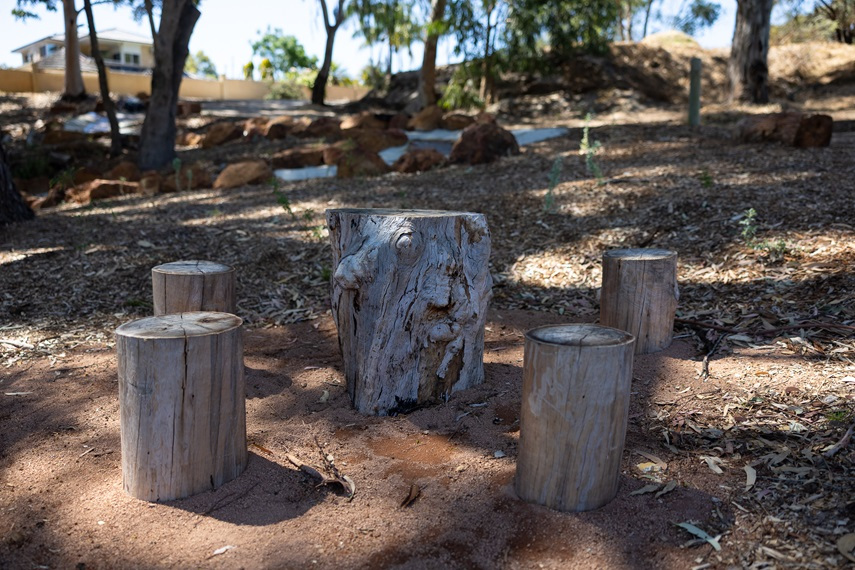
The feedback on the water classroom from parents and students alike has been overwhelmingly positive, with many acknowledging that students are gaining so much that they simply couldn’t behind a desk. Goods says that she’s also noticed a positive change in the students who visit the space.
‘When you walk into a space like that with anyone, you just feel people naturally relax, engage, calm down and be,’ she says.
What opportunities exist within your school grounds (or nearby community spaces) to create learning experiences that connect students with nature? Are there underused areas that could become learning spaces? What small changes could make these spaces more engaging?