Hello and welcome to this podcast from Teacher magazine, the resource for K-12 educators published by ACER, the Australian Council for Educational Research. I’m Rebecca Vukovic.
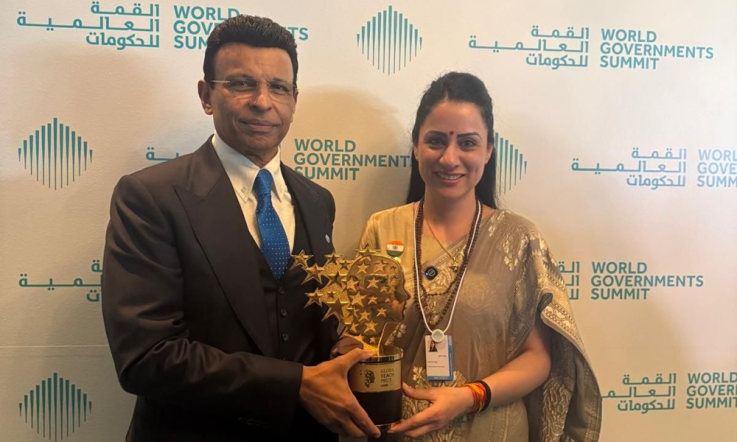
The winner of the 2026 Global Teacher Prize has just been announced. Rouble Nagi from India has been named winner and has taken home the US $1 million in prize money. Rouble was recognised for her work in transforming neglected walls in her community into hundreds of vibrant, open-air learning centres. The GEMS Education Global Teacher Prize is the largest of its kind and is a Varkey Foundation initiative organised in collaboration with UNESCO. It’s now in its 10th year and aims to shine a spotlight on the positive impact teachers make on society and recognise the exceptional educators who have made an outstanding contribution to the profession.
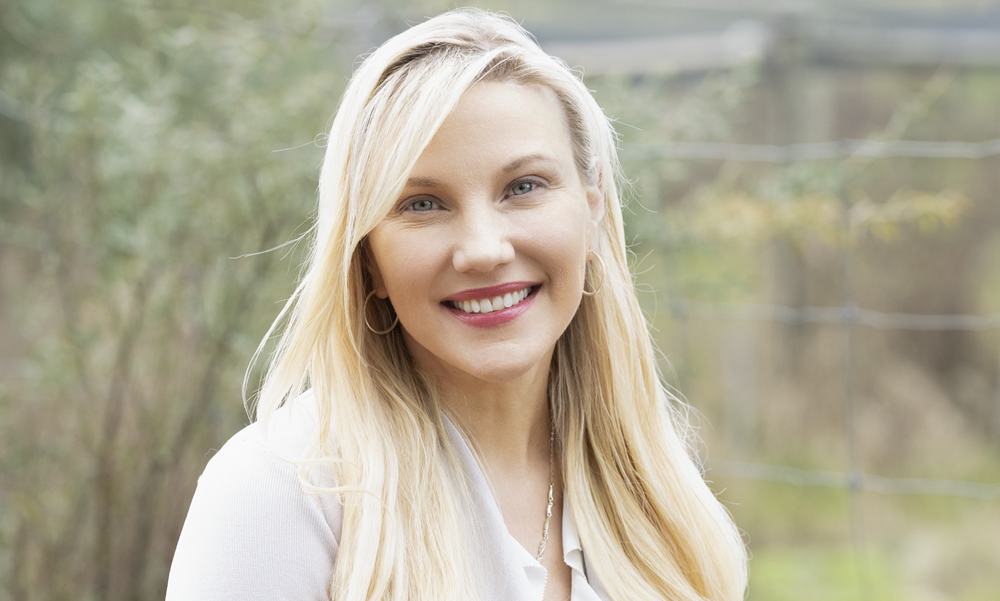
One Australian teacher was a top 10 finalist this year – Colleen O’Rourke, Digital Technologies Educator from the Hills Christian Community School in Adelaide, South Australia. She’s been recognised for developing the Nature-Nurture-Network curriculum and for her work in supporting neurodivergent learners. Dominique Russell sat down with Colleen ahead of the announcement to hear all about this work and what it means to her to be recognised in the top 10 this year. Here’s their conversation.
Dominique Russell: Colleen, thanks for joining us on the Teacher podcast. It's so exciting to speak to you so close to the announcement of who will be named winner of the 2026 Global Teacher Prize. Congratulations on making it to the top 10 for the prize. It's just incredible news. We're so happy for you. What does the recognition mean to you personally, and also to your school community?
Colleen O’Rourke: Oh, look, it's just been incredibly humbling. It really feels like the recognition isn't just for me, but it's for our whole school community, all the learners and the educators and the leaders. This work that has happened here at Hills, it's always been deeply collective. So, you know, I see it as not only a huge honour, but also a huge responsibility to share the work that we've developed on the global stage, which is just crazy.
DR: And so, tell me a little bit about the context then at the Hills Christian Community School.
CO: Yeah, so we're a faith-centred foundation. We are connected to nature and wellbeing. We've got a really unique school here at Hills. We've got 9 acres of nature space, the Onkaparinga Valley River running through, and we're an ELC to year 12 school in a regional school in the Adelaide Hills, and we have approximately about 640 students in total, but our values really are around service and care and community.
DR: And so, tell me about your role as well as Digital Technology Specialist at the school. I'd love to also hear why this subject area is of particular interest to you.
CO: So, I teach Digital Technologies as a specialist lesson from reception right through to year 10 – so, 5-year-olds to 15-year-olds. I’m also the leader of digital innovation here at Hills, supporting educators. So, my role is not just coding or devices but helping students to understand systems and ethics and creativity and impact with digital tools.
And a long time ago, when I was a little girl in a country school, I had an amazing teacher named Mr Burns. And he brought in our very first computer in the school. It was the only computer in the school. And he showed me how to animate a ball going across the screen. And I just thought to myself, ‘wow, this is incredible’. And it was from that point on, having him as my teacher for many years; he believed in me and saw my strengths. And I knew I always wanted to be a teacher. And my passion for technology started with him.
So that was the beginning phases. And then my boss asked me if I wanted to teach it as a specialist lesson. And I just absolutely love being able to get on the ground with kids and play with robots and show them how they can make authentic connections between digital systems and natural systems – which is the core of our program.
DR: Wonderful. It's always so lovely to hear about the teachers that have an impact on other educators today and the reasons why people enter the profession. How long have you been an educator for yourself?
CO: I've been teaching for over 2 decades now. Yeah, I wanted to be able to help students just like my teacher did to be feel capable and be seen. So, teaching gave me a way to redesign learning so that more students could really thrive. And I'm still driven by that same desire today in my teaching and I don't think I could see myself doing anything else.
DR: And so, you've been recognised with being named a finalist for this prize, particularly for designing digital learning that welcomes neurodivergent learners. And I really want to hear a little bit more about that work specifically, because in our latest survey of our Teacher readers and listeners, we asked our audience specifically what they would like more support with and information on during the 2026 school year, and inclusive education was something that came up really strongly. So, I'm sure they'll be really interested in hearing about the details of this work of yours. So, can you tell me a little bit about what you've done in this area?
CO: Yeah, 100%. So, inclusion is not just an add-on for me. It's a starting point. I aim to design learning that assumes diversity rather than reacting to it. With my own family experience with neurodivergence, it's deeply shaped my practice as a whole. Primarily, what we use is universal design for learning, a lot of scaffolded choice, sensory aware environments. So, we have a 360 immersive room, we have an augmented reality sandbox, and kids are connecting to nature. But everything's very strength-based, including in our assessment design as well.
So, what I've found in designing this curriculum is that technology allows students multiple ways to show understanding, and it always has, without being limited by handwriting or timing or social pressure. But when learning is designed well, it supports all the students, not just those with a diagnosis. And when I started to redesign the Digital Tech curriculum to connect back to nature, there's a balance there. There's a bridge that's being built between 2 dichotomous worlds. And we found organically that reconnecting students with nature has been one of the most powerful regulation tools. It certainly is for me as well. And it's just really special to see how our students thrive under the learning of connecting digital systems with natural systems.
DR: That leads us in perfectly to hearing a little bit more in depth about the Nature-Nurture-Network curriculum. I'm sure that anyone who's read a little bit about you, knowing that you're a top 10 finalist, will have read a little bit about that. So, I'm sure they're desperate for more details. Can you tell me about it?
CO: Yeah, so being in the unique school that we're in, with 9 acres of nature space, I thought to myself, there must be a way that we can collide the 2 worlds as dichotomous as they are. And I started redesigning our Digital Technologies curriculum to make authentic connections back to nature.
When I say authentic, I mean if we're looking at the inputs and outputs of a digital system, which is a part of the Digital Tech program, we look at the inputs and outputs of a plant's life cycle. When we're learning about AI, we cross compare with swarm systems in nature. And the whole curriculum has been redesigned to give kids a deep appreciation for nature as the original intelligence. So, they're still building their digital literacy skills, but also coming to appreciate the science in nature. And this curriculum can be taught in a concrete jungle, because it's not all about having a special nature space. It's able to be taught anywhere.
And then from there, my incredible boss gave me an old farmhouse to do up as an innovation centre. And so then I researched the tools that would support this curriculum. And we tried to do it at a low cost – so, high output, low cost, 360 immersive rooms, augmented reality sandboxes, but again on a budget.
And that gained a lot of interest from schools locally and then nationally, because I think what was seen in there, we've got such a digital dependence problem at the moment and what this curriculum does is it creates that balance. Kids are still building those skills that they need, but they're also reconnecting to nature.
And the thing that's mostly at my heart is if you want kids developing digital sustainable solutions, they need to care about nature first. And big tech companies have always looked to nature to optimise, so why wouldn't we be teaching our youngest learners to do the same? And that's pretty much the curriculum in a nutshell.
DR: And that's not all that you've been recognised for. Your work does not stop there. I'd also love to speak about how you're sharing your knowledge with other teachers, because that's something that was pointed out as well by the Global Teacher Prize organisers. So, can you tell me about what you're doing in that space and why that's such an important part of the work that you do?
CO: Yeah, 100%. So, a few years ago, I was given the opportunity to give a 2-minute rapid showcase and share my wild ideas of rebuilding this program for our school. And I shared for 2 minutes, and in that room were a bunch of leaders in the digital tech space. And it was crazy, the interest it got. And suddenly I'm presenting here and then presenting there. And then we got the interest of universities who started partnering with us in terms of research for creativity and engagement. So statewide it began, and then we had a ton of schools come out to visit.
Beyond that, with the national award, it gained national attention, and I was able to share more broadly there. And from there, there have been global opportunities in the AI space, which is another passion of mine. Connecting with other thought leaders in the AI space, I've been able to share the work we're doing there as well.
Also, we've done cross-cultural VR tours, where we've connected kids through student-designed VR tours. So, one of our first projects was to create a river restoration VR tour, looking at the work we're doing in the Onkaparinga Valley River that runs through our school grounds. So, the students were able to share the progress of that and design it in a virtual reality tour. And from there we started creating pen pal exchanges. So, the first school we did that with was Nyangatjatjara College in the Northern Territory. They've got Uluru in their backyard, we've got the river in ours, and the students were able to step into each other's worlds and share what learning ‘me, my place, my culture’ is like in their environments.
From there, we've started to branch out to schools in New Zealand and we're about to launch with schools in the US and Spain and even a school in the Amazon. So, we're trying to build global citizens, but it's kind of like pen pals when you were little. We got so excited to get a pen pal letter from our friend. But this is that at a whole new level where you're to actually step into their environments in 360. And student-designed tours are able to tell a story. So, we use a lot of XR technologies, which is your augmented reality and virtual reality, to amplify the curriculum.
DR: Now, finally, Colleen, we're speaking ahead of the announcement in the coming weeks, of course. Indulge me for a moment and let's imagine that you are named winner. I would love to hear about how you would spend the $1 million in prize money. I've read that you might be looking at distributing the Nature-Nurture-Network curriculum free to other schools – which, now that we've had our conversation, I can absolutely see why that would be a priority considering all the interest you've had.
CO: Yeah, absolutely. So, I mean, look, if that were to happen, it would be incredible, and my plans have always been half to do exactly what you talked about, to bring this program to more schools, to be able to share it globally. The other half would actually go back to my school, and the reason I say that it that this is a deeply collective effort and I've had a school that has believed in innovation, a school that has seen creativity and taken risks and they've let me share my knowledge.
And I love that so much, to be working in a school where it's not coveted as ‘our intellectual property’; share with others. And they've let me do that so openly and supported me so much in this space that I want to give back because I know that that good work would keep happening as well for us to be able to further develop and share. So, that's where the money would go. My boss still doesn't believe that, but that's what I intend to do if that were to be the case.
… The only other thing I'd like to add is it's incredible when you have leadership believe in ideas of teachers and support teachers and give them opportunities and be risk takers to let teachers grow and spread their wings, because you never know what learning design can happen with that, with empathy and courage and creativity. I just think incredible things are possible.
For me, the prize, it's never about personal gain. It's always been about impact, and this just gives us an opportunity to take that reach even further.
DR: What a great note to end on. Thank you again, Colleen, for taking the time to chat with Teacher and to share more about the awesome work that you're doing at the Hills Christian Community School. It's been wonderful to chat with you and all the best. And congratulations again for being named a top 10 finalist. What an achievement.
CO: Thank you so much. Beautiful. And thanks for your time today.
That’s all for this episode. Thanks for listening. If you enjoyed the episode, please take a quick moment to hit follow on your podcast app (if you haven’t already) and leave us a review. Both of those things help more people like you to find our podcast and they’re a big help to our team. We’ll be back with a new episode very soon!