St Theresa’s Primary School Albion in Melbourne’s west is strengthening science learning through a knowledge-rich curriculum focused on Australia’s Great Southern Reef and local freshwater environments.
Building on partnerships with Deakin University and a range of environmental specialists, Literacy Leader Jackie O'Connor-Croydon co-designed a P-6 program that integrates field experiences, expert-led learning and sequenced content, to deepen students’ scientific understanding. She also carefully selected age-appropriate literature to support this learning.
‘It is an incredibly interesting marine environment to study. Since it takes up 8000 kilometres of our coastline, I think it should be studied in schools across Australia,’ O'Connor-Croydon tells Teacher.
Historically the school has had a strong focus on marine and freshwater biology and sustainability, as well as caring for their local environment across multiple year levels. This has been led by our Community Partnerships Leader Greg Woolford supported by the school leadership team, including Principal Rob Macklin.
‘In late 2023 Greg became aware of a funded program offered by Deakin University that introduced schools to their pilot program that had been written by Catia Freitas and supported by Dr Prue Francis, the co-author of the children’s book The Great Southern Reef,’ O'Connor-Croydon explains.
Freitas, an Associate Teaching Fellow at Deakin University, first began visiting the school to work with year 3/4 students in Term 4 of 2023. ‘One of the first activities Catia had the teachers and the students do, was draw an image of what we believed was under the water at our local beach. Students drew lots of turtles, Nemo fish and sharks. The contrast in their image after their learning was incredible. They drew intricate kelp forests and creatures endemic to the Great Southern Reef,’ O'Connor-Croydon says. ‘That before and after picture showed me how much impact our teaching had in a relatively short period of time.’
In 2024, they expanded the program to complement some of the work the grade 5/6 students were already doing in their marine biology unit.
‘I altered the scope to focus specifically on the Great Southern Reef as my experience the year prior had shown me how important this marine environment was and how much the students connected and engaged with the learning.’
At the end of 2024, O'Connor-Croydon and Woolford co-designed a vertical and horizontal knowledge-rich unit about the Great Southern Reef that all students across the school would participate in.
A 10-week learning experience
The result? In Term 2 last year, students took part in a 10-week learning experience where classes engaged in structured, cumulative learning that prioritised disciplinary vocabulary, high quality literature, and authentic scientific inquiry.
Students visited marine and freshwater environments, and field scientists and experts worked in classrooms alongside teachers to deliver rich learning. The program brought the oceans and waterways to life through partnerships with marine biologists, environmental educators, and conservation specialists.
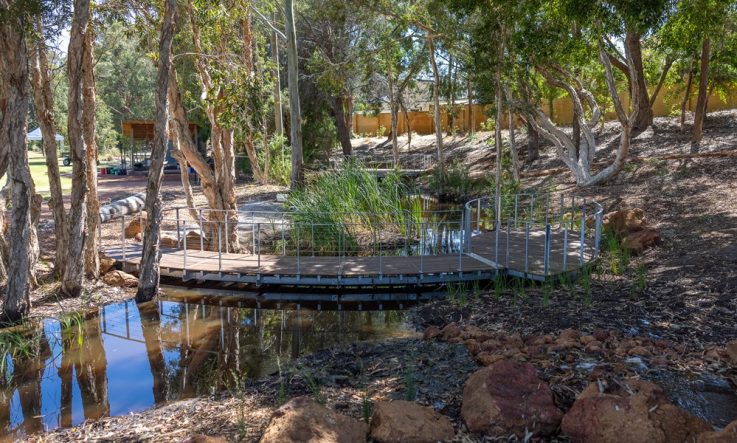
‘We partnered with Greater Western Water, who offered a free incursion to teach students about the importance of water and provide them with a basic understanding of the water cycle. We visited our local waterway Koroit Creek and were facilitated in providing students with knowledge of their local environment and how the ecosystems rely on that environment,’ O'Connor-Croydon shares.
Each grade level explored marine and freshwater science through age-appropriate, academically challenging content and relevant literature. Lessons were carefully designed and sequenced to build cumulative knowledge about the environments they were studying.
For example, students in prep-2 visited the local waterways with a freshwater scientist. They learned precise vocabulary about precipitation and evaporation through catchy tunes, making complex concepts memorable and accessible.
Students in grade 3/4 became Great Southern Reef ‘specialists’ through their work with marine scientists. Their knowledge-rich unit was supported by age-appropriate literature and Tier 3 vocabulary (low-frequency, domain-specific vocabulary essential for understanding specialised subjects). Many of the texts they read were about endemic species to the Great Southern Reef and were written by Australian authors.
Students in grade 5/6 tackled complex questions of sustainability and conservation with marine and freshwater scientists. They also began to apply their accumulated science knowledge to real-world challenges.
Building an understanding of the world
The program they used to build their core knowledge unit came from a free resource from Deakin University (Freitas et al., 2022). O'Connor-Croydon says she used the resource as a guide, then expanded on it for each of the year levels.
‘To make this unit unique for our setting I used the suggested texts, but I also spent a great deal of time researching further literature,’ she shares.
‘I love reading but is more than that – books, articles and films are texts that build our knowledge, our language and understanding of the world. I wanted the students to be provided with literature that laid the foundation for a strong understanding of marine science. I wanted the vocabulary to become internalised in their mental lexicons.
‘I also partnered with our local bookstore, The Chestnutt Tree Bookshop, who worked with me in creating a collection of titles that targeted all of our learners. I have since shared this collection with other schools as well.’
O'Connor-Croydon says that she hopes the texts chosen enrich students’ enthusiasm and engagement with the topic.
‘I was drawn to texts that were primarily Australian. I also incorporated titles from Indigenous authors as I think Indigenous people have a deep understanding of our environment and its significance in supporting future generations. I am proud of the collection of books we now have that support students’ understanding of marine environments, and specifically The Great Southern Reef,’ she adds.
A focus on professional development
While not all teachers are experts in science, O'Connor-Croydon and her colleagues spent time ensuring that all teachers had the knowledge and resources required to teach the units.
‘We had a focus on professional development but also on intellectual preparation by backfilling our own learning,’ O'Connor-Croydon shares.
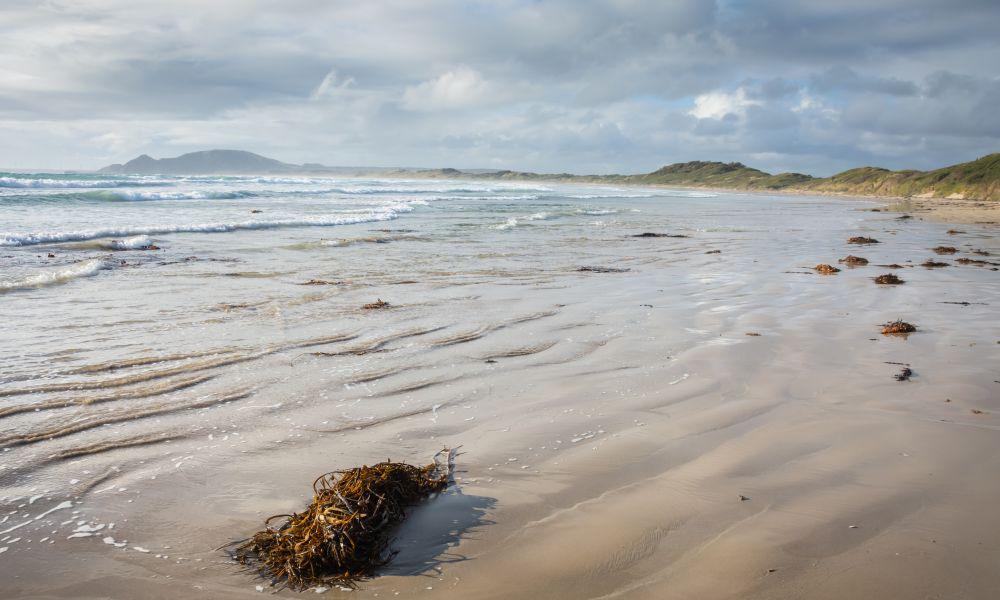
‘To a degree, Catia’s program is an educative curriculum as the teachers learned alongside the students. We have all agreed that we no longer visit the beach in the same way we all have a deeper appreciation of the wrack that washes up on the sand.’
At school, the staff at St Theresa’s have new ways of thinking about how they design engaging teaching and learning. O'Connor-Croydon outlines several key learnings from this unit.
First, they learnt to ensure they built a vertical and horizontal curriculum that allowed for students’ knowledge to expand in future years.
‘I ensured we laid a strong foundation of science understanding and used the Victorian Curriculum to support students with knowledge and skills as they move into other learnings,’ she says.
Another key takeaway: you must be organised, as it takes time to write.
‘There are some amazing resources out there, so spending the time researching it helps create rich and engaging learning experiences,’ O'Connor-Croydon says. She complemented Caita’s unit with science, geography and history resources from other external providers supporting equity and excellence across schools, including the Victorian Government.
The 2026 school year – what’s next?
The classes at St Theresa’s are composite, so to ensure that lessons aren’t repeated their work on the Great Southern Reef and marine environments will be revisited in 2027. But O'Connor-Croydon says that doesn’t mean that there isn’t work still to be done.
‘The units will be audited to include new texts, and I will collaborate with teachers about ways the units can be improved. As MACS (Melbourne Archdiocese Catholic Schools) is releasing its Vision for Writing in 2026, I also plan to have writing as a greater focus.’
Looking ahead to 2027, she can’t wait to explore the unit with the students.
‘I really believe it should be taught in schools across Australia,’ she says. ‘It allows for equity and excellence for all students and lays a strong science foundation for learners, whilst also educating young Australians about such a rich, diverse environment that is really our backyards. They are beaches we all visit and yet people are not aware of the important ecosystems that are living under the waves.’
O'Connor-Croydon says that before participating in the pilot program, she didn’t know much about the seaweed or the importance of the Great Southern Reef. ‘That has very much changed now.
‘I distinctly remember visiting Torquay at the end of 2023 and looking at the washed-up seaweed through a completely different lens. It gave me a whole new perspective of this unique marine ecosystem, and I think considering its importance and the potential it has for us in the future, it is imperative that our students learn about this environment.’
References and related reading
Freitas, C., Francis, P., Venzo, P., & Bellgrove, A. (2022). Over and under the waves of the Great Southern Reef: Teacher’s guide [PDF]. https://www.pruefrancis.com/wp-content/uploads/2023/05/Over-and-under-the-waves-of-the-Great-Southern-Reef_Teachers-Guide-1.pdf
Venzo, P., & Francis, P. (2022). The Great Southern Reef . CSIRO Publishing.
Think about a unit you’re teaching in your own context. In what ways could a knowledge-rich curriculum – with a strong focus on disciplinary vocabulary and high quality literature – enhance students’ understanding of the topic?