It’s National Reconciliation Week this week – a time for Australia to consider how we can all contribute to reconciliation in our country. Many schools across the nation will be marking the week in their own settings, whether it’s through learning activities in the classroom or coming together for whole-school events. In this Q&A, Reconciliation Australia – the lead body for reconciliation in Australia – highlights why National Reconciliation Week matters in an education context, curriculum resources available for schools to use in their classrooms, and how schools can keep the momentum going beyond this week.
What is National Reconciliation Week and why does it matter in an education context?
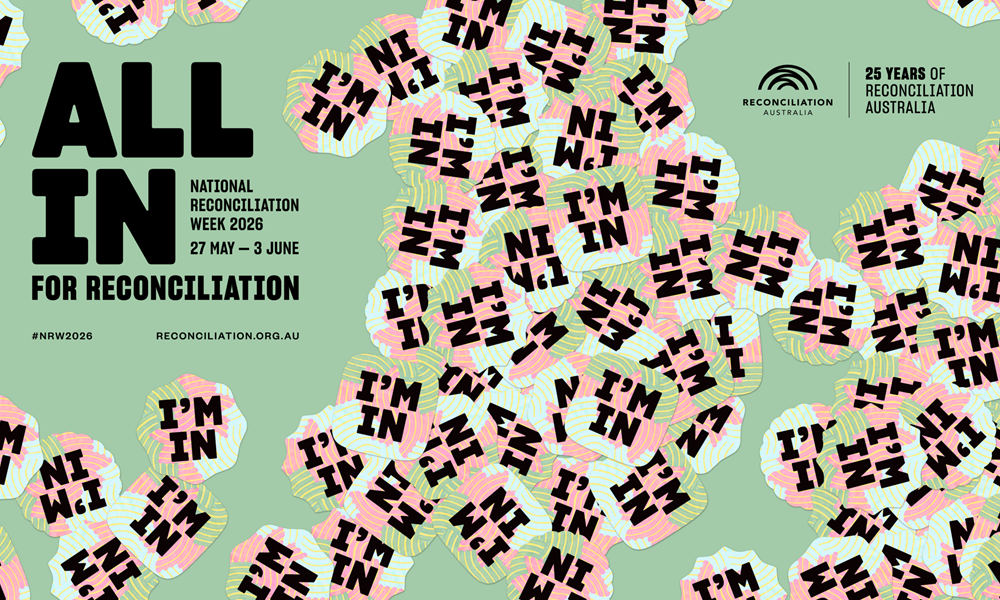
National Reconciliation Week (NRW), held each year from 27 May to 3 June, is a time for all Australians to learn about our shared histories, cultures and achievements, and to consider how each of us can contribute to reconciliation in Australia.
The week is framed by 2 significant milestones in Australia’s reconciliation journey: the successful 1967 referendum and the High Court’s 1992 Mabo decision, which recognised that Aboriginal and Torres Strait Islander peoples have lived on and cared for this Country for tens of thousands of years.
In an education context, NRW matters because education settings play a powerful role in shaping understanding, empathy and respect from an early age. Schools and early learning services are not only places of learning, but places where young people develop values, relationships and a sense of responsibility to one another and the broader community.
This year’s NRW theme, All In, reminds us that reconciliation is not passive and it is not the responsibility of First Nations people alone. Education has a critical role to play in ensuring young Australians grow up with a fuller understanding of our shared history and the confidence to contribute positively to reconciliation in their everyday lives. Learn more about NRW here.
How can schools and early learning services make reconciliation meaningful for learners?
Meaningful reconciliation in schools is about ensuring that children and young people, from the earliest of ages, have everyday opportunities to engage in learning environments and experiences that equip them with the skills, insights and passion to be the drivers of reconciliation between non-First Nations Australians and Aboriginal and Torres Strait Islander peoples into the future.
Whether as an educator, learner, parent/carer or community member, every Australian is connected to an education institution and, as such, everyone has a role to play in scaffolding a lifelong learnings trajectory that shapes the hearts and minds of future generations to contribute to the reconciliation movement.
Reconciliation Australia’s Narragunnawali Program has tools and resources for schools and early learning services to take action towards reconciliation between non-First Nations Australians and Aboriginal and Torres Strait Islander peoples.
We have a carefully curated range of resources and subject guides available for all educators to access and download once they create a free account, including resources aligned to this year’s NRW theme, in our Narragunnawali News article here.
What curriculum resources for early learning, primary and secondary, are available for this year’s NRW?
These early learning, primary and secondary curriculum resources help build practical activities and lessons. They promote reconciliation and develop children’s and students’ understanding of Aboriginal and Torres Strait Islander histories, cultures and contributions.
- Early Learning: Explore the meaning and purpose of the NRW 2026 theme with learners and consider practical opportunities for bringing it into their learning environments and community.
- Primary: Teachers and learners explore the NRW 2026 theme and take practical action for reconciliation in their classrooms, school and wider community.
- Secondary: Learners critically examine the NRW 2026 theme, investigate what genuine whole-community commitment to reconciliation requires, and develop civic initatives to drive meaningful change.
For educators out there wanting to deepen the reconciliation work in their own setting, what can be a good starting point?
The best first step for a school or early learning service is to consider developing a Narragunnawali Reconciliation Action Plan. A Reconciliation Action Plan (RAP) is a formal commitment to reconciliation. It shows how a school or early learning service can strengthen relationships, respect and opportunities in the classroom, around the school/service, and with the community.
There are lots of resources about how schools and early learning services can develop a RAP using the Narragunnawali platform to register and extend on existing initiatives, or to begin their reconciliation journey.
The best way to see reconciliation in action in schools and early learning services is through examples in the Narragunnawali Awards. They are held every 2 years and are the only national awards that recognise and celebrate Australian schools and early learning services that are implementing outstanding reconciliation initiatives. See last year's winners and finalists here. And the video playlist here.
How can schools keep the momentum going after National Reconciliation Week?
National Reconciliation Week can be a powerful starting point, but reconciliation has the greatest impact when it becomes part of everyday school or service culture. The Narragunnawali platform has professional learning resources and opportunities for educators, as well as curriculum and teaching resources, supporting First Nations voices and leadership within the school community in this vital work.
The theme All In reminds us that reconciliation is everyone’s responsibility and that meaningful change happens through collective, ongoing action. Schools and early learning services are uniquely placed to help shape generations of young Australians who understand the importance of respect, truth-telling and shared responsibility, not just during NRW, but every day of the year.
Consider the following questions as you reflect on reconciliation in your school setting:
- Does your school have a Reconciliation Action Plan (RAP) in place?
- If not, who in your school is best placed to support the development of a RAP?
- Are there any examples from previous Narragunnawali Award winners that could be adapted for your setting?
With a colleague, discuss together how you could keep the momentum going after National Reconciliation Week at your school. What support would you need to get your ideas off the ground?