Today marks a major shift in Australia’s online landscape, with age restrictions coming into force preventing under-16s from creating or keeping accounts on major social media platforms. The responsibility rests squarely with platforms – including Facebook, Instagram, TikTok and YouTube – to take ‘reasonable steps’ to prevent under-16s from having accounts. Here, we look at how teachers can help students and families navigate the change, what the legislation means for schools, and resources out there to support educators.
Rather than a ban, the social media age restrictions have been termed a ‘delay’. Australia’s eSafety Commissioner explains the changes are aimed at protecting under-16s from the ‘pressures and risks they can be exposed to while logged in’. This includes platform design features that encourage more screen time, and algorithms that increase exposure to ‘negative, upsetting or manipulative content’.
‘These features have been linked to harms to health and wellbeing – including increased stress levels, and reduced sleep and concentration,’ it adds. During consultations about the changes, the Commissioner says school educators agreed the delay gives time for under-16s to learn about the benefits and risks of social media, build their resilience and digital, social and emotional skills, and understand the importance of reaching out for help when needed.
What do we know about young people’s social media use?
South Australian academics (Zhou et al., 2025) recently published findings from a study tracking more 14,350 students across the state aged 11-14. It looked at how they were spending their time after school in the 4 years between 2019 and 2022. The insights give an indication of how big a part social media plays in their lives – daily users jumped more than 200%, from 26% to 85%, while non-users fell from 31% to just 3%.
‘… if social media is dominating their time, it poses developmental risks,’ one of the research team – University of South Australia Professor Dorothea (Dot) Dumuid – comments. ‘When access is restricted, children may shift to alternative platforms like gaming, messaging apps or TV. Tracking these behavioural shifts and examining their short- and long-term impacts on young people’s health and wellbeing will be important.’
Australian online youth mental health service ReachOut tells Teacher its research found young people think the new restrictions will: make them feel less connected to their friends (65%); make them lonelier (60%); and make it more difficult to get mental health support (43%).
What do the restrictions mean in practice?
The eSafety Commissioner has published a list of social media platforms affected by the changes, and obligations of service providers. They’ll be required ‘to take reasonable steps to prevent Australians under 16 from creating and having accounts … under-16s will still be able to see publicly available social media content that doesn’t require logging into an account.’
The Commissioner says the changes may mean that schools need to find an alternative method for communicating with parents and students. ‘There are exclusions for a number of platforms, including educational tools such as learning management systems. For example, Google Classroom will not be age restricted. YouTube videos that can be seen without logging into an account can still be shared by teachers.’
What can teachers do to help students?
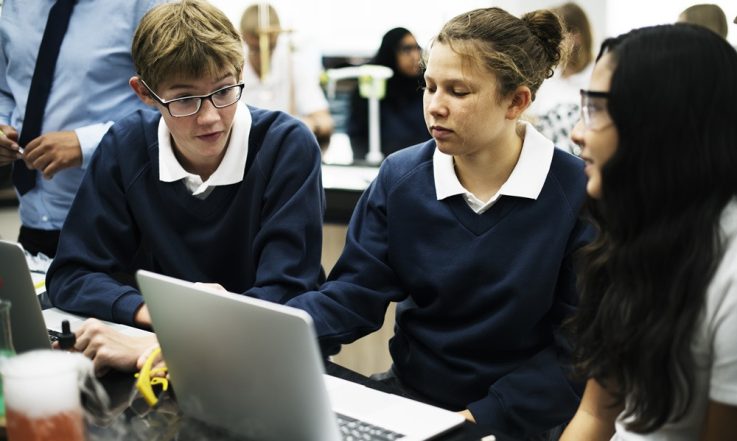
The restrictions will be a significant shift for students and their families. ReachOut’s Clinical Lead and Senior Psychologist, Linda Williams says teachers can play a role in supporting students through the change. ‘Young people find connection and comfort in digital spaces. For many of them, the shift away from social media will be difficult.
‘Your students may feel cut off from their friends and community, which can lead to them feeling frustrated, upset and confused. Teens from marginalised communities are at an increased risk of experiencing disconnection and isolation, which could affect their overall wellbeing.
‘If a student has become dependent on social media, they may experience withdrawal symptoms, like mood swings, withdrawal from day-to-day life and issues with communication.’
Williams says normalising these mixed feelings and encouraging alternatives are among the ways teachers can offer support. ‘Remind your students that there are other ways to build connections. You could encourage them to try a new group activity or connect with a peer support program.’
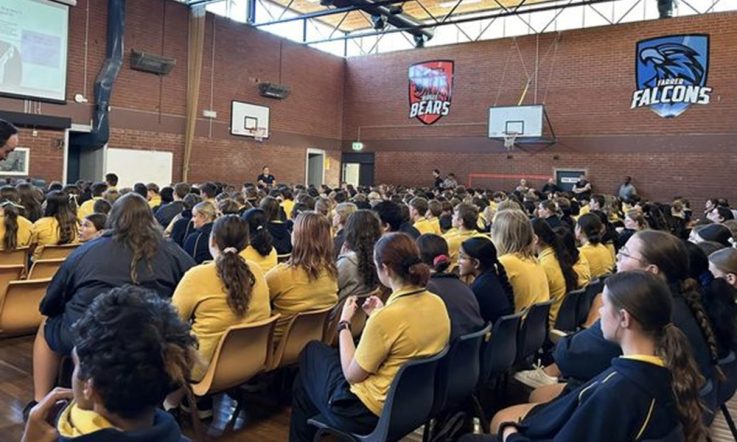
Creating a space for open discussion and letting students have a voice is also crucial. ‘Young people often tell us how upsetting it is when adults minimise their experiences or emotions, and that’s especially relevant here. Often, if one or 2 students are talking about something, many more are likely wondering or worrying about it. A whole-class discussion is an effective way of making sure everyone has a chance to benefit. However, teachers are best placed to decide the most appropriate approach for their specific classroom.’
If you decide on a whole-class discussion, Williams offers this advice. ‘Start the conversation by acknowledging that this is a big change and that they might be feeling mixed emotions, whether that’s confusion, fear, worry or relief. Instead of diving straight into what the rules mean, create a space for open discussion. Ask your students what they know about the restrictions and how they’re feeling about them. This will help them feel seen and heard.’
The psychologist says some students may need further support to cope with the changes, so it’s important that teachers share how they can access professional support. ‘Just because restrictions are in place doesn’t mean that young people are safe online. Continue your conversations around online safety, boundary-setting and privacy, and share resources to build critical thinking skills.’
For those working with younger children who aren’t impacted yet, Williams says there’s still a benefit to having open conversations. ‘Things like the importance of balance and boundaries. Teachers working with younger age groups might still get questions from their students. Keep your communication positive and frame the restrictions as one way adults are trying to keep young people safe online.’
The Butterfly Foundation says young people are feeling confused and worried about the changes. Writing in Teacher this month, Butterfly’s Director of Education Initiatives Danni Rowlands (2025) says: ‘… returning to schools to deliver body image education – and through conversations as a mum and community sport volunteer – I’ve had the opportunity to talk to young people about the upcoming changes. Their responses reveal confusion, worry, and misinformation. “Will I get fined – or my parents?” “Why are we being punished?” “TikTok is my life.” “What will happen to my memories and friends?” “What about people who are lonely?”
‘Speaking with teachers, some of whom are parents also, there has been a sense of relief but also genuine concern for students who might be “withdrawing” during school hours, the impact on mood and engagement in their classrooms and the stressors placed on young people socially due to the inequities between those who can still access platforms and those who can’t.’
Resources to support educators, students and parents
There are lots of resources out there already. The eSafety Commissioner has set up a dedicated Social media age restrictions hub which includes information for educators, young people and families. There are also FAQs, shareable posters, flyers and presentations, and free 30-minute webinars designed specifically for educators (and for carers and families), running throughout December, January, February and March.
ReachOut has published new guides for teachers and schools (including lesson plans), young people, and parents and carers.
And Butterfly has a page of resources with Tips around the social media ban for under-16s.
References
eSafety Commissioner. (n.d.). Social media: Age restrictions. eSafety Commissioner. https://www.esafety.gov.au/educators/social-media-age-restrictions
Rowlands, D. (2025, December 1). Supporting students as social media changes – in a BodyKind way. Teacher magazine. https://www.teachermagazine.com/au_en/articles/supporting-students-as-social-media-changes-in-a-bodykind-way
Zhou, M., Maher, C., Brinkman, S., Cools, J., & Dumuid, D. (2025). Postpandemic after-school activities among youths in Australia. JAMA Network Open, 8(11), e2543637. https://doi.org/10.1001/jamanetworkopen.2025.43637