
As we head into the Term 1 holiday break here in Australia, it’s a good time to take stock of how you’re travelling as a school leader. What went well this term, and what made a positive difference for your students and staff? Where did you experience challenges or pressure points? How are you feeling at the end of this term, and what do you need personally and professionally to lead well for the remainder of the year?
In his new book, From Burnout to Breakthrough: The Leadership Reset, educational leader and author Brad Gaynor explores the growing pressures on school and organisational leaders and the toll these demands can take on wellbeing. In this extract for Teacher readers, Gaynor draws on his own lived experience of burnout to unpack the warning signs, explain the difference between leadership fatigue and burnout, and share why naming it gave him the first foothold toward recovery.
I didn’t realise I was burning out until it was too late. Like many leaders, I chalked up the exhaustion, irritability, and sleepless nights to the pressures of the role. What I failed to see were the warning signs that my body and mind were overwhelmed by chronic stress. My experience was not unique, as research increasingly shows that leaders face disproportionate rates of burnout, often leaving them emotionally depleted and physically unwell.
… By recognising the signs early, leaders can take proactive steps to prevent burnout and protect their wellbeing.
Recognising the symptoms: my personal experience
Most people would have had no idea this was going on. Outwardly, I was still showing up, still performing, still doing the work. But behind the scenes, burnout was slowly touching every part of my life.
Burnout does not announce itself loudly. It creeps in gradually, disguised as the natural demands of leadership, until it becomes impossible to tell where the role ends and the suffering begins. Looking back, I can now see how it unfolded across every part of my life, creating a slow, silent collapse I did not recognise at the time.
My body started sending signals long before I listened. I was constantly exhausted, no matter how much rest I tried to get. Sleep became elusive. I would lie awake with racing thoughts, then wake more tired than when I had gone to bed. Tension headaches became regular companions. At the time, I convinced myself it was just part of the job.
Then came the mental fog. My decision making dulled. Tasks that once came easily started feeling overwhelming. I would read the same sentence repeatedly and still not take it in. Conversations slipped out of memory halfway through. Creative thinking, which had always been a strength, felt out of reach. And the more I felt my performance was slipping, the more pressure I felt – which only made things worse.
The most difficult part to admit was the shift in how I felt. That familiar sense of purpose started to fade. I no longer registered the wins. Minor setbacks felt enormous. I became more cynical and started questioning work I had once felt passionate about. I was irritable, reactive, and eventually numb. It felt like I was watching my motivation and joy dissolve in slow motion.
I began to withdraw. I avoided conversations that might expose how much I was struggling. Meetings that used to energise me became just another thing to get through. I found myself less present, less patient, less able to truly listen. I reached for unhealthy coping strategies – a drink became a nightly habit, not for pleasure but to quiet my mind. I abandoned exercise and stopped paying attention to what I was eating. I was just trying to get through the day.
At work, it still looked like I was coping. I kept showing up, kept delivering, kept meeting expectations. From the outside, there were no obvious signs. But on the inside, something had shifted. The projects that once energised me now felt heavy. I was no longer leading with vision or creativity – I was just surviving. I could feel the difference, even if no one else could. My leadership no longer felt like it came from strength. It felt like effort layered on effort.
At home, I was present but disconnected. Conversations felt like a drain rather than a comfort. The things I once enjoyed started to feel like burdens. I withdrew even from the people I loved most. And because I did not really understand what was happening, I could not explain it to anyone.
Burnout is not just stress. It is a breakdown that seeps into every part of your life – physical, emotional, mental, relational and professional. In hindsight, the pattern is obvious. But when you are inside it, it feels like personal failure. Naming it helped. It allowed me to see that what I was going through was not weakness or poor resilience. It was burnout. And naming it gave me the first foothold toward recovery…
Burnout or just tired? A quick self check
Leadership fatigue is real, but it doesn’t always mean burnout. This table is designed to help you distinguish between everyday tiredness and something deeper. Reflect honestly. What patterns are showing up for you?
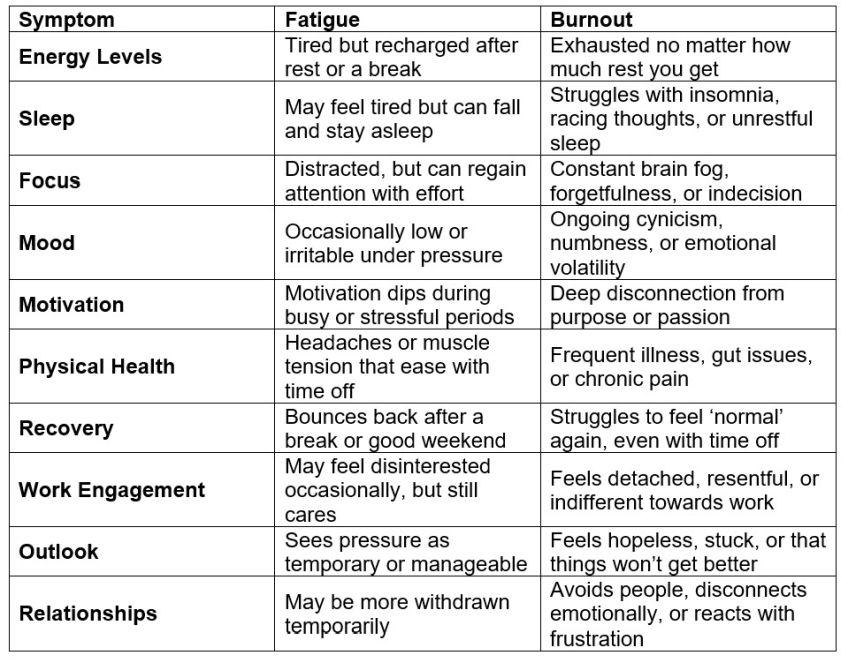
Quick Reflection: If most of your answers lean into the Burnout column, it’s a signal worth listening to. You may be in the early stages of burnout – or already there. The good news? You’re not alone.
Brad Gaynor’s new book, From Burnout to Breakthrough: The Leadership Reset, is published by Routledge and available to purchase via this link.
Do you have a plan in place to manage your own health and wellbeing?
Which of the early warning signs described in the article do you recognise in yourself? Are there any similar patterns emerging in your own leadership practice?
If you are experiencing burnout in your role as a school leader, what immediate steps can you take to get support?