In staffrooms across Australia, educators are having increasingly complex conversations about equity. They are responding to rising living costs, housing instability and the growing number of students presenting with unmet basic needs.
While schools have long stepped in with breakfast clubs, stationery supplies and wellbeing hubs to support students in need, another barrier is quietly influencing attendance and engagement: access to clean clothes.
For some students, the difference between walking through the school gate or staying home is as simple – and as heavy – as a clean uniform.
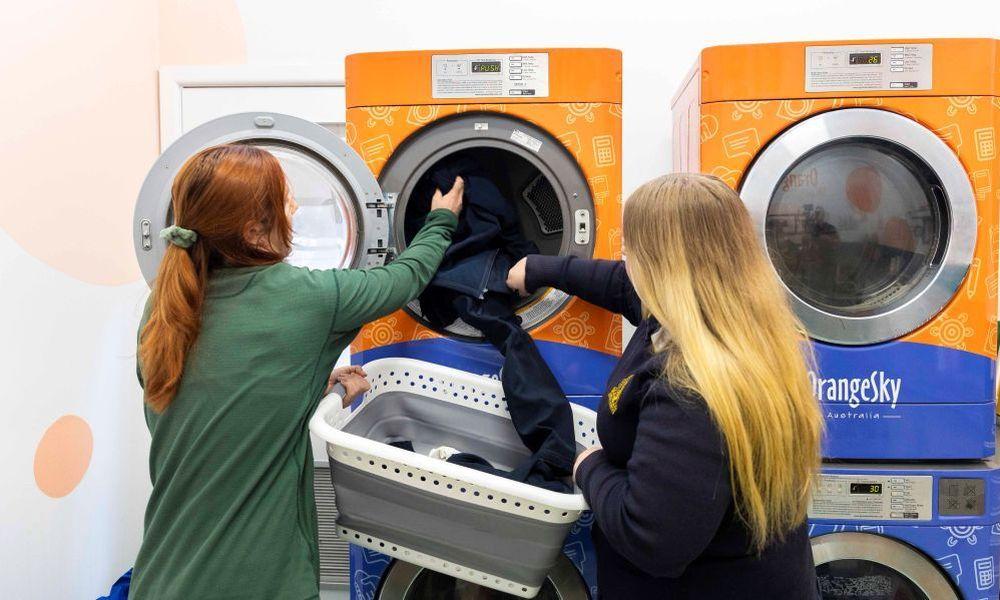
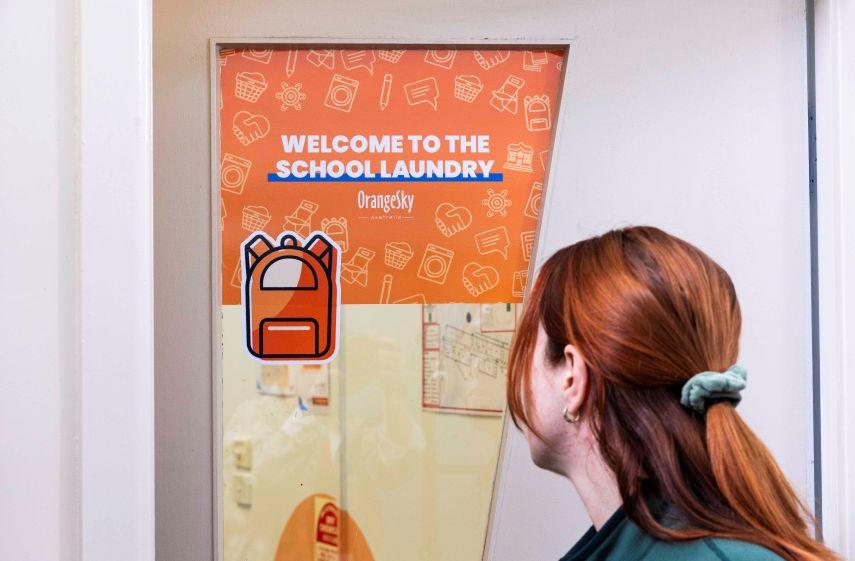
Now, Australian not-for-profit Orange Sky Australia, best known for their bright orange mobile laundry and shower services supporting people experiencing homelessness and hardship, has launched a new initiative: A School Laundry Program. This program sees Orange Sky partnering with schools to install free, on-campus washing machines and dryers – guided by a simple belief: access to laundry should never be a barrier to education.
Currently supporting 5 school communities, and engaging with a further 82 schools, the program responds to a simple need with far-reaching impact – ensuring students have reliable access to laundry facilities.
A hidden driver of disengagement
Reports and research from Australian schools and international laundry programs suggest that limited access to clean clothing can influence students’ attendance, participation and sense of belonging, (Pinchapoo, n.d.; Provision Promise, n.d.).
Heidi, an Inclusion Coordinator at a participating school, has seen how quickly embarrassment can spiral into disengagement.
‘We have some young people that haven’t had access to laundry services in the past and it’s led to them not engaging in their education,’ she explains. ‘They don’t want to come to school because they’re aware of the way that they present, visually and also with the odours from unclean clothes. So it disengages them.’
Carolyn, a Business Manager at a participating school, puts it simply: ‘If they don’t have clean clothes, they don’t come. Anything we can put in place that makes a student want to come to school and further their education is so important.’
These insights reflect a broader social reality. Almost one in 3 Australians experiencing homelessness are under the age of 18 (Australian Institute of Health and Welfare, 2023). For young people in unstable housing or low-income households, access to working washing machines is far from guaranteed. Yet the social expectations of school life remain unchanged.
For educators, this highlights a simple reality: no amount of academic support can compensate when a student’s basic needs aren’t being met.
Moving upstream – laundry at school
As an organisation committed to continually evolving its services to better support people doing it tough, Orange Sky is always looking to reach communities who may be experiencing hardship in less visible ways. In exploring where unmet needs might be going unnoticed, the organisation identified young people as a cohort often hidden in broader conversations about homelessness and disadvantage.
During research and community engagement, access to clean clothing emerged repeatedly as a reported barrier to school attendance and participation. As Orange Sky began connecting directly with principals, wellbeing teams and educators, that insight was reinforced.
‘Once we began connecting with educators to learn more about this hidden need, it became apparent that in many schools, the need wasn’t actually hidden. It was something teachers were aware of and a barrier that school students were facing regularly,’ Orange Sky Co-Founder and CEO Lucas Patchett says.
The solution was simple. If students cannot access laundry facilities, bring the laundry to the students.
Orange Sky’s Schools Laundry Program installs and maintains free, on-campus washing machines and dryers, fully funded and serviced by the organisation. Schools are not asked to absorb costs, outside of water and electricity usage, or manage maintenance, allowing leaders to stay focused on teaching and wellbeing.
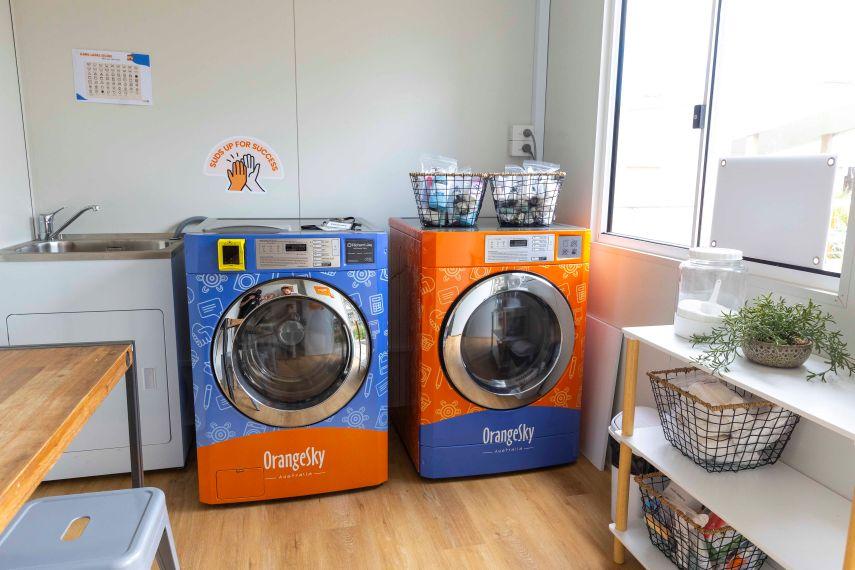
The aim is not just clean uniforms, but stronger attendance, greater confidence and a deeper sense of belonging within the school community.
‘By the time a young person is missing school because they’re worried about how they present, they’ve already lost valuable learning time,’ Mr Patchett says. ‘We believe no one should go without clean laundry, and we are so grateful to have now launched this program into schools supporting the younger generation who may not be able to access Orange Sky in other settings.’
Designing for belonging
A critical feature of the program is discretion and ease of access.
For many teenagers, or even primary school students, admitting they do not have clean underwear or a washed school t-shirt can feel overwhelming. Schools have therefore worked with Orange Sky to ensure access is as private and independent as possible.
At some sites, students can enter the laundry space using their regular student ID card. They do not need to ask for permission or explain their circumstances. The service is simply available.
‘It was really important that students or staff could access this space without anyone knowing, without feeling embarrassed or any shame,’ Carolyn says. ‘They can go in there anytime they want. That service is always there for them.’
For students, that quiet availability can change how they experience school.
Miro, a Year 9 student at one participating school, says the presence of the laundry shifted his sense of comfort.
‘When I found out Orange Sky opened at our school, I felt comforted knowing students would have a place to wash their clothes,’ he says. ‘I also felt comforted that they would learn independence and some very valuable life skills.’
In an environment where adolescents are highly attuned to difference, access to clean clothing can act as what one educator described as ‘the great equaliser’.
Beyond attendance – connection and life skills
Early feedback from Australian schools has revealed increased confidence and classroom engagement among students who regularly use the service.
However, school leaders say the impact extends further.
In several schools, the laundry has been integrated into wellbeing hubs or inclusion centres.
‘As soon as we engaged with Orange Sky, the kids just came out of the woodwork and the need became more obvious for the kids as individuals and also as a skills training program for us at school. We use it for students to be able to access independently and learn life skills as well as bring a sense of community and sense of self,’ Heidi says.
For students in kinship care, unstable housing or early independent living arrangements, knowing how to wash and care for clothes is a critical capability – one that supports long-term independence as much as short-term attendance.
Responding to hidden disadvantage
One of the strongest messages emerging from participating schools is the extent of hidden need. Across 3 schools, in just the first 2 months of the school laundry program, they have completed over 1,140 loads of washing on-site.
For education leaders, this raises important questions about how disadvantage is identified and addressed. Hygiene poverty rarely appears in formal reporting. It is more often recognised through observation, trust and relationships.
For Carolyn, the case for action is clear.
‘It's such a small gesture, but it has such a big impact in someone's life to have clean clothes, but having the support in a school also supports the students wanting to continue their education knowing that there's no shame and they're safe and they're so supported.
‘I really encourage other schools to put this in place, support the students and make a difference in their lives,’ she says. ‘Educate them not just in a classroom, but in life.’
Heidi agrees.
‘It enables them to feel like they belong,’ she says. ‘It makes them feel like they’re the same as the other students sitting next to them.’
As Australian schools continue to focus on supporting the whole child, practical initiatives like the Schools Laundry Program demonstrate how meeting basic needs can directly strengthen engagement, wellbeing and learning outcomes.
Because when students feel comfortable, confident and included, they are far more likely to show up – and to thrive.
Exploring the model
For schools interested in strengthening attendance, supporting student wellbeing and responding to hidden disadvantage in a practical way, the Orange Sky School Laundry Program offers a fully funded, low-burden option.
Orange Sky works alongside school leadership teams to assess space requirements, manage installation and provide ongoing servicing and support. The aim is to make implementation straightforward, allowing schools to focus on what they do best – supporting young people to learn and thrive.
School leaders interested in exploring a free on-campus laundry facility can contact Orange Sky to learn more about how the program could work within their community. Contact our team via schools@orangesky.org.au or visit the School Laundry Program web page for more information.
References
Australian Institute of Health and Welfare. (2023). Specialist homelessness services annual report 2023: Clients, services and outcomes. https://www.aihw.gov.au/reports/homelessness-services/specialist-homelessness-services-annual-report-23/contents/clients-services-and-outcomes
Pinchapoo. (n.d.). Hygiene poverty in Australian schools. https://www.pinchapoo.org.au/?home-page-stories=hygiene-poverty-in-australian-schools
Provision Promise. (n.d.). Teachers say students skip class due to hygiene. https://provisionpromise.org/blogs/promise/teachers-say-students-skip-class-hygiene

