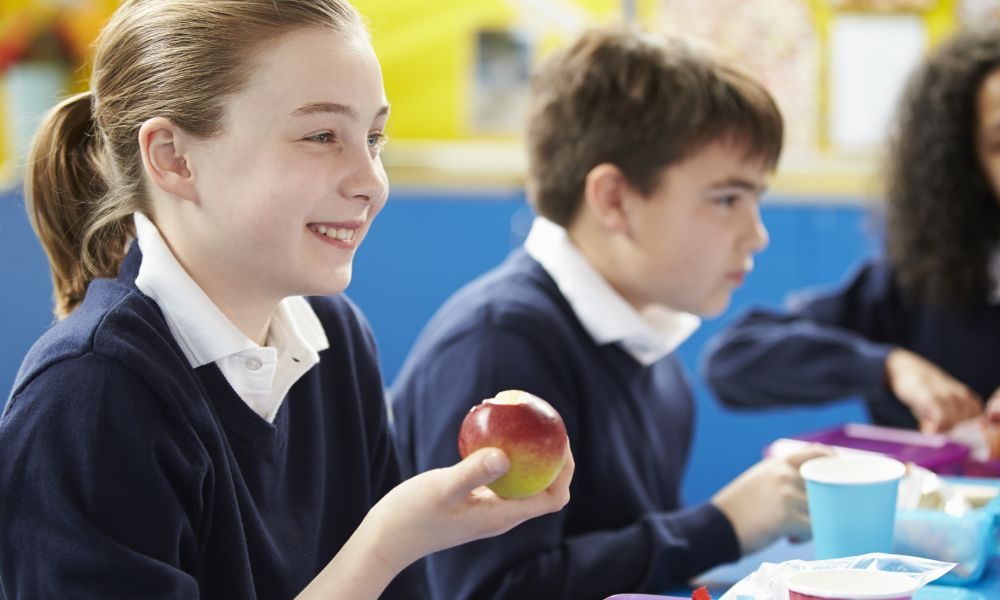
What do ‘friend’, ‘cost’ and ‘privacy’ have in common? They’re all past winners of Oxford’s Australian Children’s Word of the Year (CWOTY). Now we can add ‘vitamin’ to the list, with the latest research highlighting an increase in students writing about self-care, wellbeing and the importance of being healthy and strong.
A total of 46,771 stories (more than 3.4 million words) written by K-12 students were collected through the online Writing Legends program for 2025 and analysed. All 6 shortlisted words – exercise, vitamin, diet, skin, muscle and energy – were linked to the theme of health and 5 out of the 6 were used at least 127% more frequently than in 2024 (Oxford University Press, 2026).
You’ll know from reading your own students’ writing where they get free choice on topic and vocabulary, the resulting stories can offer insights into what’s going on in their lives – their hobbies, what interests and excites them, what they care about, and what’s on their mind. In the 2025 CWOTY submissions students weren’t just writing about their health, they were also talking about how to manage it. The dataset includes examples of students writing about skincare routines and sun protection in lots of detail.
‘Children’s writing is where big cultural conversations show up early, which is probably why we’re seeing them echo familiar conversations about what practices to adopt to optimise health,’ Dr Amanda Laugesen, Director of the Australian National Dictionary Centre at ANU says of the major theme to come through in 2025. ‘Adults are constantly talking about needing more energy and wanting to feel better, so it’s no surprise children have picked these up.’
‘Children aren’t just writing about dragons and adventures anymore,’ Lee Walker, Product Director at OUP ANZ, adds. ‘Across thousands of stories, we saw children write about self-care as something you do to feel good, stay energised and grow strong, rather than as appearance-driven body talk. It’s a sign of how present self-care has become in our society.’
An overview of the 2025 analysis
As in previous years, most of the submissions for 2025 were written by students in the mid- to late-primary year levels (years 3 to 6). The winning word – vitamin – appeared 1133% more frequently in students’ writing in 2025 compared to 2020–2024, a total of 363 times. It was often written about in relation to the importance of eating fruits and vegetables.
‘Students may have been influenced by the fact that vitamins and supplements are now a common item found across supermarkets and are often advertised or promoted by influencers across social media,’ the shortlist report notes.
From the 2025 submissions, there were 4 major themes identified from the trending words.
Health: Looking after yourself to make sure you grow up healthy and strong, including eating well, exercising and playing sport.
Emotion and connection: Students wrote about their emotions, relationships and connections with others. The words ‘love’, ‘teamwork’, ‘community’ and ‘confidence’ increased in frequency, but so too did ‘doubt’ and ‘pressure’. Slang terms like ‘sigma’, ‘bff’ and ‘bestie’ also appeared.
Society and learning: This theme included how students understand and digest information with words such as ‘fact’, ‘opinion’, ‘research’ and ‘exploration’ increasing in frequency.
Environment and nature: The words ‘ecosystem’, ‘adaptation’, ‘pollution’, ‘recycling’ and ‘extinct’ all increased in frequency, suggesting this is still a topic area students are concerned with – particularly in terms of the impact on animals and the oceans.
Developing and extending spelling and vocabulary
As well as painting a picture of their interests and passions, analysing student writing helps teachers understand what’s needed to develop and extend their spelling and vocabulary skills.
The shortlist report shows the 100 highest-frequency words in the 2025 submissions, and how their ranking compares to the previous year. As in 2024, ‘the’, ‘and’, ‘a’, ‘to’ and ‘I’ take out the top 5 positions with some minor movements in the order. Some of the biggest movers for 2025 are: ‘has’ (up 37 places to 33), ‘big’ (up 33 to 61), ‘monster’ (up 165 to 65) and ‘pink’ (up 419 places to number 66 in the top 100).
References
Oxford University Press. (2026). Oxford's Australian Children's Word of the Year 2025: Shortlist report. https://www.oup.com.au/primary/2025-childrens-word-of-the-year
What are the topics your own students enjoy writing about? How could you engage and extend students in these areas through reading, writing and spelling?
Reflect on the 4 major themes from the Oxford University Press study. How could you draw on these in your own lesson planning?
