‘In an era where information is instantly accessible, our challenge may be to allow alternative, engaging content that cultivates and refines scientific inquiry and critical thinking skills.’ In today’s article, Samantha Ephraims, Lead Teacher at Kalkie State School in Queensland, uses the teenage fandoms of Taylor Swift and television show Stranger Things as examples of students mirroring the scientific process, without even being aware they are doing so. She explains that these fandoms use scientific processes (they pose questions, formulate hypotheses, track variables, test predictions and revise models) to dissect and analyse their pop culture obsessions. Ephraims says that teen fandoms can be used to address a decline in scientific engagement in students.
Teachers and the scientific community are actively working to understand and address the decline in scientific engagement among Australia’s senior students (Macintyre, 2024). What if interest in science isn’t diminishing, it’s simply evolving?
We may be overlooking an area where scientific practice is thriving – teen fandoms. If you’ve interacted with teenagers in recent years, you’ve likely encountered fandoms, which are online communities united by a shared passion.
Whether it’s Taylor Swift, Stranger Things, or the latest instalment of a fantasy book series; Gen Z and Gen Alpha fandom members are already engaging in the scientific process as they work to interpret complex ‘cultural’ artifacts and ideas.
Fandoms are often developed on digital platforms through collaborative content creation. Participation is your key to belonging – members collaboratively interpret, debate, and produce content around shared cultural texts.
A shared passion for a celebrity, a fantasy world or the latest pop culture phenomenon is dissected and analysed by groups online. While fandoms are not a new concept, the ease and speed with which this passion can be shared is relatively novel.
Members of fandoms closely mirror the scientific process, without even being aware they are doing so. They regularly pose questions, formulate hypotheses, track variables, test predictions and revise models through public discourse. Using notetaking, timelines, metadata, and collective reasoning, they build evidence sets and develop theories.
Example 1: Stranger Things
In the lead-up to the Stranger Things finale, fans engaged in what looked strikingly like the scientific method. They gathered evidence from dialogue, props, and release patterns, formulated hypotheses, and tested predictions.
The most viral theory, dubbed Conformity Gate, argued that the New Year’s Eve finale was a decoy, and a secret ninth episode would drop on January 7. Fans compiled visual ‘clues’ (character positioning, background props, colour shifts, numerical hints), shared findings across TikTok and Instagram, and collectively refined their models, creating arguments to support their theories.
The scale was staggering. On TikTok alone, theories about a ninth episode amassed millions of views in a single weekend, and even though the rumoured episode failed to appear, Netflix briefly crashed under the surge of logins as fans scrambled to verify their prediction.
Example 2: Taylor Swift
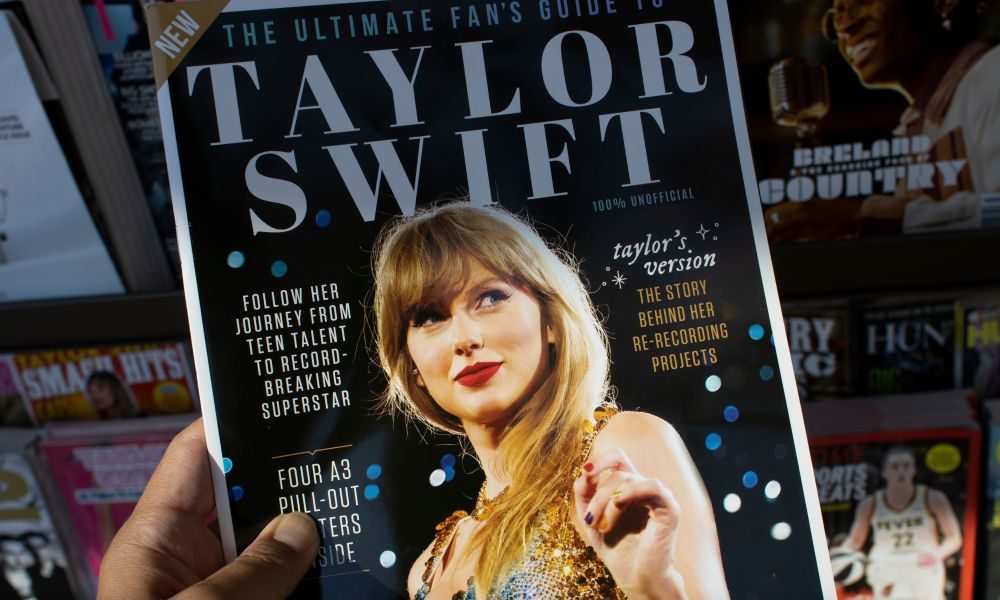
Taylor Swift fans exemplify productive friction – manageable difficulty that sparks curiosity and deepens understanding – through their meticulous evidence gathering.
For a recent example, in the lead-up to the announcement of 2025 album Life of a Showgirl, they engaged in a near-scientific process: cataloguing jewellery choices, tracking shifts in wardrobe colour palettes, and analysing props in Instagram posts and magazine spreads to predict what Swift would do next.
These observations were cross-referenced, debated, and refined across thousands of Reddit threads, TikTok breakdowns with tens of millions of views, and Discord servers buzzing with predictions. Swift deliberately planted Easter eggs (cryptic accessories, quotes, and symbolism) knowing her fandom would decode them, turning music promotion into a collaborative exercise in hypothesis testing and evidence-building that reflects the rigour of scientific inquiry.
Meeting students where they are
Science education goes beyond content – students learn valuable skills that allow them to understand and solve future challenges, identify emerging patterns and predict likely outcomes of change within the world.
In both of the above examples, teens have picked their field of interest and they’re motivated to apply reasoning and logic. Young people are using fandoms to engage in Socratic-style dialogue (asking probing questions, challenging assumptions, and co-building ideas) without realising its philosophical roots, or its role in cultivating critical thinking and deep understanding.
Discussing PISA results, Hofverberg et al (2022) assert that student motivation plays a key role in performance, suggesting enjoyment and interest are the biggest factors in success. Could it be that encouraging students to experience the ‘thrill of pursuit’ is the key to unlocking interest in science education in the senior years?
By recognising fandoms as live laboratories of scientific reasoning, we can sustain engagement and build robust inquiry skills – meeting students where they are and elevating how they already learn.
Celebrating this passion and enthusiasm for learning, and later modelling the way it can be adapted to academic contexts, should lead to greater confidence (and by extension, engagement) in the sciences. If we (temporarily) invite fandoms into our classrooms, and explicitly connect the students’ instinctive ways of working to documented scientific approach, perhaps we can grasp this opportunity to build on students’ natural curiosity.
Perhaps you could start by introducing a mini unit (of 3 or 4 lessons) targeting a current cultural phenomenon. You can observe students as they articulate how claims are made, how evidence is assembled or discarded, and how competing ideas are considered and resolved within their arguments. Identifying and validating scientific ways of working as observed, can build a sense of purpose and achievement for students.
Those students who would otherwise have shied away from choosing STEM subjects in the senior years, may discover that they are ‘science people’ after all.
In an era where AI can produce content instantaneously, if our goal is to cultivate individuals who think creatively, analyse variables, and rely on evidence to support their ideas, shouldn’t we recognise the value of fandoms and members’ pursuit of knowledge? After all, the skills they develop are ultimately transferable within scientific contexts.
References:
Dozier, C. L. (2021). Is less always more? What PISA 2015 can actually tell us about inquiry-based science teaching practices (Doctoral dissertation). Stanford University. https://stacks.stanford.edu/file/bx081nj4567/Dozier%20Disseration%20FINAL augmented.pdf
Hofverberg, A., Eklöf, H., & Lindfors, M. (2022). Who makes an effort? A person-centered examination of motivation and beliefs as predictors of students’ effort and performance on the PISA 2015 science assessment. Frontiers in Education, 6, Article 791599. https://doi.org/10.3389/feduc.2021.791599
Macintyre, A (2024) Science education support with gravity. CSIRO (online) https://www.csiro.au/en/news/All/Articles/2024/January/science-education-resources
Thinking about the investigative processes used in teen fandoms, how might you design or adapt a lesson so that students can pose their own questions, track variables, or make predications?
How could you invite students to bring their own interests, communities or cultural texts into science learning in a way that fosters motivation, evidence‑based reasoning, and meaningful engagement?