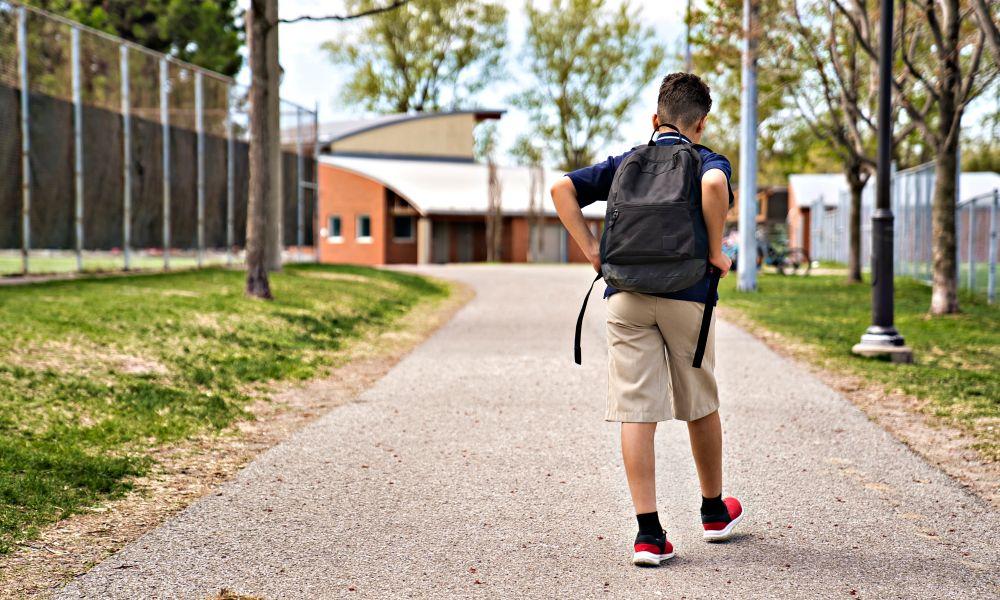
Trauma enters classrooms through the invisible backpacks students carry each day. While educators cannot remove that weight, they can help make it more manageable.
Childhood trauma includes distressing experiences that can produce lasting emotional, behavioural, and cognitive effects (Schamuhn, 2024). These may include abuse, neglect, poverty, caregiver illness, violence, or loss. Although these events often occur outside school, their effects frequently appear in attention, regulation, and relationship challenges at school.
Emotional strain can often appear as anxiety, withdrawal, defiance, or inconsistent academic performance (Martos, 2025). These behaviors are usually adaptive responses rather than intentional misconduct.
We know that responses vary. Some students become reactive, while others disengage. Many develop negative beliefs about safety and self-worth. Chronic stress keeps threat-response systems activated, limiting attention and higher-order thinking (Perry & Szalavitz, 2017).
Inside the invisible backpack
While experiences and responses to trauma differ, the fictional story of Rae illustrates how trauma can quietly shape a child’s school experience.
Rae came to school with her polka-dot backpack filled with folders, crayons, and a granola bar. A new classmate sat beside her wearing an oversized sweatshirt and carrying quiet worry. Rae learned the sweatshirt belonged to the girl’s mother because there was no washing powder at home and the family was trying to avoid another visit to the food bank. At snack time, the classmate had nothing to eat, so Rae shared her granola bar. By day’s end, Rae understood that while her backpack carried supplies, her classmate’s invisible backpack carried hunger and uncertainty. Not all backpacks weigh the same.
This example shows that every student enters school carrying lived experiences that influence their readiness to learn. Some carry stability and encouragement; others carry fear and unmet needs.
For some students, this can result in disruptive or withdrawn behaviours in the classroom. It is often a protective response to trauma rather than defiance (National Child Traumatic Stress Network, 2017). Trauma-informed practice shifts the question from ‘What is wrong?’ to ‘What happened?’ This stance promotes empathy and psychological safety. It also aligns with strengths-based trauma-informed approaches that emphasise identifying and building on student assets, rather than focusing on deficits (Brunzell et al., 2015).
When students feel unsafe, learning access narrows (Substance Abuse and Mental Health Services Administration, 2019). Predictable routines, calm adult responses, and emotional validation become instructional essentials.
The role of the educator
Educators can help create conditions where students feel safe enough to learn. Consistent routines, clear expectations, and reliable responses reduce uncertainty and support regulation (National Child Traumatic Stress Network, 2021). Predictability allows more cognitive energy for learning.
Teachers can treat behaviour as communication by naming emotions, offering limited choices, and reinforcing small regulation gains. Even modest improvements signal progress and should be acknowledged.
Research shows that connection strengthens resilience and engagement. Trust, belonging, and emotional safety support learning readiness (Brunzell et al., 2019). Brunzell et al. (2019) further argue that trauma-informed positive education intentionally integrates student wellbeing with academic learning, reinforcing that students are more likely to engage and succeed when both emotional regulation and cognitive development are supported.
Daily check-ins, restorative dialogue, and inclusive classroom practices communicate student value beyond performance. Physical space also matters. Quiet areas, movement opportunities, and sensory supports acknowledge regulation differences.
Healing develops through repeated moments of reliability and care. Culturally responsive teaching, grounded in neuroscience, strengthens learning by pairing strong relationships with intentional cognitive scaffolding, allowing students to feel both safe and intellectually challenged (Hammond, 2015).
Here are 3 strategies that teachers can use to support students. Grade ranges have been included, but there will be exceptions and teachers need to consider the most appropriate strategy for where their own students are at.
1. Guided emotional mapping (grades 2–6)
Guided emotional mapping is a structured yet flexible strategy that supports students in recognising, naming, and regulating emotions connected to learning experiences. Implementation begins with explicit instruction on emotional vocabulary using age-appropriate language, visuals, and modelling. Teachers introduce a simple emotional scale (for example, calm, uneasy, overwhelmed) and explicitly teach what each state may feel like in the body and mind.
Students then engage in brief, predictable mapping routines. At designated points in the day – such as arrival, after transitions, or following challenging academic tasks –students record their emotional state using colour codes, symbols, or brief written responses.
Teachers can model reflective language by thinking aloud (‘I noticed my body felt tense during the test, so I paused and took a breath’). Over time, students reflect on what triggered emotional shifts and which strategies supported regulation. We’ve found that this strategy is especially powerful for trauma-impacted students because it externalises feelings that can be overwhelming.
Patterns in emotional data allow teachers to anticipate high-stress moments and proactively adjust instruction. For students, emotional mapping builds metacognition, self-awareness, and confidence. With repeated practise, we’ve observed that many students begin independently recognising early signs of dysregulation and selecting strategies before escalation occurs.
2. Tiered classroom safety menus (grades K–6)
Tiered classroom safety menus provide students with clearly defined visual regulation options that match varying levels of emotional intensity. Ideally, teachers co-create the menu with students early in the year, explicitly teaching when and how each tier may be used. This collaborative process normalises regulation and reinforces that emotional needs are valid.
Tier 1 supports subtle regulation strategies such as breathing exercises, sensory tools, desk movement, or quiet drawing. Tier 2 includes short movement breaks, calming corners, peer check-ins, or brief teacher conferences. Tier 3 provides more intensive support, such as time with a trusted adult, structured calming spaces, or restorative conversations. Teachers explicitly model selecting strategies and narrate decision-making to support student understanding.
Safety menus reduce power struggles by offering choice within clear boundaries. For trauma-impacted students, predictable access to regulation supports restores a sense of control and dignity. Over time, students learn to independently assess emotional needs and select appropriate strategies, strengthening resilience and reducing disruptive behaviours.
3. Emotionally intelligent conflict circles (grades 3–6)
Emotionally intelligent conflict circles provide a restorative, skill-building approach to addressing peer conflict. Teachers explicitly teach circle norms, emotional language, and listening expectations before conflict arises. When issues occur, students participate in guided dialogue focused on understanding impact rather than assigning blame.
During circles, students respond to structured prompts such as ‘What happened from your perspective?’, ‘How did this make you feel?’, and ‘What do you need to move forward?’ Teachers scaffold responses, model respectful listening, and ensure psychological safety. Students are supported in naming emotions, acknowledging responsibility, and collaboratively identifying repair steps.
For trauma-impacted students, these circles build emotional literacy, empathy, and relational trust. Conflict becomes an opportunity to practise communication and repair rather than punishment. When we’ve used this strategy in our context, we’ve seen students show increased problem-solving, stronger peer relationships, and improved classroom community over time.
References
Brunzell, T., Waters, L., & Stokes, H. (2015). Teaching with strength: A strengths-based approach to trauma-informed teaching. Reclaiming Children and Youth, 23(4), 30–36.
Brunzell, T., Stokes, H., & Waters, L. (2019). Trauma-informed positive education. Educational Psychologist, 54(3), 213–231.
Hammond, Z. (2015). Culturally responsive teaching and the brain. Corwin.
Martos, A. (2025). The impact of trauma on school-aged children: A collective case study (Doctoral dissertation, California State University, Sacramento). Sacramento State Scholars Repository.
National Child Traumatic Stress Network. (2021). Creating trauma-informed systems.
Perry, B. D., & Szalavitz, M. (2017). The boy who was raised as a dog (3rd ed.). Basic Books.
National Child Traumatic Stress Network. (2017). Trauma: What child welfare attorneys need to know. Schamuhn, T. (2024). Childhood trauma: Through a child’s eyes. Institute of Child Psychology.
Substance Abuse and Mental Health Services Administration. (2019). Trauma-informed approach to education.
In what ways do your current routines, responses, and classroom structures promote a sense of safety and predictability for trauma‑impacted students?
Think about the strategies outlined in this article (emotional mapping, safety menus of restorative dialogue, for example). How can you consistently incorporate these strategies in your classroom to support students’ regulation and connection?