Hello and thanks for tuning in to this podcast from Teacher magazine, the resource for K-12 educators published by ACER, the Australian Council for Educational Research. I'm Jo Earp.
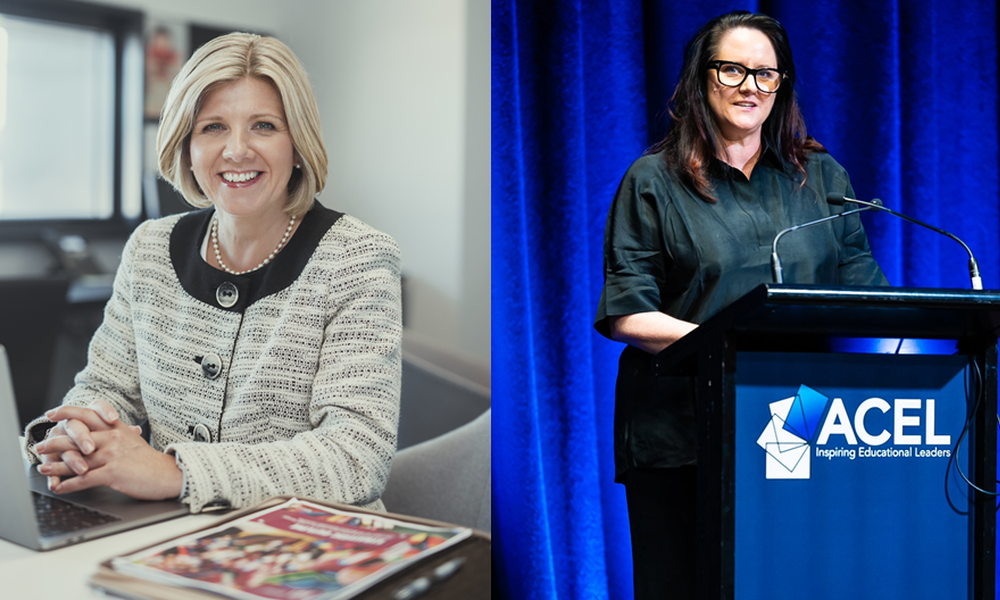
Welcome everyone to this special episode. We're talking leadership and, wow, I've got 2 fantastic guests for you today. Lisa Newland, Chief Executive Officer of the Australian Council for Educational Leaders (ACEL) and Lisa Rodgers, Chief Executive Officer for the Australian Council for Educational Research (ACER). Now, we’re speaking ahead of the ACEL National Conference in September in WA – the theme for that conference 2026 is Bold Leadership: New Frontiers in Education. Actually, ACER is partnering with ACEL to deliver the conference this year so I thought it would be a great opportunity to get to the best leaders I know in education, Lisa and Lisa, on the Teacher podcast for a chat about that, to hear more about their approach to leadership, and also some great examples that they've seen over the years. I absolutely loved recording this one. I hope you enjoy it too.
Jo Earp: Lisa Newland, CEO of ACEL and Lisa Rodgers, CEO of ACER, welcome to this very special Teacher podcast. It's so good to have you both here today. You've got decades of leadership experience between you and I'm looking forward to hearing your reflections and insights. Lisa Rodgers, you're joining me from WA today and Lisa Newland, you're in Queensland. And as I mentioned, WA, Perth, that's going to be the location of ACEL's 2026 National Conference. It's over 3 days from 29th of September to 2nd of October and we'll talk about that very shortly. Let's start though with a little potted history, if you like, of your careers. And, Lisa Newland, I think I'll come to you first.
Lisa Newland: Thanks, Jo. Look, I started as a high school English teacher in 1992. I spent 20 years in schools. I really, truly loved my time in the classroom. Not that it was easy. It was always a great challenge, but I do miss that journey that we take with students from January to December every year.
Look, I've also worked in regional roles, like helping with rollout of Australian Curriculum and other sort of systemic priorities, over 200 schools at one stage. And that was a great opportunity to think about scale. But I was fortunate enough to have an opportunity to work at a global consultancy that focused on culture and leadership. I had an amazing research department and a learning and development team. So, it was a steep learning curve for me coming out of education but from there I led my own education consultancy back to where I felt I belonged in schools and education and what motivated me.
And then after working with ACEL on a number of projects, I became the CEO last year. So, 20 years in schools and about 15 working on schools, I think of it in that way. But it was quite a diverse experience, but I think everything in many ways led me to where I am now, whether it was intentional or not.
JE: Yeah. And Lisa Rogers, tell me a bit about, you know, a little potted history on your career.
Lisa Rodgers: Thanks, Jo. And it's great to be here with you and Lisa, and I'm really looking forward to the conference.
So, my career has been a little bit unusual. It's kind of certainly not been linear. I started off as an intelligence analyst in the British Army, which is a bit odd, but it taught me service and what good service looks like and also trained me in making good decisions (well, hopefully) on ambiguous, uncertain situations and often in quite high-pressured environments. So, just the calm judgment.
And then I went from there and I moved into working in psychology and in schools in North Wales. And we were basically using evidence to improve life outcomes for specifically under 9s. And I love that. I love that work. And then went to New Zealand and there was a decade there of progressing research and then that went into policy. So, I ended up in quite senior policy roles in the Ministry of Education in New Zealand and helped ministers and other senior officials make some major reforms in education.
From there I went to Australia. So, I never thought that I'd end up in Australia. But the opportunity to come across the ditch and work in a federated system was interesting to me. And at AITSL, when I led AITSL, it really brought home to me that any reform or any change has to be done by bringing people along with you. And so that's, like, Australia is the best place to learn that because of course all the states and territories and all their different personalities and all the differences they bring through AITSL it really was about how do we reform through the professional standards and indeed initial teacher education in a way that resonates nationally?
Then I went to the Director General job and head of the school curriculum and assessment authority in WA. That was scale. So, there's 826 public schools in Western Australia, but also we were the regulators for the non-governments. So, every day that's, I had 60,000 staff and about 500,000 children that I was looking after. And, again, my focus really was outcomes for students and how to land things quite softly across a massive state.
And now, in terms of scale, I'm the Chief Executive of ACER, which is a global education research organisation. And this is all about making sure that we're at the cutting edge, we've got future products that enable teachers to know more and do more in a way that has real-world impact. And, of course, we go from early childhood all the way up through to work entry.
JE: So, as I say then a wealth of experience and a wealth of leadership experience and of course in the education sector too. I was thinking our leadership and life philosophies are often shaped by people around us. I'm interested what or who's had a big influence on your own approach to leadership. So that could be an experience or a mentor or a leader and also what lessons have stayed with you. I'll switch it around this time. We'll go to Lisa Rodgers first on this one.
LR: Thanks, Jo. One of my greatest teachers was a guy called Peter Hughes. He ended up being the public sector commissioner in New Zealand and he was kind of revered (and feared a wee bit) because he was so incredibly impactful and he demanded a lot, but he demanded a lot because he wanted outcomes for the people of New Zealand. He was a great guy to work under. What did he teach me? He taught me lean in. So, nobody else is coming. And this phrase that, actually, don't spend too much time wondering if you're completely ready; you've actually just got to lead, and opportunities arise often when you're not prepared. But, also, things happen, and they feel bigger than you in the moment. So, I've had those things happen – so, COVID when I was in WA or cyclones and things, and you don't quite really know exactly what you're doing, but actually you've just got to step in and you've got to lead, you've got to work things out.
But second lesson I think then is it's not a solo endeavour. So, there can be a tendency in senior roles to think you've got all the answers and actually what Peter taught me and what I know is actually it's not about me. It's about seeking the wisdom of others and making sure that people have got the opportunity to speak and be heard. And it's up to you to seek advice. Consult widely, listen carefully, and then actually you have to make a decision and make that decision. Look, sometimes the decisions might be wrong and it's okay to say that decision was wrong and we're going to do something else or, but you've got to step into that. Yeah, and communicate, communicate, communicate. Somebody will have always missed the memo. Give people the opportunity to hear your thinking, talk to people. Tell them where you're at. You're not a deity. You're actually there in the service of people trying to work things out, and that's about communication.
JE: Yeah. Lisa Newland?
LN: That really resonated with me as well, Lisa, because one of my great mentors, he was a tough boss, like tough, and he was probably loved and feared (loved and hated, even), in equal measure, but those who worked really closely with him probably experienced the most leadership growth. And in similar lines, it was the idea that he used to say, you know, ‘make the complex simple and the simple compelling’. So, if we had to come up with a way to pitch work or a way to communicate, he'd say, ‘Too complex. You're trying to be clever. It needs to be simple. It's not compelling’. So, we had these really great sort of rules that we worked under, in particular how to distil the thinking to get to the kernel of what was important and what was the actual issue rather than looking and, you know, communicating in a really verbose way. So, I learned a huge amount from him and he used to say, ‘stop justifying yourself’. And he said, ‘I didn't buy the dog to wag the tail’, kind of thing. It's like, ‘I put you in this position, now just step up and do it. Lead’. So, it was exactly the same kind of advice. And honestly, some of his feedback was so brutal, but I learned so much. I was up for that. I was never personally affronted or upset. I was like, ‘OK, yeah, actually it is a bit rubbish, I can make it better’.
And so, I really liked that dynamic and working in that. And I understand not everybody does, but it really taught me to back myself and – not that I knew everything, or you know what I say goes, or my way or the highway – it was more like, given all of the different things that we know at any one point in time, this is the way forward and just step in, back yourself and go for it. So, I learned a lot in that environment, which was a pretty tough environment.
But I think we, you know, when you watch and observe leader behaviours – and I really like to even, obviously leadership that's not an education – but just watching how people communicate. What the implications of their communication style is, and what are some of the kinds of frameworks we operate by? Like, is it rule of 3? Is it, you know, what are the mind, kind of, frameworks we go back to that are going to help us in any point in time? And so really, I've got a sort of almost like a hobby to watch, listen and learn from leadership. But on reflection, I think some of the toughest leaders for me, the ones who didn't say, ‘yeah, great work, you did well’ every single time, the tough ones were the ones where I did the most growing.
So yeah, so it resonates, although mine sounded a bit more harsh than yours, Lisa, but I think they're both the kind of same in terms of the intent behind their work maybe.
JE: I just want to develop that point a little bit more, Lisa Newland there about – and something you said earlier as well, Lisa Rodgers on not having all the answers all the time. There is often a perception though that leadership is about that, that you have the answers all the time. But in your experience then, how important (and you mentioned this, Lisa Newland, about listening to others) how important is that curiosity and learning and continuous learning when we look at leading schools and education systems in particular?
LN: Yeah, well, I love what Lisa said about we make a decision based on what we know and think at the time, but we can change the decision too.
But I think about, you know, declaring our vulnerability is allowing ourselves to be seen as not having all the right answers, but doing the due diligence of a process, you know, to lead people through something. And sometimes we have to consciously step aside from our ego, you know. Let people know ‘I don't actually know at the moment, but I will find out. I'm a fast learner. I'm committed to learning more …’.
And really, I think part of trust and developing that is articulating the decision making, not justifying it and being on the back foot and apologetic, but really sort of talking about ‘this is the way the decision was made. We'll check in on this decision’ but being vulnerable enough, and I think with an intent to actually build trust with other people. Because that trust has a lot to do then with, you know, false ego and you know, staff morale that tends to work into the toxic sort of culture stuff. Because if we're not vulnerable and we just lead with ego, you know, I always say ego is not your amigo. We all end up where we're covering for insecurity. So, I think it's really important to label it, articulate it, and be really honest.
In the same way, I'd hate to see education become, you know, an environment where it's a binary argument – like, at one end of a continuum is explicit teaching, at another end it's inquiry and never the 2 shall meet. And if you say one thing in favour of it, then it's, you know, you belong to a camp. I think the richness of our work is the discussion and the ambiguity and the unknowing and then how we actually can disagree but be respectful in our disagreement so that we can back ourselves and say, ‘hey, we're professionals, we've got expertise, but this is what I'm thinking at the moment’. And actually have, you know, healthy cultures of just different thinking. So, I think that all relates to us not necessarily knowing, but how do we know together collectively what is it we do know and where do we go from here, together? So, I think, we have to learn to disagree, be healthy in society.
JE: Thoughts on that, Lisa Rodgers?
LR: I agree. I could, yeah – wholeheartedly agree. One of the issues I often find in my leadership is – because I don't have all the answers all the time and my natural disposition is to be curious, and so in a meeting or when we're debating something or we're having to move something along, I'll be asking the questions. So: What's the problem? Why is it happening? What are we missing? What do we not know? And I become really actively curious. And one of the problems of that is that people feel a sense of accountability when I'm asking those questions.
And so, one of the things that I have to watch for in my curiosity is making sure that it's a safe place for people to provide their advice into that place because people naturally come with a view of what the Chief Executive is. And so, I really do believe that the Chief Executive (or whoever it is) – actually, there is no one person that is the smartest person in that room. The job is to get the best thinking out of that room and to make the right decision in the best interests of the people that we're serving. And I get enormous satisfaction from seeing other people succeed and indeed enabling people to find their voice and to land a really good outcome. That's quite hard to achieve. But when you've got that, you generally get good outcomes.
So yeah, everything that Lisa said. And how do you stay curious, and how do you enable other people to be in a curious space? And that actually for me – and thinking about my career – I do think there's a piece here about ongoing curiosity. And I haven't changed jobs regularly, but I get to a point where I need to change because I need to stay curious. And I do think that the world changes too quickly for any leader to rely on what they knew 5 years ago, or 12 years ago, or, there's this sense of renewal or refreshment that it's like I don't feel I'm at my best if I'm actually not challenged and learning. And so, I'll continue to seek that, yeah, in order to make sure that I provide the best in that environment.
JE: So, of course our leadership styles and approaches can change over time. Lisa Rodgers, has your own approach to leadership changed throughout your career? You mentioned, you know, how you started off in the military actually. I'm curious to hear if there's anything in particular that prompted those shifts, if they did happen?
LR: Yeah. So, I think my leadership has evolved over time. And I think that's probably true for most leaders. But I do think there are things that have stayed with me. So, you mentioned the work in the British Army. That experience really deeply shaped me. And the environments that I was working in, the decisions really mattered and often they were literally kind of life or death in some instances. And what I learned there – because I was really young, too – I learned about the importance of service; being in the service of others. I learned about discipline and responsibility. So, this sense of responsibility. And I mentioned it before, like, nobody else is coming. Sometimes you're in situations and you have to make a call. And it doesn't matter at what point of the organisation you're in you have to make a call. So, I learned that leadership wasn't about status or authority. It's about looking after the people around you and making the best decisions you could with the information available at the time. And so, it taught me that.
And so, I am fairly comfortable in an ambiguous situation and so I'm happy to kind of lean in, and often I think leadership requires courage rather than certainty. So, it's the courage to say, ‘okay, I'm going to take this on now and I'm going to give it a go’ and trust that everybody, like other people around you have got you back and vice-versa. Then when I moved into policy and research and public sector leadership roles, my style became far more collaborative. One, there was a bit more space and time. And it was less about expertise, but it was more about how do we get the right judgement and the right opportunity to land things? So, you might have the best decision in the world, but if it's not going to land well, then it's probably not the best decision.
And this was brought home to me once. I was a very senior public servant over in New Zealand. And if we made a policy change, I knew that we got it wrong if I got in the car at the end of the day and picked the kids up from school and the kids would tell me, ‘oh, mum, you did…’ whatever you did, you know. So, there was one instance where outdoor education had been cancelled because we'd done something with the funding formula, which meant that actually principals acted rationally and they cancelled outdoor education. And so, the kids are in the back of the car going, ‘Mum, we're not doing outdoor education anymore. What have you done?’ And so, there's something about, it might be a rational decision, and it might make sense, but if it's not going to land then It's just not a good decision.
So, no single person sees the whole picture. Often people across the organisation have a different lens. Often the Chief Executive knows things that other people don't know. But actually, also the kids in the system do too. And so, it's interesting when you bring them into a policy context and ask them about what some of the best decisions would be. You get really sensible, good answers. So, I suppose I've … things have been shaped, but there are a few, kind of, central core things that I was taught very early on that I've held onto.
JE: Yeah. Lisa Newland, you know, you mentioned you started off as a teacher and so you've obviously worked your way through that leadership progression in terms of in a school as well. How has your approach to leadership changed over the years?
LN: I think I was actually a very annoying early adopter of new and shiny things! I would be annoyingly enthusiastic about ‘oh, this sounds amazing. This will be great’. And I’d jump straight to action a lot of the time and almost drag people along with me, you know. And I have to sort of consciously resist this now. And it is a conscious decision. I've got to watch – I love new ideas, I love creative options, but I have to stop, wait for others, like be very deliberate and purposeful about consulting and talking and listening to others. And it's not a position of rudeness or arrogance, actually, it's annoying energy and enthusiasm. I'm conscious of this because so many people over the years have given me feedback about this particular trait.
In saying that, I think that I really think that being comfortable in ambiguity is a strength as a leader; that we have to sort of be able to see both sides of something, multiple perspectives, competing priorities. And I always like, obviously I say things all the time, like ‘lead people, manage process, drive results’. And I didn't value enough that one around managing process, but it's so powerful when you get that right. And I think earlier in my career I probably relied upon relational leadership, you know, winning people over, getting them on the bus. But what I didn't leverage well, that I now really enjoy thinking about, is that idea that structure drives behaviour and process. When very deliberately implemented and sort of having a strategy around process can drive new behaviours and do some of the heavy lifting for you, rather than just relying on the people skills. So, I think, for me, that's probably my learning of how my leadership has evolved over time.
JE: I want to go specifically to school leadership now. We've spoken about sort of systems, policy, that whole sort of gamut of leadership responsibilities. Many school leaders report that they've been asked to do more than ever before and they’re balancing competing priorities. So, it is a very complex role and we know that. But we also know that there are lots of examples of fantastic leadership out there in schools right across the country, right now. What are some examples that you can remember of leadership that you've seen over the years that have made you stop and you’ve said ‘that's exactly what great leadership looks like?’ Lisa Newland, I'm going to come to you first on this one.
LN: I think great leadership in schools is where leaders look at their school and their community and they define ‘what are the things we can control and what are the things we can influence?’ Because there's a lot of brutal facts in education that are system-driven or policy-driven. But it's about, okay, let's not give oxygen to complaining or wishing it was different. Let's really focus on, okay, that's the brutal fact. What's our sureness of success? How will we collectively work on this together? And I think great leadership is when a principal can scan that environment, see an opportunity and strategise to accomplish a mission. Because so often what we tend to encounter is principals who want to do that but get very stuck in the operational aspects of school. Whereas maybe their thinking strength and their style is around strategy and thinking and that sort of higher thinking in a way, but they get very caught in the operational. And I think for schools to really perform they have to have great teams, great leadership teams, whether that's the executive or middle leadership team, like aligned and collaboratively solving problems to new approaches.
Like, when schools get hit with a substantial problem – like say, for example, I know of a school that they ran out of space, they ran out of classrooms, they just had so many kids coming in. And that could be seen as, oh, you know, woe is me, what are we going to do? But they actually, like, if we think about challenges as opportunities, I think that's the other mindset for me of great leaders. So, they turned a substantial problem into an advantage by then taking an entire cohort of kids off site – not just for a lesson, but for a year, an entire year level went and worked in a different area. And then they've developed a program around it that's really quite rigorous and exceptional. And I think that sort of to me, that's sort of a sign of a school that has a leadership team that not just can make, create and generate great outcomes, but can be hit with a substantial challenge and think, where's our opportunity here? And I think that's a shift in mindset.
But bringing people on board with that, sharing what is possible – schools aren't easy places for this to occur. And I think that's where that idea of bold leadership really does come in. Yes, this is the decision, this is what we're doing and now bringing everyone along with you, that does take some time. But people will follow what they see as possible, I think. So, having that strength and optimism, I suppose, to really go out in front with something that maybe people haven't thought of before is … I think sometimes we play it safe. We do what we need to. We deliver what we need to. We follow all the rules, you know, as schools. I'm not saying that's a deficit necessarily, but I think sometimes there's opportunities there that we may miss.
JE: Great school leadership, Lisa Rodgers. What does that look like?
LR: So, everyone can think about the schools that they've walked into, and they've got really charismatic leaders and they might be great, charismatic leaders. The school leadership teams or principals that really stand out for me are the ones that focus on the kids. And that sounds so trite. But have you ever been in a meeting where you've got a problem on the table and you spend the first 50 minutes talking about all of the other things related to that problem and then you'll spend the last 10 minutes on the actual thing that you were there to discuss? And within 10 minutes you've got the answer. I often find in education that we'll spend 50 minutes on all the things other than the kids. And in the last 10 minutes, we'll get down to the kids and actually what this means.
And often I've seen the best leaders hold the strategic vision – which is improving outcomes for students – and starting from that very position from the word go. And, as Lisa said, there's so many conflicting priorities in a school. There are so many staff, there are so many community members, there are so many local members, there are so many people out there that have a view about what should be. And they're all valid and they should all be listened to. But, actually, the leaders that are the standout are those that create the conditions for others to succeed, to deliver on what is best for the students. And that’s quite hard.
JE: I'm going to stay with you for this next question to have a go at this one and it's about middle leadership. So you don't have to be in a formal leadership position to show leadership, we know that. And on those formal roles – and it's not just the principal or the headteacher or whatever terminology you're using in your system wherever you're listening to this podcast today – there is that middle leadership layer and that crucial role of that, not just in terms of leading for now, but they're going to be your future principals, yeah. They're the pipeline.
I was looking at AITSL's Australian Professional Standards for Middle Leaders (n.d.) and that includes 4 enabling dispositions. And one of those that I was sort of digging into is ‘interpersonal courage’, it's this area called interpersonal courage. And that's defined as – I'll just read from the standards: ‘the ability to take risks to challenge school and team norms, cultures and practices that prevent improved student learning and wellbeing’. So, If you look at the standards, this there’s continuum of proficient, accomplished and expert. And so, at the expert level, there are a couple of things that I wanted to just pick up on – ‘the personal courage to have difficult conversations’ and ‘seeking and acting on frank feedback about the effectiveness of decisions’. So, your thoughts on those 2 points there, Lisa Rogers?
LR: Thanks, Jo. I know these standards well. I think they're ingrained in my brain. Yeah, look, so we've been speaking about this, right? So, leadership isn't about bravado. It is about moral courage, that self-awareness, willingness to kind of hear things that you might not want to hear, putting in place the conditions that enable people to say things to you that might be really difficult. And so, it's not the kind of dramatic courage, like we're all going over the top that people think about. It's the everyday courage that is required in leadership and that's leadership at every level.
So, you've spoken about it. So, the courage to have the difficult conversation when actually it would be really easier to avoid it. And we have that almost daily in our lives where you think, ‘oh, actually I probably do need to say something about that’. And you're weighing up, ‘should I?’ Yeah, well, you've just got to get in there and have the better conversation so you can improve things. The courage to tell people something that would be helpful for them to hear and might not want to hear it. And similarly, for me, you might not want to hear it, but you've got to hear it. And then the courage to make a decision when there's no perfect option. Again, in a classroom, things are happening all the time and educators are having to make decisions all the time.
The thing about obviously kids in schools is they give you quite a lot of feedback and that's really, really helpful. But if you don't encourage that over time as leadership grows and you develop, it becomes a really, really lonely place. So, leadership really isn't about being fearless, that middle leadership (or actually just leadership) and the moral courage. It's about kind of being comfortable with feeling uncomfortable. It's about seeking feedback. It's about providing feedback in a safe way, inviting the challenge, having the difficult conversations and building environments where actually those conversations can happen all the time. It's about being willing to test the questions, hear some of the responses, and just take on some of the things that you're hearing that perhaps feel a little bit uncomfortable. I think that's important.
JE: Lisa Newland, those 2 points there from the middle leadership?
LN: Yeah, look, I think it's no coincidence that one of our most popular programs is called ‘Straight Talking’ because this does take personal courage.
And what we often find with middle leaders, like sometimes, particularly for those people in regional, rural, remote – you might now find yourself in a supervisor kind of position, but the people that you may have to have a straight talk with were once your friends or they're your colleagues or you're still in the same room as them in a school. And I think that adds another layer of complexity to having those, kind of, frank discussions in terms of that difficult conversation. But we know that it really does help to create a healthy culture. We all know that if we needed feedback, someone would happily give it. We all know that if we were doing something wrong that was impacting someone else, somebody would let us know, and I think that develops trust.
But I think there's a huge opportunity for feedback in schools. We don't often ask people how they want feedback. What type or style of feedback is useful for you? You know, I'm not talking about 3 stars and a wish with teachers, I'm talking about what kind of feedback is useful for you to hear it. And also, how can feedback support you but also challenge you to grow from it. And I think maybe as middle leaders, part of that trust and vulnerability (‘I don't know everything’) is maybe inviting, stepping into the vulnerability by inviting some feedback. You know, what do you want to see more of from me? What do you want to see less of? You know, structuring it in a way that gives you something tangible to work with, but setting the conditions that we are a team or we are a culture, that we're honest, authentic and forthright with each other as adult professionals in a workplace. So, giving some agency around how we'd like feedback I think is key, but actually leading the way with some, you know, inviting that feedback in from others is really a great sort of strategy for middle leaders.
JE: So, as I say, the ACEL conference theme this year is Bold Leadership: New Frontiers in Education. I mean, most of this conversation actually has been about that bold leadership and what that looks like. In terms of the new frontiers aspect of that, what do you think is the most exciting frontier for school leaders over the next 5 to 10 years? Lisa Newland, do you want to take that one first?
LN: People might automatically go to something like AI, you know, the huge looming consideration that we have. We've dealt though with massive systemic upgrades and technology before; it doesn't always result in wholesale change. So rather than look at external factors like that, that could possibly be the new frontiers, I actually think what we've been speaking about here – things like agency and people having courage and stepping in – I think that's actually, for me, the part of a sign of the future.
So, I was saying to someone the other day – and if you're as old as I am, you understand this one – but it was that idea of ‘don't wait to be told you need Palmolive Gold’. I don't know if anyone knows the end of that ad. I don't know, Lisa, if you know that one! But it's that idea though, don't wait to be told. I think that my mission as the ACEL CEO is to shape the future but do that by providing opportunities for people to step up, to have a say. To say, ‘this is our sector, we're professionals, we should determine what that future looks like rather than waiting to be told’. And, I suppose, our strategic pillars now are be seen, be heard, connect. And I see that as a crucial part of our core work.
So, it's not so much topics that I think are important here. I think it's a shift in the way that we elevate our own profession and really step into the breech. So, I want to provide educators with a platform to have those conversations – feeding up, back, forward, like stepping into this space so that we determine and talk about, what is the future of education? So, where's the opportunity for people to actually step boldly into that and own it? Because we're the practitioners, we're the experts. And I think that is a big shift from where I think some people currently feel like we are.
And I know that AITSL's done some fantastic work. We've sort of partnered with them on that around future teacher, future leader. So, trying to get out in front to determine what some of those things are. And interestingly, it always gets back to things like relationships, the student at the core, the essence where we actually decide – collectively as experts in the system – what's the purpose of education? Because it can't just be around sets of data. What is our actual purpose? And I think when we define that, own it, and then work towards it, I think that is an exciting new frontier for us. Because I think, sometimes we've been lost in the conversation, not willingly, but just through, I suppose, different sort of changes and voices that then we listen to and we hear, but not necessarily our own voices in amongst the mix.
JE: And new frontiers, exciting frontiers for you, Lisa Rodgers?
LR: I could almost verbatim give Lisa's answer. What I learned coming from New Zealand to Australia is there's a lot of collaboration and there's a lot of negotiation about what should be. And we see that in the politics across Australia. And there's a place for that, it's important. It's an important context in Australia. I just think that we need to make sure that we focus on the outcomes that really count. And the profession do have the teaching and learning in their hands of Australian children. And there isn't certainty. And we can't make sure that every risk is dealt with or resolved before we get on and just build that future. Teachers know that. And we can't wait for every stakeholder, that actually often sits outside of school, to agree. The conversation often happens in policy circles outside schools where the teaching's going on in schools. And so, I just think I’m with Lisa in regards to there’s such an opportunity for the profession to take what they know and continue to teach in a way that will improve outcomes for children.
Now, I'm not suggesting that we are reckless and we ignore the policy debate – that's really important and we've got to be deeply informed about that. We've got to follow the rules and have the courage to act and teach because that's happening every single day in the classroom. And there's a bit of a shift from protecting the system and the adults in the system to serving the students. If we could make that shift, I think it would be really profound. Lots of teachers have made that shift; [it’s] happening in classrooms every day, but maybe it just needs to be a bit more explicit across schools and at system levels.
JE: A reminder then that the conference takes place over 3 days from 29th of September to 2nd of October and the schedule is absolutely packed with keynotes. Lisa Rogers, you're delivering the opening keynote actually. Concurrent sessions, workshops, provocations, there are panels. We're going to zoom ahead. Let's imagine we're at the end of September, beginning of October. If every attendee walked away with one message or a mindset shift, what do you hope that would be from Bold Leadership: New Frontiers in Education? Lisa Rodgers.
LR: I would say take it on – nobody else is coming. And feeling empowered to go and do what they're absolutely fantastic at, and that's teaching the next generation. There's so much good. There'll be so much good in those rooms. And I'm thinking about the delegates, them having the time and the space – third term holidays, have fun, sit down, think, pat yourself on the back, and then be empowered, I think. Grab that bold leadership and go.
JE: That's a nice message. And for a final time then, Lisa Newland.
LN: Similar, I just think back yourself. You may not have every answer. The conference hopefully will challenge some thinking about what's possible and really, I suppose, instigate some thoughts about what you can do to take a measured risk. Back yourself, you've got expertise, you've got people around you who'll support and challenge. So, step forward and have a go. I just think that would be awesome if there were people very much empowered to do that after sharing 3 days with ACER and ACEL in Perth.
That’s all for this episode. I told you this was going to be a good one. My thanks to Lisa Rodgers and Lisa Newland for a fantastic conversation. And thanks to you for listening, wherever you are. If you enjoyed this one, take a moment to follow our show on your podcast app (if you haven’t done that already) and leave us a review. Both of those things help more people like you to find our podcast, and they’re a really big help to the team. We’ll be back with a new episode very soon.
References
Australian Institute for Teaching and School Leadership. (n.d.). Middle Leader Standards. AITSL. https://www.aitsl.edu.au/the-standards/middle-leader-standards
The ACEL National Conference 2026 is proudly presented in partnership with ACER and takes place in Perth, Western Australia from 30 September to 2 October 2026. Explore big questions, hear bold thinkers and join leaders actively shaping education's future. Click on the link to find out more about the program and to register to attend.