School culture is built in the little moments by us all

‘Perhaps the most important realisation for any school community is that culture is never owned by the leadership team alone… Every staff member holds influence, regardless of their role or title.’ Teacher magazine is delighted to welcome Rachael Lehr – Foundation Associate Principal at Dayton Primary School, Western Australia – as a columnist. In this first article, she discusses how strong, positive school cultures are built deliberately, through everyday actions and shared responsibility.
At the beginning of the 2026 school year, we gathered as a staff for our development days with the intention of reminding our team of ‘the things that matter most’ at Dayton. Amongst the teaching and learning reminders, we reminded our team of something simple but powerful: our positive culture does not happen by chance, it is created by us all.
While school culture is often spoken about as though it were something intangible that just happens serendipitously, like a feeling in the air, a tone in the staffroom, or an atmosphere that somehow emerges just because the ‘right’ people happen to work together, the reality is far more deliberate and intentional.
The culture in our schools and organisations is built, reinforced, and sometimes eroded, through the everyday actions of all the people within the organisation. It is shaped through small interactions, quiet decisions, and shared expectations that accumulate over time. As Bryk and Schneider (2002) highlight in their research on relational trust in schools, the foundations of strong professional cultures are not established through statements or slogans, but through consistent patterns of behaviour that demonstrate respect, competence, integrity, and personal regard.
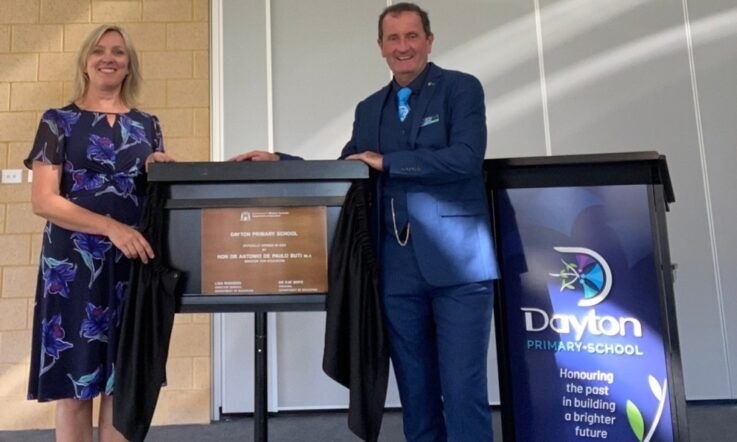
We shared our 2023 opening journey at Dayton Primary in Series 1 of Teacher’s podcast series ‘School Assembly’. Principal Ray Boyd and I recruited intentionally with an eye to culture, when we looked for ‘mindset over skillset’ and employed staff who we felt would be a good fit for our team in relation to a shared ideology, the desire to be lifelong learners, and just genuinely nice humans (who are a little quirky as an added bonus!).
This seems, on a casual reflection, to have worked, as visitors often comment on the warmth and positivity they feel when they walk into our school. Relief teachers notice it quickly and remark on it before they leave at the end of the day. Parents often mention the welcoming atmosphere that extends from the first point of contact with our front office staff to every adult they interact with at the school. New staff who join Team Dayton frequently remark that there is something distinctive about the way people interact with one another, and they feel like they have become part of something special (with one teacher driving nearly 550 km each week for this).
While these observations are pleasing to hear, they also prompt an important reflection for us as we remember that culture can be built – but more than that, it needs to be sustained through intentional and ongoing actions.
Our positive culture does not simply appear because a group of well-intentioned people who genuinely like kids and are a little bit quirky work in the same school. It emerges when individuals deliberately choose to contribute to an environment where professionalism, care, and shared responsibility are the norm, a place where they feel a genuine sense of belonging. In many ways, culture is built in the little moments between the work that we do each day in schools, and it is built by us all.
These moments might seem small or inconsequential in isolation: a warm greeting and a kind word offered in the morning; a colleague stepping in to help when someone appears overwhelmed; a conversation by the photocopier that acknowledges effort or celebrates progress; or a willingness to address a minor concern before it grows into something larger. Yet, over time, these little interactions shape how a school feels to the people within it.
As John Hattie (2023) reminds us through his work on collective teacher efficacy, the beliefs educators hold about their shared capacity to make a difference are among the most powerful influences on student outcomes. Those beliefs are strengthened not through rhetoric alone, but through the daily experiences staff have of working in environments characterised by trust, collaboration, and mutual support. When teachers and leaders feel like ‘we truly are in this together’ and ‘I am not alone’ that feeling of collective efficacy increases.
One phrase that all staff in our team at Dayton have heard often is that ‘the standard you walk past is the standard you accept’ – a concept attributed to Lieutenant-General David Morrison in a speech on leadership and culture to the Australian Army in 2013. While sometimes interpreted as a hard or confrontational statement, in reality it is far more collegial and constructive.
At Dayton, it is a reminder that our standards are not maintained by statements, policies, or positive posters on our walls, but by the willingness of all individuals to uphold these expectations in everyday moments. It reflects the understanding that healthy and positive professional communities rely on shared ownership and a willingness to speak up. When something is not quite right, whether it relates to student expectations, professional interactions or the way we care for our environment, addressing it early, respectfully, and with professionalism protects both the culture and the relationships within it.
Whilst we often speak about how amazing our team and our culture is at Dayton it has not been an easy ‘sit back and let it happen’ journey. We have understood that ignoring small concerns rarely makes them disappear and, more often, it allows them to quietly grow until they become far more difficult to resolve. In strong cultures, colleagues lean into these difficult conversations with clarity and kindness, recognising that maintaining standards is not about criticism or fault-finding, but about safeguarding the professional environment everyone depends on.
As Edmondson (2019) explains in her work on psychological safety, the most effective teams are those in which people feel able to raise concerns, ask questions, and challenge ideas without fear of embarrassment or retribution. In these environments, speaking up (while sometimes hard to do) is understood not as conflict, but as a contribution to collective improvement.
This idea aligns closely with the African philosophy of Ubuntu, often translated as ‘I am because we are’ – another phrase that is used regularly at Dayton, even with our students. Ubuntu reminds us that our actions as educators rarely affect only ourselves. The way we show up each day, in our words, our tone, our willingness to support others, and even the assumptions we make about colleagues’ intentions, ripples outward to influence the wider community.
When we assume positive intent, offer support freely, and communicate with both honesty and care, this contributes to the conditions in which trust and collaboration flourish. Students, of course, experience the positive effects of this culture as well, as research consistently demonstrates that the quality of adult relationships within a school has a significant influence on the broader learning environment (Fullan, 2018).
At Dayton, our vision is to ‘create a sense of belonging that promotes success, engagement, and wellbeing for all’ and we want that ‘all’ to include our team as well as our students and wider community. When our staff experience a sense of collective purpose and mutual respect, that stability and positivity extends into classrooms and playgrounds, shaping the experiences and leading to better outcomes for the young people in our care.
Another principle that has resonated deeply with our team comes from the sporting world: the idea of ‘sweeping the sheds’. Popularised in James Kerr’s (2013) book Legacy, which examines the leadership culture of the New Zealand All Blacks rugby team, the concept emphasises humility and shared responsibility with the most senior players sweeping the changing sheds after a game. The message is simple but powerful – no task is beneath anyone, and everyone contributes to maintaining the standards of the team.
In schools, sweeping the sheds might look like helping tidy a shared space, supporting a colleague who is navigating a challenging moment with students, stepping in to assist with supervision or a duty, or quietly resolving a small logistical issue before it becomes someone else’s burden. These actions are rarely visible to others, and they certainly aren’t mentioned in strategic plans or annual reports, yet they are the threads that weave strong cultures together.
As Simon Sinek (2014) suggests in his work on leadership and trust, environments where people consistently act in the interests of the collective create a powerful sense of belonging and safety.
Clarity also plays an essential role in sustaining healthy professional cultures. Brené Brown’s well-known phrase ‘clear is kind’ – a phrase I mention often in conversation – resonates strongly in educational contexts because ambiguity often becomes fertile ground for misunderstanding and tension. When expectations are made explicit, when timelines are reinforced, when shared values are openly discussed, and when professional standards are understood across the organisation, teams are better able to support each other in upholding them. Clarity, in this sense, is not about rigidity, rather, it creates the conditions where educators can focus their energy on the work that matters most – teaching and learning – rather than navigating uncertainty about expectations or priorities.
Perhaps the most important realisation for any school community is that culture is never owned by the leadership team alone. While leaders certainly play a significant role in modelling behaviours, reinforcing expectations, and shaping the direction of the school, culture ultimately belongs to everyone. Every staff member holds influence, regardless of their role or title.
Whether working in classrooms, supporting students in the playground, assisting families in the front office, or collaborating in professional learning sessions, each interaction contributes to how a school feels for those within it. Culture is strengthened when colleagues celebrate one another’s successes, offer honest feedback with care, maintain high expectations for themselves and others, and approach challenges with professionalism rather than avoidance.
Over time, these everyday behaviours accumulate to create the conditions where people feel safe, supported, and motivated to do their best work. In the end, the culture we experience in our schools is the culture we collectively create. It does not require dramatic initiatives or sweeping reforms, instead it grows gradually through everyday moments: a welcoming smile, a supportive conversation, a willingness to help, a respectful but direct discussion when something needs to improve. Together, these individual actions shape the environments where educators work and where students learn.
What are you doing every day to build and shape a positive culture in your school community?
References
Brown, B. (2018). Dare to lead: Brave work. Tough conversations. Whole hearts. Random House.
Bryk, A. S., & Schneider, B. (2002). Trust in schools: A core resource for improvement. Russell Sage Foundation.
Edmondson, A. C. (2019). The fearless organization: Creating psychological safety in the workplace for learning, innovation, and growth. Wiley.
Fullan, M. (2018). Deep learning: Engage the world, change the world. Corwin.
Hattie, J. (2023). Visible learning: The sequel: A synthesis of over 2,100 meta-analyses relating to achievement. Routledge.
Kerr, J. (2013). Legacy: What the All Blacks can teach us about the business of life. Constable.
Morrison, D. (2013). The standard you walk past is the standard you accept [Speech]. Australian Army.
Sinek, S. (2014). Leaders eat last: Why some teams pull together and others don’t. Portfolio.