When did being uncomfortable go from being a predictable part of life, to something that must be avoided at all costs? From tackling new challenges to overcoming self-doubt, giving students opportunities to step outside their comfort zones could be one of the most valuable lessons we can give them.
With the rising popularity of generative AI, Amazon’s same-day shipping, 90-second soap operas, noise-cancelling headphones, and food delivery apps providing (almost) immediate satiation for our latest sweet-treat craving, we've created a world where children rarely have to wait, work things out or sit with discomfort. For Generation Alpha, instant gratification and constant adult intervention can mean fewer opportunities to develop frustration tolerance, independence and perseverance.
So, what happens when life presents a problem that can’t be solved immediately by a clever app on our phones? Real-world challenges require resilience, practical problem-solving skills, patience, teamwork, and critical thinking, and in a time where convenience and comfort are so readily available, it is more important than ever that these skills are consciously developed and nurtured in our young people.
Outdoor education and school camps provide a natural opportunity for young people to develop these skills. Away from the familiar routines of everyday life, students are given the chance to try new things, navigate unfamiliar situations and discover what they're capable of. While students may arrive at camp with varying levels of confidence, most are guaranteed to end up trying something they have never encountered before. Guided by camp instructors and supported by their attending teachers, students are encouraged to safely step outside their comfort zones and face unfamiliar challenges head on.
Getting outside of the regular constraints of the classroom environment is often as good as a system reboot. A study conducted by Outdoor Youth Programs Research Alliance (2018) found that students who went on camps ‘were more independent, less anxious, work harder at school, and felt more important in the school community’.
Camp instructors play a big role too. They’re often looked up to with a sort of reverence by students attending camp. For a few days, these instructors will coach them through an array of activities, a (seemingly) fearless leader who is experienced in bringing out the best in each child, identifying their natural strengths, and supporting those students who may need some extra guidance or reassurance.
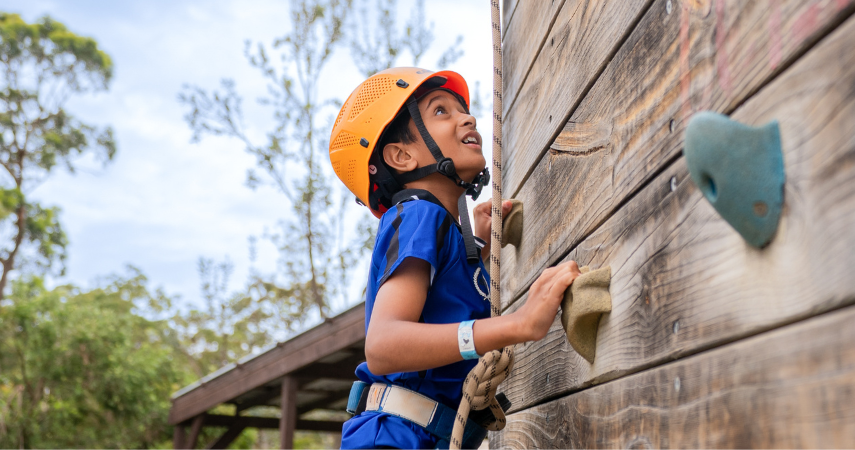
Camp activities may be the most obvious way in which students can strengthen the muscle that allows them to deal with discomfort – a crucial skill that will become even more important as time goes on. A rock climbing wall looks awfully high when you’re standing at the bottom, but with qualified instruction, students are taught to break this challenge down into a series of small steps, allowing them to tackle something that may have, at first glance, seemed impossible to them.
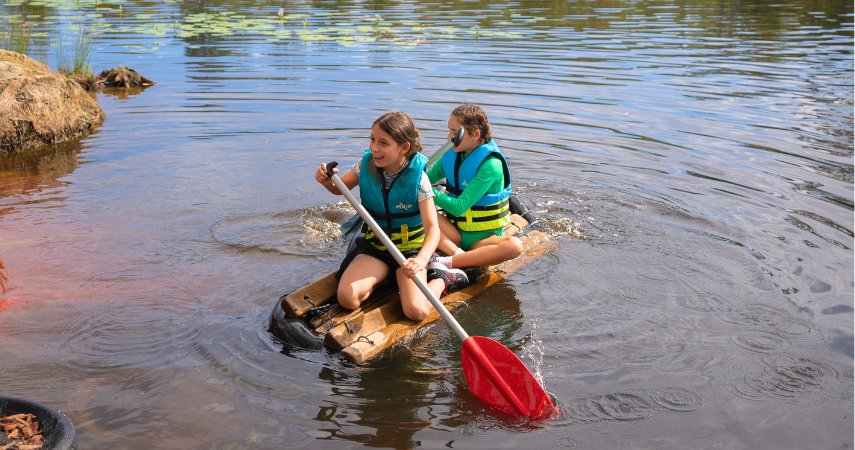
Experiences of nature have been linked to development of perseverance, critical thinking, leadership and communication skills (Kuo et al., 2019). Combined with activities that actively call on students to engage with these skills, such as raft building (where students must work together to create a vessel that will keep their teammates afloat as they paddle across the water), or alpine rescue (where teams of students must navigate a challenging obstacle course whilst carrying one teammate on a stretcher), camps create a rich environment for fostering personal development.
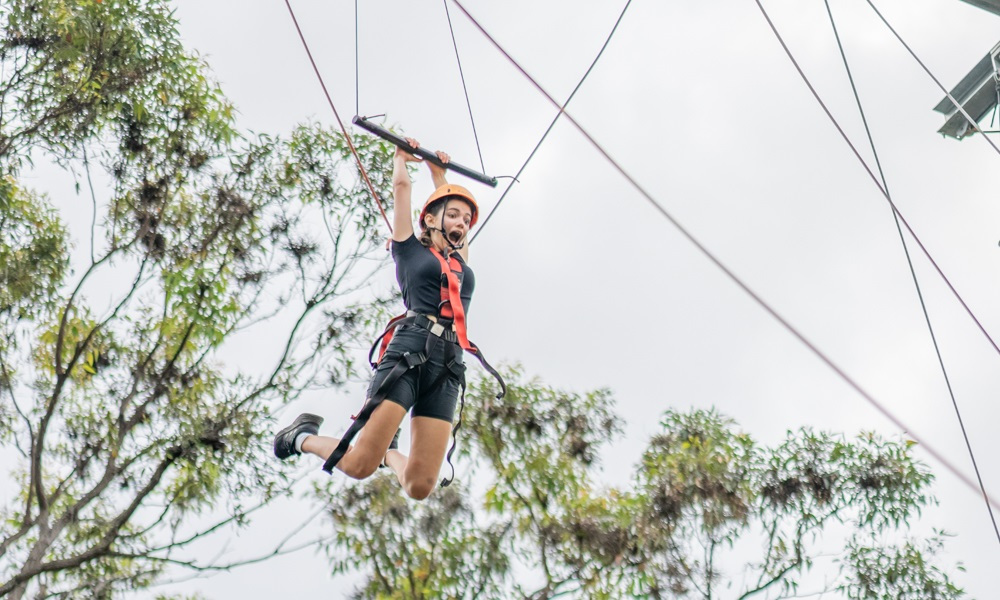
Camp activities are also a wonderful way for students to take part in calculated risk-taking. Activities such as abseiling and jumping from heights (even while safely harnessed) can trigger a fear response. When students overcome this by completing an activity that scares them, their brains are rewarded with a rush of dopamine, giving them a sense of accomplishment and euphoria. Repeated exposure to this natural ‘high’ helps brains adapt, reducing fear over time (Cottrell et al., 2020).
A study from Quinones (2023) supports this, explaining that outdoor play involving elements of challenge or adventure can reduce fear in children, help grow their resilience and confidence, and increase their executive functioning and problem-solving skills.
Even the sleeping arrangements at camp can be a ripe opportunity for growth. For some students, camp may be their first time staying overnight without a parent or guardian present. There are also group dynamics to consider, and being in cosy camp quarters together provides ample opportunity for practising group decision-making, navigating a range of social situations, and dealing with being somewhere unfamiliar. In return, students usually find that, although there is no place like home, their time away at camp was nowhere near as daunting as they anticipated.
For students, these camp experiences aren’t just fun, they’re transformative on several levels. From managing discomfort and building a strong sense of self, to working with others and tackling new challenges, the benefits provided by outdoor education camps create a strong foundation for success, both in school and in life beyond the classroom.
References
Cottrell, J. R., & Cottrell, S. P. (2020). Outdoor skills education: What are the benefits for health, learning and lifestyle? World Leisure Journal, 62(3), 219–241. https://doi.org/10.1080/16078055.2020.1798051
Kuo, M., Barnes, M., & Jordan, C. (2019). Do experiences with nature promote learning? Converging evidence of a cause-and-effect relationship. Frontiers in Psychology, 10, Article 305. https://doi.org/10.3389/fpsyg.2019.00305
Outdoor Youth Programs Research Alliance. (2018). Improving resilience, learning and wellbeing among young people. https://www.outdoorsvictoria.org.au/wp-content/uploads/2022/08/311018-Outdoor-Youth-Programs-Research-Alliance-Research-Findings-Summary.pdf
Quinones, G. (2023). An infant-toddler outdoor risky play practices in an early childhood centre in Australia. Journal of Outdoor and Environmental Education, 26(3), 463–477. https://doi.org/10.1007/s42322-023-00148-y

