What opportunities do your students have to apply concepts they’ve learned to solving real-world problems?
That is the aim of the annual International Mathematical Modeling Challenge (IM2C). Now in its 12th year, the challenge has wrapped up for 2026, seeing 37 countries participate, including Australia.
The IM2C invites students to work on a designated mathematical modelling task in teams of up to 4 under the supervision of an advisor (typically a teacher). The teams must nominate 5 consecutive days to work together on the problem before submitting their solution document for judging. In Australia – where the challenge is coordinated by the Australian Council for Educational Research (ACER) – documents are judged by a qualified panel of teachers and mathematics education researchers, and the 2 best documents are then submitted to the international round of judging.
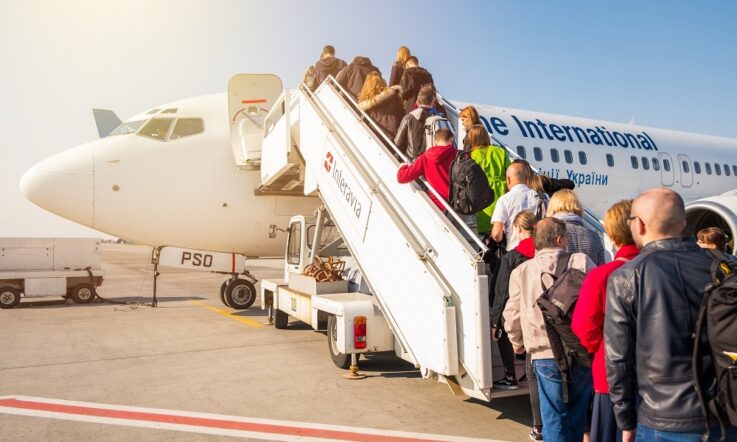
Past challenges have tasked students with developing the fixture for a global sports league, creating a model to assess household readiness for pet ownership, and determining the most efficient way to disembark a plane.
The task for 2026 was:
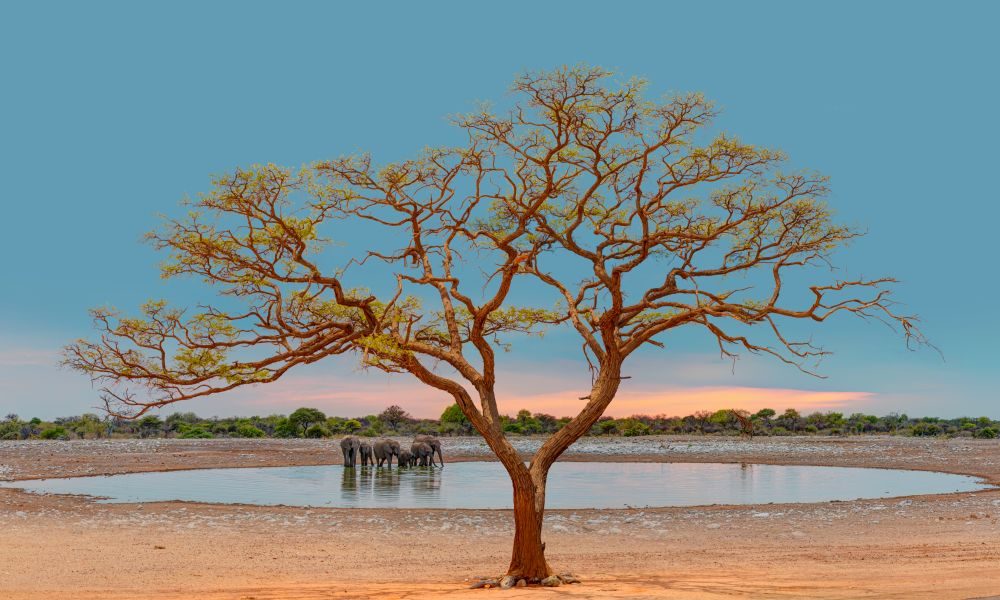
The IM2C seeks a modeling-based approach to inform protection planning for Etosha National Park, a large and complex wildlife reserve. Your work should consider how limited human and technological resources can be coordinated to protect wildlife across the park over time, and how ‘protection’ can be defined and measured in a realistic, practical, and quantitative way (IM2C, 2026).
Over the 5 days, teams were required to address major conservation challenges faced by the park, develop a mathematical model to allocate protection resources, use their modelling approach to analyse how well the park is protected over time and to estimate the number of human personnel required to maintain their chosen level of protection, investigate how changes in assumptions or available resources affect their strategy, discuss the strengths and limitations of their approach, and demonstrate how their modelling approach can be adapted for use at 2 other national parks or wildlife reserves located on different continents (IM2C, 2026).
An opportunity to develop mathematical thinking
In Australia, 8 teams were recognised as national finalists.
One national finalist was a team from Glenunga International High School in South Australia. John Connell, IB Mathematics teacher at the school tells Teacher that mathematical modelling is an important part of how they teach mathematics at the school.
‘We want students to see that mathematics is not just theoretical, but a powerful tool for understanding and solving real-world problems,’ he says. ‘Glenunga has participated in the IM2C twice before. It gives students a valuable opportunity to apply mathematics to real-world situations, and it is excellent preparation for the mathematical modelling and investigation skills they need in their IB studies.’
‘We are very proud to be named national finalists. It is wonderful recognition of the students’ talent, teamwork and perseverance, and it reflects our school’s strong commitment to developing critical and creative thinkers.’
Not all schools named as national finalists were seasoned at the challenge. National finalists Brisbane Grammar School participated for the first time this year. Maude Pearce, Head of Mathematics at Brisbane Grammar School, said the idea to participate actually came from the students who approached her and asked to enter.
‘The students thrived because the competition mirrored the way they learn every day in our classrooms,’ she tells Teacher. ‘Beyond developing their mathematical thinking, it strengthened their communication, collaboration, and resilience under pressure, all qualities that will benefit them throughout their lives.
‘The recognition reinforces something we strongly believe as a department, that students achieve their best when learning is collaborative, challenging, and centred on deep thinking rather than simply finding the right answer. Seeing that approach recognised on a national stage is something we're all very proud of.’
External challenges to complement classroom learning
In Australia, 3 teams received Meritorious Achievement Awards – John Monash Science School in Victoria, Sydney Grammar School in New South Wales, and James Ruse Agricultural High School in New South Wales.
Nancy Zhu, a Mathematics teacher at James Ruse Agricultural High School, tells Teacher this recognition reflects their students’ collaboration, perseverance and mathematical thinking, and is something the whole school is proud of.
‘Our school has participated in the IM2C for several years, and it's something our students really enjoy. It develops teamwork, critical thinking and problem-solving, while giving students the opportunity to apply mathematics to authentic, real-world challenges,’ she says.
‘The IM2C complements our focus on problem-solving and mathematical reasoning. It gives students the opportunity to apply what they've learnt in class to a genuine real-world problem while developing the collaboration, creativity and communication skills that are so important in mathematics and beyond.’
Recognising and celebrating student achievement
Brisbane Boys’ College entered 3 teams into the challenge this year, and all 3 were named as national finalists. One team also received the Outstanding Achievement and Queensland Award. The school has participated in IM2C for many years now, and in 2024 they even had a team fly out to Hong Kong to attend the international awards.
‘I've been involved in organising lots of maths competitions at [Brisbane Boys’ College] and the IM2C is unique for its challenge, the depth of responses required, and the modelling framework,’ Mathematics teacher and Gifted & Talented Coordinator at the school, Bryn Jenkins, tells Teacher.
‘Our students involved are some of our most enthusiastic and high-achieving in mathematics, and knowing they are seeing the benefits of modelling in mathematics in the real-world, and are gaining experience in this area now, is so fantastic. One of my hopes is that maths plays some role in our students' lives for years into the future, and they can see the practical benefits of it, and this is one way I can see concrete evidence of mathematics having a positive challenge and impact in their lives.
‘I think more than anything else it's wonderful for the students to be recognised in this way, as it shows their hard work and involvement in maths modelling, a skill which doesn't just appear overnight. These boys have worked hard for years in the world of mathematics, and this is one way they can be recognised.’
The complete list of Australia’s IM2C National Finalists is:
Outstanding achievement:
- QLD State Award. Brisbane Boys’ College: Angelus An, Eugene Jeung, Kyle Shen, Jonathan Su.
- NSW State Award. Northern Beaches Secondary College – Manly Campus: Ryan Chen, Roger Full, Alexander Burns, Maan Garg.
Meritorious achievement:
- James Ruse Agricultural High School: Aiden Wen, Lenis Wu, Jamie Hao, Charlotte Sun.
- VIC State Award. John Monash Science School: Ehen Chua, Ryan Wee, Mornington Yang, Andy Zeng.
- Sydney Grammar School: Gabriel Song, Edward Lau, Samual Lai, David Walsh.
Other national finalists:
- Brisbane Boys’ College: Joel Won, Rory Hillman, Aryan Potukuchi, Bryan Kang.
- Brisbane Boys’ College: Chris Sun, Lucas Qi, Peter Lee, Albert Ge.
- Brisbane Grammar School: Guan- Ao Ma, Cyrus Nemati, Timothy Zhu, Callum Deacon.
- SA State Award. Glenunga International High School: Tyler Han, Lawrence Hart, Florence Fang, Daniel Xu.
- NBSC Manly Campus: Antoine Cheminat, Jarod Binley, Aidan Gilbert, Jacob Wood.
- WA State Award. Perth Modern School: Tehzeeb Kuhar, Wanying Wu, Ain Kim, Emily Chen.
- Top Entrant of Junior Secondary. Pembroke School: Oscar Zhou, Monty McCann, Jedd Chiu, Louis Kent.
References:
IM2C. (2026). 2026 IM2C Protecting Wildlife at Scale. https://immchallenge.org/wp-content/uploads/2026/06/2026_IMMC_Problem.pdf
What opportunities do students in your school currently have to apply mathematical concepts to authentic, real-world challenges? Do they require students to demonstrate collaboration and written communication skills?
How might external challenges or competitions complement your existing curriculum? What evidence could you collect to understand the impact of real-world problem-solving tasks on student outcomes?