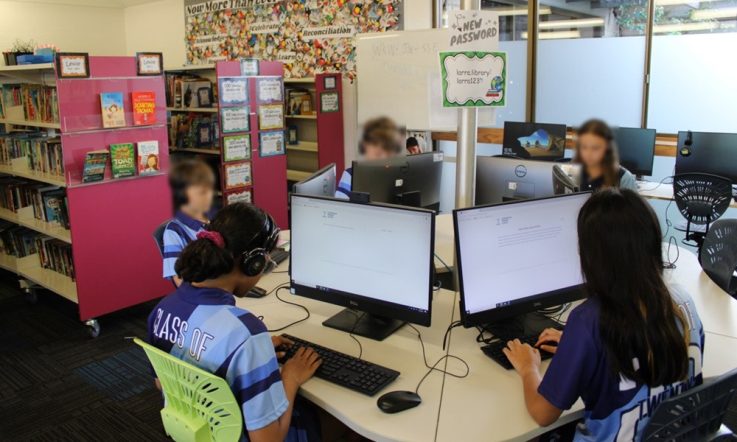
‘Our policy explicitly states that AI should enhance teaching and learning while safeguarding student engagement, cognitive development and ethical standards. It also emphasises that AI use must not replace students' thinking, writing or problem-solving. This distinction is critical.’ In today’s article Kara Baxter – Deputy Principal, Learning and Teaching, at Strathcona Girls Grammar School – shares the thinking and process behind the development of the school’s AI policy.
When generative artificial intelligence first emerged in schools, much of the discussion centred on cheating, disruption and uncertainty. While these concerns remain important, they risk overshadowing a more significant question: how can schools help young people learn to use AI thoughtfully, ethically and effectively?
Strathcona Girls Grammar is an independent girls’ school in Melbourne, Victoria, offering education from Early Learning to year 12. Our approach to the use of AI has been guided by a simple principle: it should enhance learning, not replace it. Our philosophy is grounded in the belief that human relationships, teacher expertise, critical thinking and deep learning remain at the heart of education. AI is a powerful tool, but it is just that, a tool.
This position aligns with global research and policy. UNESCO has advocated for a ‘human-centred approach’ to generative AI, emphasising that educational use should protect human agency and genuinely benefit learners and teachers (Fengchun & Mutlu, 2024). UNESCO’s guidance highlights the importance of ethical, safe and meaningful implementation, rather than adoption for its own sake.
Strathcona's whole-school AI policy reflects this thinking. Developing the policy was a way of building shared language, consistency and confidence across the school. As staff and students began engaging with generative AI in different ways, we recognised the need for clear expectations around ethical use, academic integrity, privacy, cognitive engagement and teacher professional judgement. The policy gives staff a framework for decision-making, supports professional learning, and helps ensure that innovation stays coherent rather than fragmented or tool-driven.
Our school's AI policy is already on its second iteration. The policy itself emerged through ongoing conversations between school leaders, teachers, and ICT, and was shaped by our risk and compliance lens. The policy draws on both research and classroom experience: we reviewed emerging national and international guidance, explored the opportunities and risks associated with generative AI, and considered how these technologies intersect with teaching, learning and assessment.
Importantly, the process stayed grounded in the practical realities of school life. Teachers needed clear guidance on what responsible use looks like, students needed support to navigate a rapidly changing landscape, and families needed confidence that innovation would be balanced with appropriate safeguards for learners across our school's different age groups.
Our staff are encouraged to use AI to support professional tasks such as drafting communications, summarising information and generating ideas. But it is not a substitute for core teaching responsibilities. Our policy explicitly states that AI should enhance teaching and learning while safeguarding student engagement, cognitive development and ethical standards. It also emphasises that AI use must not replace students' thinking, writing or problem-solving.
This distinction is critical.
While the principles of our policy apply across the entire school, the way AI literacy is developed differs according to age and stage. Our policy also highlights that digital and cyber safety is an important part of the responsible use of AI.
For younger learners, the focus is on developing curiosity, questioning information, and understanding that digital technologies are created by people and therefore reflect human decisions. As students progress through the middle and senior years, conversations become more sophisticated, exploring issues such as bias, misinformation, privacy, intellectual property and responsible use. By year 12, students are expected not only to use AI appropriately but to critically evaluate its outputs, understand its limitations, and make informed decisions about when its use enhances learning and when independent thinking is required.
Importantly, AI literacy is not confined to a single lesson or subject. Whilst our students begin their understanding of AI through their digital technology classes in years 7 and 8, we see it as a capability that should be developed across the curriculum. Students encounter AI through research projects, inquiry learning, assessment tasks and interdisciplinary experiences that require them to evaluate information, challenge assumptions and justify their thinking.
Increasingly, learning experiences focus less on generating answers and more on asking good questions, exercising judgement and applying knowledge in meaningful contexts. In this sense, AI literacy is becoming part of broader digital, information and critical-thinking literacies that young people will require long after specific technologies have evolved.
In a research project, for instance, students might use AI to brainstorm potential inquiry questions, generate alternative perspectives or receive feedback on a draft. However, they are expected to evaluate the quality of the output, identify inaccuracies, challenge assumptions and ultimately make their own decisions. The intellectual work remains theirs.
Research is beginning to reinforce this approach. The OECD’s Digital Education Outlook 2026 found that generative AI can improve task performance but does not automatically lead to stronger learning. The report argues that successful outcomes depend on clear pedagogical design and warns that students can become overly reliant on AI if cognitive effort is outsourced. Its key conclusion is that how AI is used matters far more than whether it is used at all.
That insight resonates strongly with our own experience.
Just as important is the role of teachers.
Amid rapid technological change, some have predicted that AI tutors could eventually replace teachers. Experience tells us otherwise. Teacher expertise has never been more important. Effective AI implementation requires educators who can design meaningful learning experiences, exercise professional judgement, model ethical decision-making and help students navigate complexity.
As education researchers Ethan and Lilach Mollick (2023) have observed, ‘the role of teachers is often overlooked,’ and AI tutors ‘do not replace the complex role of a teacher in front of a class’.
Our own implementation of AI has reinforced this belief.
One of the clearest lessons from our experience has been that the success of AI implementation depends less on the technology itself and more on the people using it. While much public discussion focuses on tools and platforms, our experience is that meaningful change in schools occurs through teacher expertise.
When teachers understand both the possibilities and limitations of AI, they are better able to design learning experiences that harness its strengths while preserving the cognitive challenge necessary for deep learning. This is why staff professional learning has remained central to our approach. Building confidence, capability and shared understanding across the teaching profession will ultimately have a greater impact than any individual technology.
The future of education will not be defined by whether schools adopt AI. That question has already been answered. The more pressing challenge is ensuring AI strengthens human learning rather than diminishing it.
Schools have an opportunity to move beyond fear and hype towards informed, evidence-based practice. If we can help young people become critical thinkers, ethical decision-makers and confident users of emerging technologies, we will be preparing them not only for a future shaped by AI, but for a future in which they can help shape AI itself.
In that future, the goal is not for students to think less because AI exists. It is to help them think better.
If you’d like to learn more, you can contact Strathcona at admin@strathcona.vic.edu.au.
References
Fengchun, M., and Mutlu. C. (2024). AI competency framework for teacher. UNESCO. https://doi.org/10.54675/ZJTE2084
Mollick, E.R., and Mollick, L. (2023). Assigning AI: Seven Approaches for Students, with Prompts. The Wharton School Research Paper http://dx.doi.org/10.2139/ssrn.4475995
OECD. (2026). OECD Digital Education Outlook 2026: Exploring Effective Uses of Generative AI in Education. OECD Publishing. https://doi.org/10.1787/062a7394-en
Does your school have an AI policy? If not, as a leadership team, what principles should guide AI use and policy in your school?
If you do have an existing policy, does it provide clarity for staff, students and families, or are there areas that require further guidance? Given this is a rapidly evolving area of technology, how often is it reviewed an updated?