‘Engaging in language learning enables students to encounter and engage with linguistic and cultural diversity, prompting critical reflection on their own identities, beliefs, and ways of being in the world,’ Dr Michiko Weinmann tells Teacher.
The Associate Professor (Languages/TESOL education) in the School of Education at Deakin University says language learning not only contributes to the development of their intercultural understanding, but also their empathy and ‘capacity to navigate an interconnected and multilingual world.’
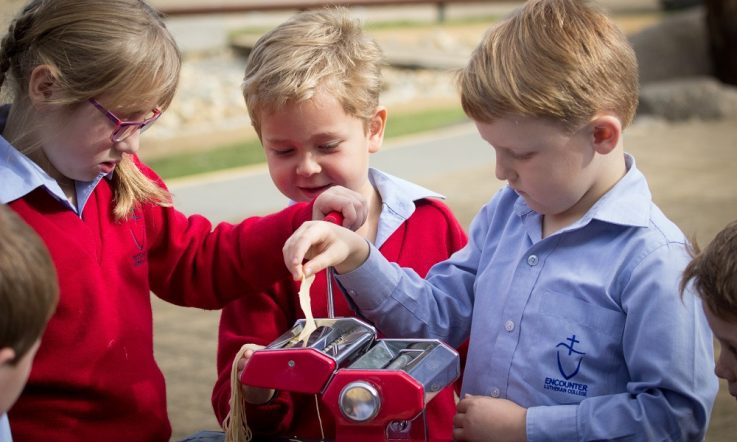
Although there are clear benefits, staffing needs can make it difficult for some schools to sustain or implement a Languages program. To address staffing concerns and improve language provision in primary schools, an innovative Catholic education program known as Teachers as Co-Learners (TCL) is currently in place in more than 90 Catholic primary schools across Victoria, where language learning is embedded as a daily allocation of 15-minute ‘chunks’ during the school day.
The model positions the classroom teacher as a ‘co-learner’ who delivers the Languages curriculum alongside a school’s language assistant, all with the aim to leverage both the classroom teacher's pedagogical expertise and the assistant’s linguistic expertise.
Pilot study findings
In 2024, Deakin University in collaboration with Melbourne Archdiocese Catholic Schools (MACS) undertook a pilot study of the TCL program. The research team – Dr Weinmann and her colleagues, Dr Sarah Ohi, Associate Professor Andrew Skourdoumbis and graduate researchers Jack K Bennett and Thu Ha Bui – aimed to examine the impact of the TCL program on teacher practice in language and literacy education (Weinmann, et al., 2025). Their findings show that participant schools found the TCL program to be effective in engaging students in language learning.
On the reasoning behind the program’s 15-minute daily ‘language chunk’ design, Dr Weinmann tells Teacher research evidence shows that short, frequent learning episodes lead to more consolidated long-term retention than infrequent, longer sessions. She says this is particularly relevant to language acquisition, as frequent, brief lessons provide regular input and output language opportunities.
‘Revisiting language “little and often” strengthens neural pathways, and supports memory and sustained retention of new material,’ Dr Weinmann explains. ‘While 15 minutes may seem brief, its impact is reinforced when lessons are embedded in a whole‑school languages approach, as it is the case with TCL.’
Teachers are described as co-learners in TCL because they participate in the language learning process alongside their students, rather than delivering language instruction as language ‘experts’. As such, teachers don’t need specific language teacher expertise to be involved in the program, developed by the Catholic sector for its teachers. ‘What they do need is the professional and pedagogical knowledge they already possess as experienced primary classroom teachers. This existing expertise becomes the foundation on which they develop capabilities to facilitate and support language learning,’ Dr Weinmann says.
TCL is also an opportunity for teachers to model making mistakes and experimenting with new language in front of students, she adds. ‘Their willingness to learn alongside students consolidates the idea that learning is an ongoing process for everyone, not just children. This modelling resonates with students and normalises the vulnerability that learners might experience when studying a new language.’
TCL in action at Siena Catholic Primary School
Siena Catholic Primary School in Lucas (Diocese of Ballarat), Victoria, teaches Italian through the TCL program. Grade 3 teacher Tim Gilbert is the Italian language leader at the school and co-teaches Italian with the school’s language assistant from Puglia, Italy.
‘With the growing pressure of finding teachers after COVID-19, especially language qualified teachers, we were led down the path of TCL,’ Gilbert tells Teacher. ‘Overall, the program stood out to us as a fantastic way to successfully and sustainably teach a language. So far this has been proven right and continues to exceed our expectations.’
In a normal week, the language assistant is present for 2 of 5 Italian lessons. ‘He is our native tongue that supports pronunciation and provides the contextual understandings of the language being taught,’ Gilbert says.
Gilbert shares that a typical week of TCL starts with the new language acquisition and known language retrieval. Each lesson begins with greetings in Italian and reading out learning intentions and success criteria. Modelling of the language is then led by either the classroom teacher or the school’s language assistant for around 5 minutes. Here students choral words or phrases together.
‘We then have a receptive processing activity for 5 minutes that requires the students to listen to words and phrases and complete activities they hear. These activities change daily and the teacher follows along with the designated activity in the lesson slides. These tasks include activities such as translating, writing the language they hear, and finishing a word/sentence amongst other things. Then there is 5 minutes of structured production of the language, such as conversation practice, unjumbling sentences, syllable work and highly engaging songs. Finally, the lesson finishes with an exit ticket where the students need to independently produce the language in a simple one-minute task,’ Gilbert explains.
‘By teaching it in the manner that we do, students have the opportunity to experience the language daily which, in turn, builds a stronger knowledge and love of the language.’
Appointing student language ambassadors to increase engagement
St Thomas More Primary School in Hadfield (Melbourne Archdiocese of Catholic Schools) implemented TCL in 2024, also teaching Italian. Due to timetabling and staffing needs, trained Languages educator Adriana Bonacci takes on the role of both TCL language leader and the language assistant. She is supported by another trained Languages educator at the school.
‘When first informing staff at our school that we were going to begin this journey, there was apprehension. Questions like, “How can I teach a language when I can’t speak it?” We supported them heavily with professional learning as well as extra modelled sessions in the classroom and by the end of the first unit, week 4 of term 1, the buy-in came as they noticed their confidence, alongside that of the students, soar,’ Bonacci says.
‘As we are Languages trained teachers, we are able to model both the pedagogy and the language for teachers. This supports their TCL professional learning growth,’ Bonacci explains. ‘Each of our classes is timetabled weekly to have us model the lesson once a week, whilst the classroom teacher runs the other 4 daily TCL lessons.’
Part of the TCL model involves appointing student language ambassadors. Bonacci says students really enjoy this aspect of the program. ‘Each week, a student is selected by the classroom teacher to be the language ambassador for the week. On days 3-5, after 2 days of teacher modelling, they get to run the choralling component of the lesson to model to the rest of the class. They get to wear the language ambassador lanyard, and they take their role very seriously. This is tracked and gives all an opportunity to be leading their class in TCL throughout the year.’
Teachers as co-learners in other curriculum areas
Dr Weinmann says TCL has the potential to inform future work in other key learning areas, particularly in subjects experiencing teacher shortages.
‘For example, one of our research team members Associate Professor Andrew Skourdoumbis, who is multilingual but not a language or literacy specialist, observed that many aspects of TCL aligned strongly with teaching approaches in, for example, Mathematics and Science, particularly around pattern recognition, progression of conceptual understanding and supporting learner confidence.’
Dr Weinmann adds that other key elements of TCL have the potential for translation across the curriculum:
- High‑frequency learning episodes: Replace long weekly blocks with short, daily micro‑lessons to build consistency and reduce cognitive load.
- Expert support: Integrate specialists through team‑teaching and curriculum resource support so teachers can confidently facilitate discipline learning.
- Metacognitive talk: Teachers could share their learning processes to model how they are learning.
‘While Languages has discipline‑specific requirements, the co‑learning principles that underpin TCL are highly transferable. The TCL model is built around scaffolded learning and shared inquiry, which are universal rather than discipline-specific pedagogies,’ Dr Weinmann says.
References
Weinmann, M., Ohi, S., Skourdoumbis, A., Bennett, J. K. & Ha Bui, T. (2025). Teachers as Co-learners of languages: Recurricularising language and literacy learning from a multilingual stance. Deakin University. https://redi.deakin.edu.au/wp-content/uploads/sites/3/2025/07/TCL-report-180625.pdf
Thinking about the Languages program in your school, how might involving students in leadership roles like language ambassadors, enhance their engagement?