NAIDOC Week is an annual, nationwide celebration that honours the cultures, histories and achievements of Aboriginal and Torres Strait Islander peoples. This year, it takes place from 5-12 July.
For schools, NAIDOC Week provides an opportunity to build students’ understanding, respect and connection to Australia’s First Nations cultures, often drawing on ideas from the annual theme.
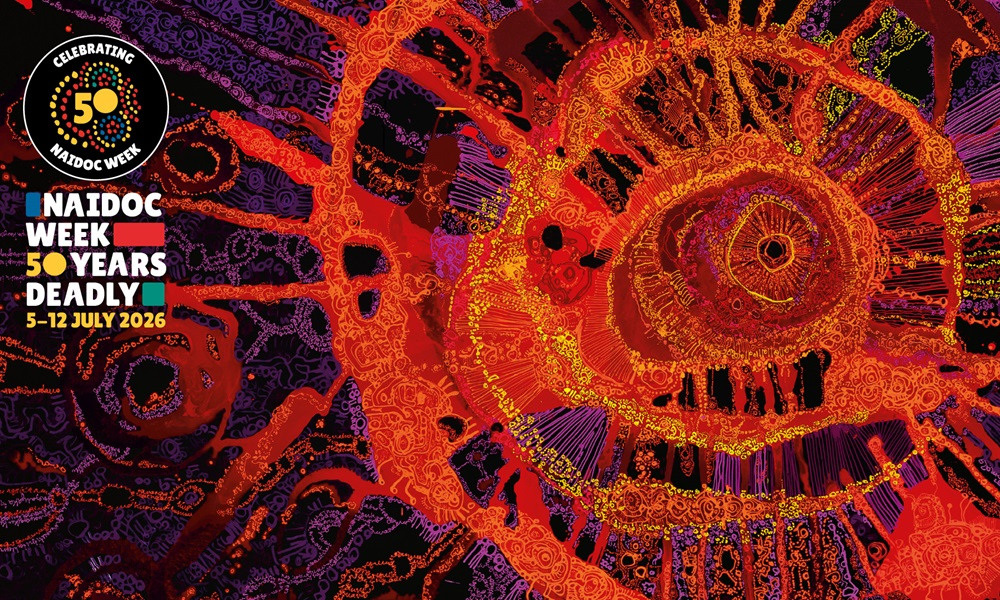
The 2026 theme ‘50 Years of Deadly’ celebrates 5 decades of strength, pride and achievement in Aboriginal and Torres Strait Islander communities. NAIDOC Co-Chair Aunty Professor Lynette Riley says the 2026 theme honours the collective effort behind the movement.
‘This theme honours the people who stood firm, who kept organising, creating and leading, and who ensured culture and community remained at the centre of everything NAIDOC stands for.’
Resources for teachers
To give teachers the tools to bring the theme into Australian classrooms, ABC Education and the NAIDOC Committee have published NAIDOC Week Education Resources for 2026.
Developed by educators Aunty Steph Armstrong OAM and Thara Brown, under the guidance of Aunty Riley, the resources bring together cultural knowledge and classroom practice.
‘This resource is a celebration of culture, community and the rich knowledge that has been shared across generations and continues to guide and inspire learning today,’ Aunty Riley says.
The resources explore key moments across 50 years of NAIDOC Week history, including land rights, the Stolen Generations and Reconciliation, alongside the music, art and culture that have defined Aboriginal and Torres Strait Islander histories.
Designed for years F–10, the resources can be adapted to suit students’ learning levels and needs in line with the Australian Curriculum’s Aboriginal and Torres Strait Islander Histories and Cultures cross-curriculum priority.
‘This year’s resources are not aligned to specific year levels, with trust in teachers’ ability to adapt the resources to their students’ learning levels and needs, and with the hope that teachers explore all the NAIDOC Week themes over the years,’ the NAIDOC website explains.
School activities and events
Currumbin State School, Queensland
Each year, Currumbin State School in Queensland celebrate NAIDOC Week in week 9 of Term 2, ahead of the school holidays.
A large primary school with an enrolment of 1145 students – 100 of those being First Nations – Indigenous student leaders take part in the organisation and leadership of activities alongside cultural visitors.
‘This includes presenting the whole school assembly and taking a more significant role in the opening smoking ceremony that begins the week’s celebrations,’ Principal John Cattoni tells Teacher.
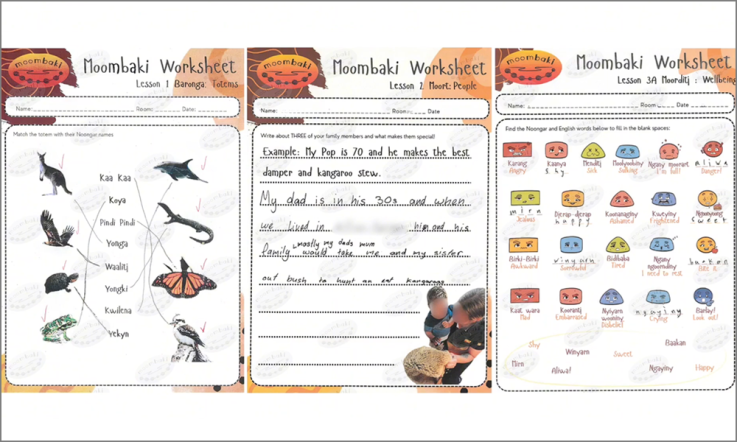
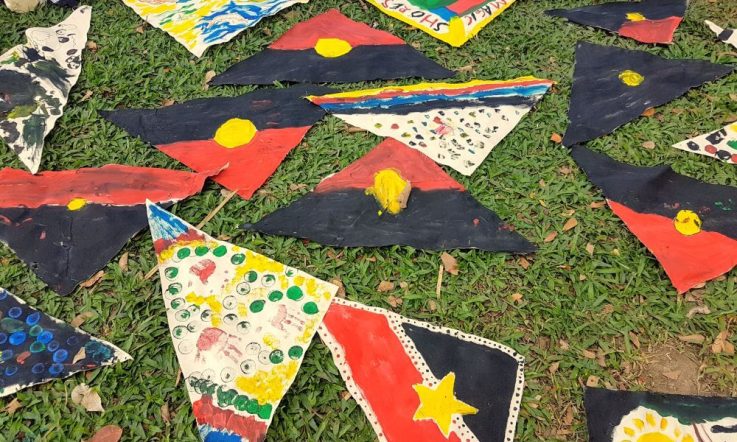
Throughout the week, all students participate in a wide variety of cultural activities to gain a deeper understanding of connection to Country. For example, students learn traditional songs and dances, they participate in Aboriginal painting through symbols and storylines, paint boomerangs, make crafts and more.
‘Each year level focuses on a different aspect of Indigenous culture through storytelling, song, dance, art and history with local cultural presenters,’ Cattoni explains. ‘This culminates with a Kup Murri feast for Year 6 students and morning tea for the extended Indigenous and school community.’
Cattoni says the theme, 50 Years of Deadly, is heavily embedded in curriculum activities and during the whole school assembly.
‘A former Indigenous student guest speaker explained how culture and connection have been a vital component in the success of our community. The girls Indigenous dance group highlighted the meaning of NAIDOC and demonstrated how celebrations have changed over time,’ he adds.
Cattoni says that NAIDOC celebrations are incredibly important to his entire school community. ‘The week of celebrations are embraced by our school community. Our NAIDOC assembly is our first full-school assembly for the calendar year. These celebrations form an essential component of our school identity.’
Stockdale Road Primary School, Victoria
At Stockdale Road Primary School – a school of 450 students located in the Latrobe Valley of Victoria – NAIDOC Week is celebrated across all year levels.
Cultural Inclusion Leader Rachel Tatterson says all students had the opportunity to explore a range of Aboriginal artefacts and learn about their significance, deepening their understanding and appreciation of First Nations cultures and histories.
‘In Paddock to Plate, Education Support teacher Shirley Ryan showed students her Aboriginal artefacts and discussed what it meant to be First Nations and learnt about culture, Country and identity,’ Tatterson tells Teacher.
During NAIDOC Week celebrations, Ryan led a traditional Aboriginal blessing with ochre, which Tatterson says was a particular highlight for students. ‘Students approached this experience with respect and curiosity, gaining valuable insight into the cultural importance of ochre and its connection to identity, Country and community,’ the school newsletter shares.
As part of their week-long celebration, students also explored the meaning of the word ‘deadly’ as something strong, excellent and worth celebrating. ‘Students connect this to the strength and pride of Aboriginal peoples,’ Tatterson adds.
Ryan is a proud Brinja Walbanja woman from the Yuin nation in New South Wales. Having been at the school for 22 years, Ryan now works predominantly in junior school intervention as a speech therapy assistant. She says she loved the opportunity to share more about her culture with students.
‘I love my culture and want to share it with the students. The kids are always so respectful when we look at artefacts and discuss culture and where all Aboriginal people come from. I feel blessed to be able to share it.’
Joseph Banks Secondary College, Western Australia
For students at Joseph Banks Secondary College – a public school located in Banksia Grove in the northern suburbs of Perth – NAIDOC Week celebrations run across years 7-12. The culmination of celebrations is their student-led NAIDOC Expo, complemented by cultural learning experiences embedded throughout the week.
‘Students participate in workshops, classroom learning activities, and cultural experiences that deepen their understanding of Aboriginal histories, cultures, and achievements,’ Principal Liz Smith tells Teacher.
‘These include art installations, dance performances, sharing food, storytelling, a smoking ceremony and opportunities to engage with local Aboriginal elders, voices, and perspectives. Our programs are designed to ensure that every student, regardless of year level, connects meaningfully with the significance of NAIDOC Week.’
The school kicked off NAIDOC Week with the creation of a sand mural symbolising their students and staff coming together to teach and learn from one another.
‘It represents our shared connection and commitment here at JBSC. The mural was created by a wonderful group of both Aboriginal and non-Indigenous students across years 7-12,’ Smith shares.
Smith says that as the school acknowledges 50 years of NAIDOC, in 2026 they will also be creating a whole-school mural that will be displayed for years to come.
‘Each student will contribute their handprint to form the rainbow serpent (Wagyl), using a variety of colours to represent unity and connection. This piece reflects us coming together as one while honouring 50 years of NAIDOC. The Wagyl holds strong cultural significance here on Wadjuk Boodja and links to another mural being developed by our Aboriginal students in Kaartdijin Koolungah,’ she explains.
Smith says that recognising events such as NAIDOC Week helps to provide students with opportunities to learn through meaningful experiences, ask questions, and engage in conversations that strengthen cultural awareness. She also acknowledges the 2026 theme, 50 Years of Deadly, provides a powerful opportunity to recognise and celebrate the achievements, strength, and resilience of Aboriginal and Torres Strait Islander peoples.
‘At Joseph Banks Secondary College, we have embedded this theme across our week, celebrating excellence, pride, and identity, and our displays and student-led presentations focus on stories of success across areas such as sport, the arts, science, education, and community leadership, ensuring that students see both historical and contemporary examples of excellence.’
How is your school marking NAIDOC Week this year? What possibilities are there to welcome Traditional Owners, Elders, and Aboriginal and Torres Strait Islander community members into your school to share their stories, insights and lived experiences?
The resources highlighted in this article can be used across the year with students from Foundation to Year 10. Take some time to explore the activities – how might you incorporate them into your teaching for the remainder of the year?