A collaborative study involving Aboriginal Elders, families, educators and children across 3 urban schools in Perth, Western Australia, is working to deepen Aboriginal children’s understanding of, and pride in, who they are by strengthening their connections to culture, Country and kin.
The Moombaki Cultural Learnings Project demonstrates how authentic, community-led initiatives can enhance Aboriginal children’s wellbeing, sense of belonging, cultural pride and school engagement, laying strong foundations for success beyond the classroom.
Professor of Aboriginal Education, Community and Wellbeing at Curtin University and Lead Researcher Cheryl Kickett-Tucker, says the findings from the 5-year project show the urgent need for schools and governments to properly resource Indigenous-led cultural learning.
‘Too often Aboriginal educators are left carrying the cultural load without recognition or sufficient support, while many non-Aboriginal school leaders mistake token gestures for genuine cultural inclusion,’ she says.
The Moombaki project
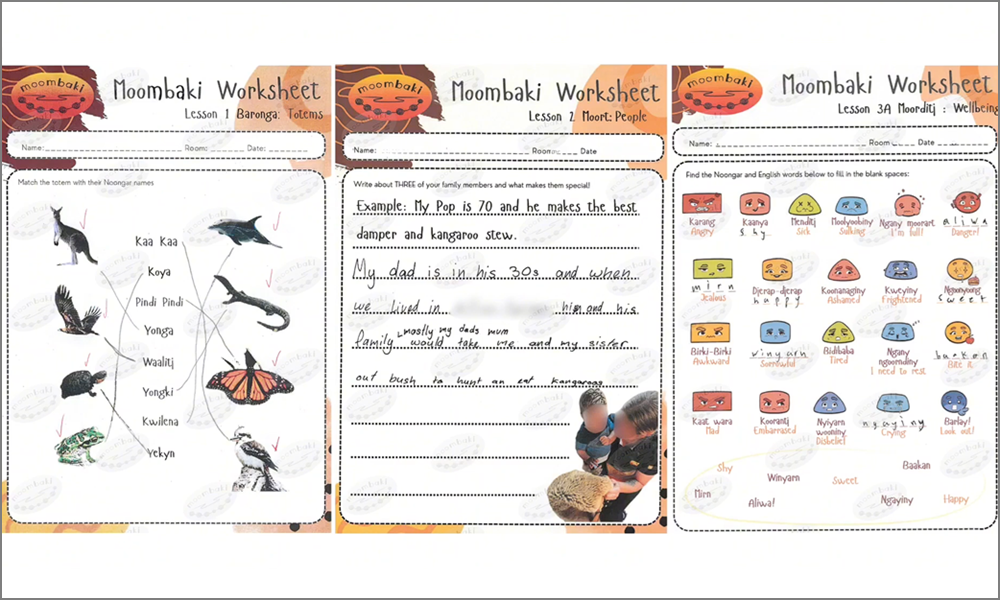
Moombaki means ‘where the river meets the sky’ in Noongar, and the program features several key elements:
- Virtual reality (VR) and digital apps: The project developed interactive mobile apps and a VR game that allows students to learn Noongar language, history, and stories
- Community-led teaching: The curriculum is taught in culturally safe ways by local Aboriginal community educators, Elders, and parents to ensure authentic knowledge-sharing
- Cultural Integrity Audits: The audits provide schools with a practical auditing tool to measure their progress toward genuine cultural safety and accountability.
As part of this project, community Elders councils were set up at each of the 3 participating schools, where they conducted a series of yarning circles with Aboriginal parents, carers, Elders, Aboriginal staff and non-Aboriginal staff.
‘We were asking, if Aboriginal people are putting the content into these resources and it's being taught by majority non-Aboriginal folk, how are we going to work together [to teach this]? How do we come together as a united group to make it happen?’ Professor Kickett-Tucker explains.
Aboriginal students were also called on to offer their views. ‘We asked them if we were going to build something to help you know more about the local culture and language around where you live, around your school environment, what needs to be in it? So that's what we got. We found out from our people exactly what they needed.’
The insights gathered were developed into 7 content themes– covering themes such as ‘Boodja’ (place), ‘Moort’ (people), ‘Moorditj’ (wellbeing) and ‘Mardaa’ (language). The students also visited Curtin University to work with a group of undergraduate gaming and animation students.
‘My remit to the primary school kids was, “you're the professors, they're your students, and I want you to tell them what you want created to make this program come alive”. So, they came up with an iPad series of games that reinforced those 7 themes. Over the weeks, they built a VR game called the Moombaki Noongar Quest. So again, it cemented the learnings in the classroom.’
The project culminated in the Moombaki Camp, where 56 Aboriginal children from the project took part. They did cultural activities around the area, shared stories and even performed in a talent show called Moombaki’s Got Talent. ‘It was amazing. It was the final thank you to these kids who journeyed with us to produce this set of resources,’ Professor Kickett-Tucker says.
The findings from the study
The Moombaki study took place from 2020-2025. It makes a series of recommendations including:
- Mandatory professional development of all non-Aboriginal educators to ensure basic levels of racial literacy
- Compulsory training for school leaders and teachers to empower them to act with cultural integrity and foster culturally safe environments
- A centralised repository for schools to access approved cultural content, lesson plans and community engagement strategies.
- Noongar storytelling, ceremony and language to be embedded in the curriculum.
Professor Kickett-Tucker adds schools need to move beyond ‘box-ticking’ and symbolic gestures, instead focusing on meaningful action to support Aboriginal children at school.
‘What makes it really difficult is schools don't have the resources in terms of the funding to bring Aboriginal folk in on a regular basis so it’s not just a once-off during NAIDOC Week. They've got to be embedded in every day, and to do that you need a team of people. So, schools need to be embedded in Aboriginal community groups.’
For teachers who want to embed Aboriginal perspectives into their lessons in a meaningful way, Professor Kickett-Tucker says it’s important it isn’t just an add-on to existing lessons.
‘What they should do is transform the way that they teach, relate and engage all children but particularly our children, because our kids rely on relationships. We're very relational. If you don't have a relationship with someone, they're not going to really take much notice of you.
‘You've got to individually get to know, particularly the Aboriginal kids – what they like, what they don't like, what they're good at, what they're not so good at, what they want, what their dreams are, what's troubling them today. That takes time and it really needs someone with a really kind, listening heart.
‘Obviously, good teachers do it with all students, but Aboriginal kids need that extra piece. They need to feel really valued that this teacher really believes in them, really wants them to be here. Because, unfortunately, we still have a lot of deficit thinking, a lot of deficit attitudes, a lot of low expectations of Aboriginal kids.’
Professional learning for all staff
The study recommends that all staff must complete mandatory, ongoing professional development in cultural responsiveness and integrity, reflecting evolving attitudes, policies, and community expectations. However, Professor Kickett-Tucker says there isn’t one course or program that is going to have all the answers and the PD needs to relate to your context and community needs.
‘When you're doing cultural safety, cultural security, cultural integrity – whatever you want to call it – it's a journey. It's a school journey over a long period of time. It's relational. There are lots of organisations in every state. There are land councils, there are groups that offer all levels of cultural safety in respective states and territories. But the thing is, schools can't assume to do one or 2 and tick a box and say, “we are now culturally safe”. It is not like that at all,’ she explains.
The Cultural Integrity Audit
Another highlight of the project is a Cultural Integrity Audit, which is a practical tool for schools to measure their progress towards cultural safety. The audit focuses on real actions such as embedding Noongar values in teaching and recognising Aboriginal educators as cultural leaders, providing a roadmap for schools to be held accountable.
The audit was designed to enable school leaders to stop and reflect on the extent to which they have made progress in this area. Professor Kickett-Tucker says that the audit was created in collaboration with Aboriginal teachers, Aboriginal and Islander Education Officers (AIEOs) and the community Elders group.
The audit asks of schools: Do you have an Aboriginal student education plan for your school? Do you have a reconciliation plan? Do you have community engagement? Do you have a list of organisations that you can work with?
‘When you've got the one teacher with a passionate heart that wants to help, these are all the things that inhibit them to do their job, because if the school leadership isn’t firing then they can't put these things in place to ensure that the teacher can actually do the things that they want to do. So that's what the Cultural Integrity Audit is, it’s a moment in time. It's a score.’
Final reflections
Professor Kickett-Tucker acknowledges that it is difficult for individual teachers and leaders to make a significant difference when they may be working in a system that works against them.
‘You've got this one teacher in the classroom that does want to do well, and you've got an AIEO who also wants to do well, and you've got maybe a principal that really wants to do well – but it's not enough because they're against the system. And it's the system that's broken,’ she says.
‘I don't want to paint a doom and gloom picture because I always see the goodness in people and I always try to be optimistic leading forward, but this stuff is serious. There are good people trying to do good things, but the system itself prohibits them, and that is our underlying problem.’
References
Curtin University. (2026, April 20). Schools must do more than box-ticking to support Indigenous kids: Report. https://www.curtin.edu.au/news/media-release/schools-must-do-more-than-box-ticking-to-support-indigenous-kids-report/
As a teacher, to what extent do you embed Indigenous perspectives in how you teach, interact and design learning experiences? How do you ensure that these lessons move beyond tokenistic or symbolic gestures?
As a school leader, how does your school engage with local Aboriginal communities, Elders or organisations? What opportunities are there to make these partnerships more consistent, truly collaborative and community-led?