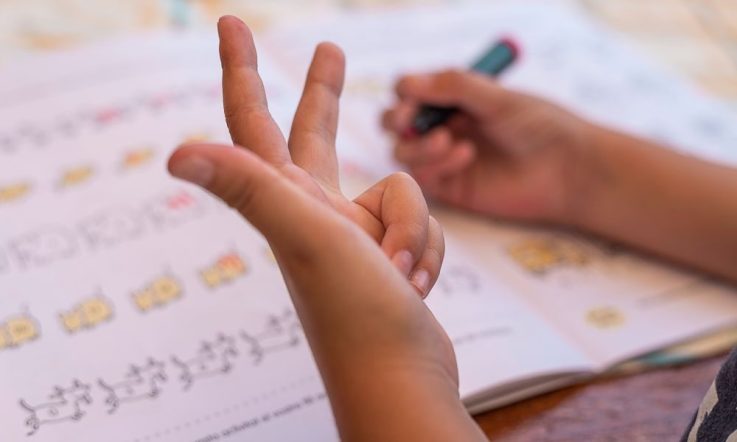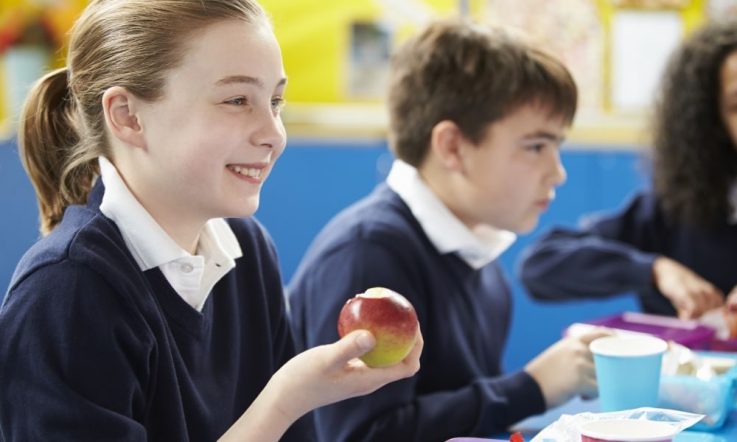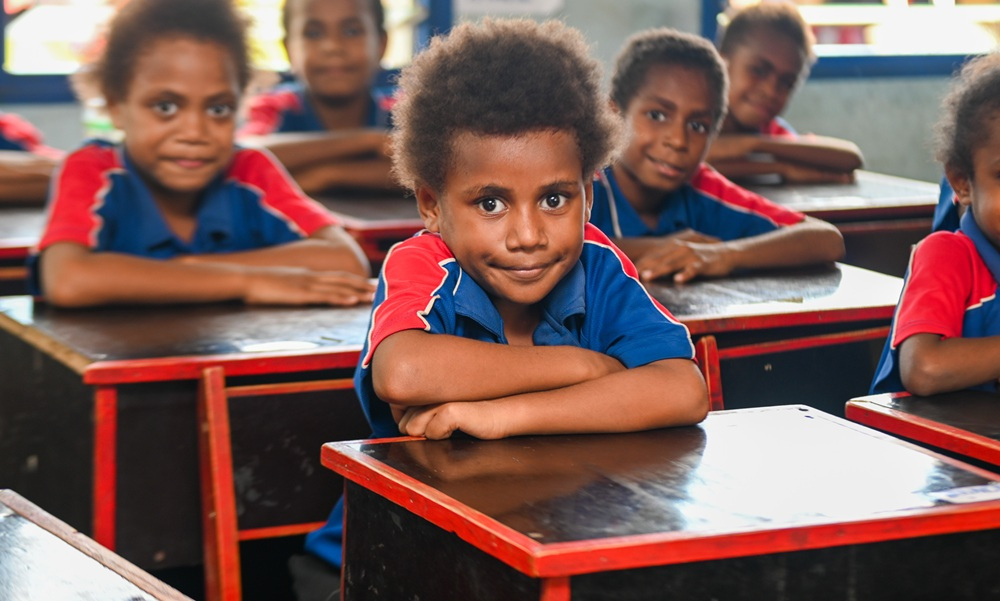
The latest results from the Pacific’s largest regional education assessment point to encouraging signs of recovery in student learning, while also identifying key areas where further improvement is needed.
The 2025 Pacific Islands Literacy and Numeracy Assessment (PILNA) provides vital regional evidence on how students in the Pacific are progressing in literacy and numeracy, and how countries can use that evidence to improve learning. It measures the skills of 41,000 students who have completed 4 and 6 years of basic education across 15 Pacific countries. It also collects contextual information from students, caregivers, teachers and school leaders.
Led by the Pacific Community’s (SPC)’s Educational Quality and Assessment Programme (EQAP), the assessment is delivered in partnership with the Australian Council for Educational Research (ACER) which supports assessment design, item development, questionnaires, analysis and reporting.
As reported in ACER News, Dr Elizabeth Cassity, Principal Research Fellow at ACER, says PILNA 2025 provides vital evidence for Pacific education systems as they continue to respond to the disruption of recent years.
‘The results show encouraging signs of recovery, particularly in parts of numeracy and reading, but they also make clear that recovery is uneven,’ Cassity says.
‘PILNA helps countries see not only whether students are meeting expected levels, but also the conditions that support or constrain learning. By working alongside SPC, Pacific ministries and development partners, ACER is helping strengthen the evidence base that countries can use to target support where it is needed most.’
Watch the video to learn more about PILNA and the journey from assessment design and country preparation, through to administration, coding, data analysis and report writing.
The 2025 results
PILNA 2025 shows signs of learning recovery across the Pacific, with modest improvement in numeracy and reading since 2021. However, performance has generally not returned to 2018 levels.
At Year 4, 72% of students met or exceeded the minimum expected proficiency level in numeracy, 44% met or exceeded the expected level in reading and 69% met or exceeded the expected level in writing. At Year 6, 70% of students met or exceeded the expected level in numeracy, 54% in reading and 53% in writing.
Girls continued to outperform boys across numeracy, reading and writing at both year levels. The gender gap in numeracy and reading has narrowed in recent PILNA cycles, suggesting some improvement in boys’ relative performance, but gaps remain.
PILNA 2025 marked the introduction of a writing proficiency scale, which enables the comparison of average writing scores with expected levels of performance. Analysis indicates that in 2025 Year 4 and Year 6 students, on average, met the minimum expected proficiency level for writing.
Wellbeing for teachers and students
According to the contextual findings, PILNA shows that teacher wellbeing is a significant concern in the Pacific. In 2025, 78% of students had teachers who reported experiencing stress at work, and 67% had teachers who felt overwhelmed by their job.
More than half of students had teachers who reported difficulty sleeping because of work, and half had teachers who said they did not have enough time for their personal life.
These pressures sit alongside very high levels of professional purpose and satisfaction. There were 97% of students who reported their teachers were proud of their work, and 96% had teachers who found their work meaningful and inspiring.
Almost 9 in 10 students were taught by teachers who identified need for professional development. This included strategies for teaching writing, reading and mathematics, and developing related curriculum content.
At the same time, student wellbeing remains a major issue across the region. Only around half of students reported frequent positive experiences at school, such as having a good day, feeling cheerful or looking forward to the next day.
Around one in 5 students reported frequent experiences of being tired, hungry, upset or unhappy at school.
The report offers recommendations for governments, caregivers and educators. It suggests that educators should focus on strengthening reading, comprehension, mathematical reasoning and supportive learning environments. It also identifies 3 priority areas for intervention: student reading, higher-order thinking skills and the wellbeing of students and educators.
Read the full article: PILNA 2025: Learning recovery in the Pacific, but gaps remain published on ACER News.
References
ACER News. (2026, September 8). PILNA 2025: Learning recovery in the Pacific, but gaps remain. ACER News. https://www.acer.org/au/news/article/pilna-2025-learning-recovery-in-the-pacific-but-gaps-remain
Pacific Community. (2026). Pacific Islands Literacy and Numeracy Assessment (PILNA) 2025 regional report. Educational Quality and Assessment Programme (EQAP). https://www.spc.int/digitallibrary/get/mvd27