Spending time outside supports student wellbeing and physical health, but it’s about much more than just access to facilities. As a teacher, how confident are you in facilitating outdoor play for students? What barriers do you face? As a school leader, do you support staff to engage students in outdoor play during the school day?
New research (Hyndman, 2026) has examined teachers’ experiences of enabling outdoor play. The survey of 135 teachers from around the world – with over one-third of respondents based in Australia – aimed to understand how teachers’ autonomy, competence and relatedness interact to shape decision making.
‘Outdoor play should not be positioned as time away from learning. It is connected learning through experience,’ researcher Dr Brendon Hyndman – Associate Professor of Education in the School of Education at Charles Sturt University – tells Teacher.
‘The study suggests that quality outdoor play is not simply a school facilities issue. It also depends on whether teachers have the autonomy, competence, relationships, resources and institutional support needed to protect and sustain it. Supporting teachers’ autonomy, competence and relatedness is therefore part of supporting children’s wellbeing, belonging, development and learning.’
What did the research involve?
Key to this study was the utilisation of Self-Determination Theory and experiential learning.
‘Self-Determination Theory helps explain the conditions that enable people to feel motivated and engaged,’ Hyndman says. ‘It focuses on 3 basic psychological needs. Autonomy means having meaningful choice and professional agency; competence means feeling capable and appropriately supported; and relatedness means feeling connected to students, colleagues and the wider community.’
Experiential learning, Hyndman explains, is learning through direct experience. Outdoor play is a powerful example of this, he adds, because children can collaborate, test ideas, express creativity and negotiate developmentally appropriate risks in authentic situations.
‘The study brings these ideas together by showing that children’s opportunities for experiential learning outdoors are influenced by whether teachers themselves have the autonomy, competence and supportive relationships needed to facilitate quality play.’
Survey participants were from varying school contexts and sectors. They completed an online survey that included open-ended prompts inviting detailed accounts of how outdoor play is valued, organised, and experienced in the teacher’s setting, as well as the barriers and enablers they encounter.
Overview of the findings – 3 main themes
Thematic analysis of the survey responses through the lens of Self-Determination Theory resulted in multiple subthemes emerging across the theory’s 3 main pillars (autonomy, competence and relatedness).
‘One of the most striking findings was how much educational and relational value can sit within ordinary moments of outdoor play,’ Hyndman says. ‘Teachers described how attentive observation, responsive support and thoughtful participation could strengthen inclusion, relationships and children’s exploration, without turning play into another formal lesson.’
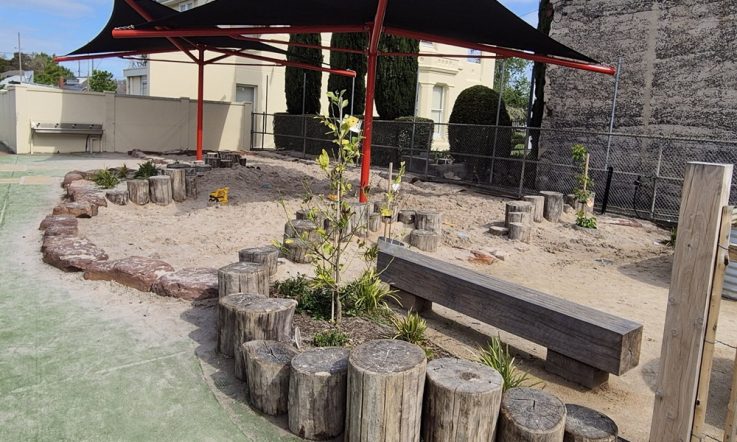
‘I was also struck by how strongly teachers’ confidence could be shaped by their working conditions. A lack of time, staffing, shade, fencing, suitable materials or well-maintained spaces could leave capable teachers focused on managing risk rather than supporting children’s play. This suggests that competence is not simply an individual attribute. It is also shaped by the environment and support surrounding teachers.’
The findings include:
Resisting curriculum confinement (Autonomy)
Teachers across primary and secondary school settings described resisting the dominance of classroom settings to carve space for outdoor play.
In secondary schools, the prioritisation is purely on classrooms. Outdoors is almost an afterthought, a place for sitting at picnic tables rather than developing skills. Students see this as a signal, it tells them this space isn’t important. (Australia, Secondary, Female, 20+ years teaching)
Micro-autonomy in play supervision (Autonomy)
Educators described redefining ‘supervision’ of outdoor play as an opportunity for pedagogical engagement.
I would take away the word supervising and ensure that teachers are scaffolding the children’s play. They need engaged adults who interact and show an interest. The moment you stop seeing it as ‘just watching them’, it becomes another opportunity to teach without them even realising. (UK, Primary, Female, 20+ years teaching)
Policy resistance to preserve play freedom (Autonomy)
A smaller number of teachers described working within or around school policies to safeguard the child-led nature of play.
Self-directed professional growth (Competence)
Many respondents reflected that their initial teacher education did not include preparation for facilitating outdoor play, or that the inclusion was minimal, highlighting that teacher competence in this area may rely on individual initiative and informal learning networks.
As a trained secondary teacher, very little of my preparation was about outdoor play. I’ve had to invest in my own training – reading research, talking to colleagues... (Australia, Secondary, Male, 20+ years teaching)
Specialist expertise and transferable skills (Competence)
Study participants with specialist backgrounds in physical education or early childhood education described greater confidence and creativity in outdoor play facilitation.
My years in early childhood taught me to see recess and lunch as learning time. You learn to set up provocations and step back, knowing when to join in. Those skills are entirely transferable to older children if you know how to adapt them. (Australia, Primary Leadership, Female, 20+ years teaching).
Competence threat from environmental deficits (Competence)
Inadequate infrastructure was also mentioned and unsafe conditions that undermined their perceived competence.
Our playground has no fence, so I have anxiety that students could run into the street. It changes how freely I can engage with them, because part of my brain is always calculating risk. If we had the right infrastructure, I could focus on supporting their play instead of scanning for danger. (USA, Elementary, Female, 20+ years teaching)
Collegial micro-communities in play support (Relatedness)
Several teachers described professional relationships and collegial networks as critical to sustaining motivation and innovation in outdoor play.
Building trust with students in informal spaces (Relatedness).
The role of outdoor play in revealing aspects of students’ personalities and capabilities that are not visible in classroom settings was also mentioned by teachers.
It is good to get to know students in their natural environments and behaviours, especially the reserved children who do not speak much in class. You learn who they really are and can connect that back into your classroom teaching. (Australia, Primary, Female, 11–20 years teaching)
Parent and community influence on play culture (Relatedness)
Finally, teachers described how parent and community perceptions shaped the extent to which outdoor play was prioritised.
Most parents in my context still see play as a reward. We need to shift that mindset, because until they see it as core learning, teachers will be under pressure to keep kids in formal lessons. (USA, Elementary, Female, 6–10 years teaching).
Implications for teachers and school leaders
‘For school leaders, the message is to protect, prepare and connect,’ Hyndman says.
‘Protect time, space and professional judgement so that outdoor play is recognised as a legitimate part of education. Prepare teachers through relevant professional learning in play support, inclusion, experiential learning and risk-benefit assessment. Connect staff through collaborative planning, shared approaches, supportive leadership and constructive communication with families.
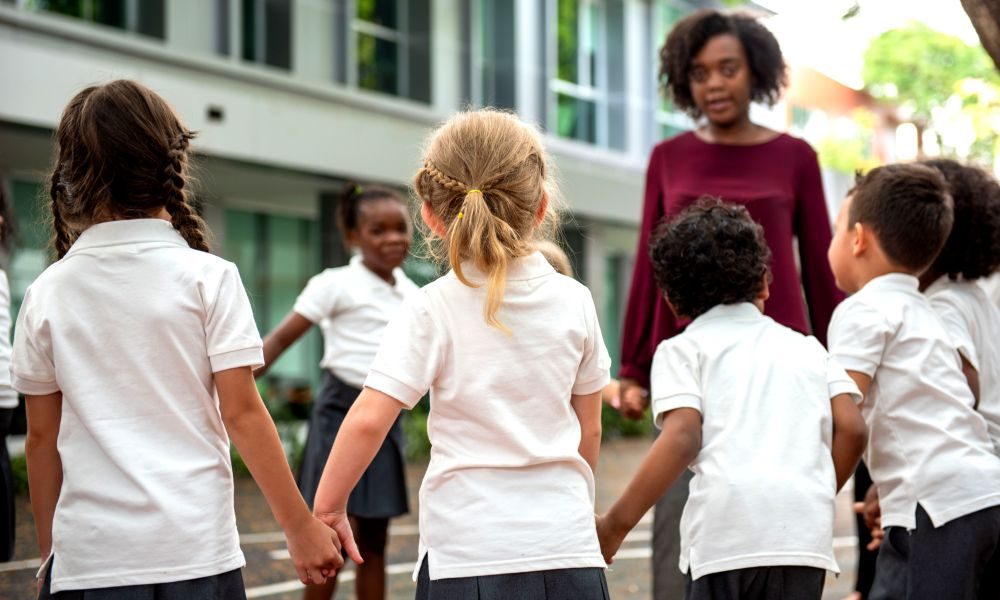
‘For teachers, the emphasis is not on turning play into another lesson, but on being attentively and responsively present by noticing who is included or excluded, supporting safety and access, responding when children invite involvement, and knowing when to step back so that outdoor play remains child-led.
‘Importantly, this should not become another responsibility placed solely on individual teachers. Sustainable outdoor play depends on the wider conditions schools create around them.’
References
Hyndman. B. (2026). Outdoor Play as Experiential Learning: How Teachers’ Autonomy, Competence, and Relatedness Shape Provision in Schools. Journal of Experiential Education, 0(0). https://journals.sagepub.com/doi/10.1177/10538259261462873
Associate Professor Brendon Hyndman says outdoor play should be recognised as a legitimate part of education by providing teachers with relevant professional learning, and connecting staff through collaborative planning, shared approaches, supportive leadership and constructive communication with families.
As a school leader, do you support staff to facilitate outdoor play during the school day? When is the next opportunity to provide professional learning in this area? How could you support staff to collaboratively plan together to support quality outdoor play?