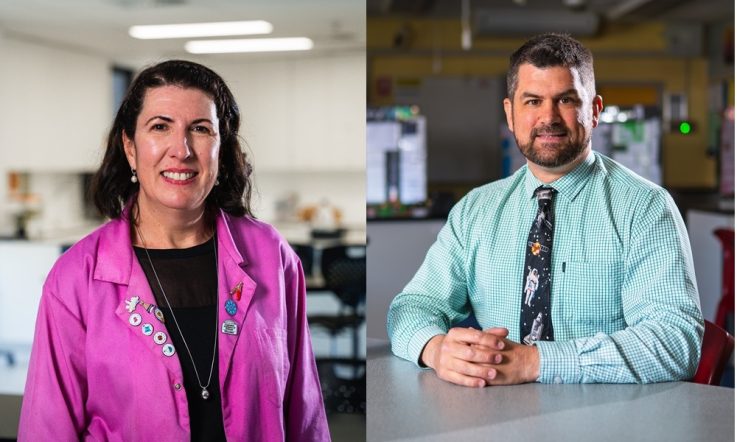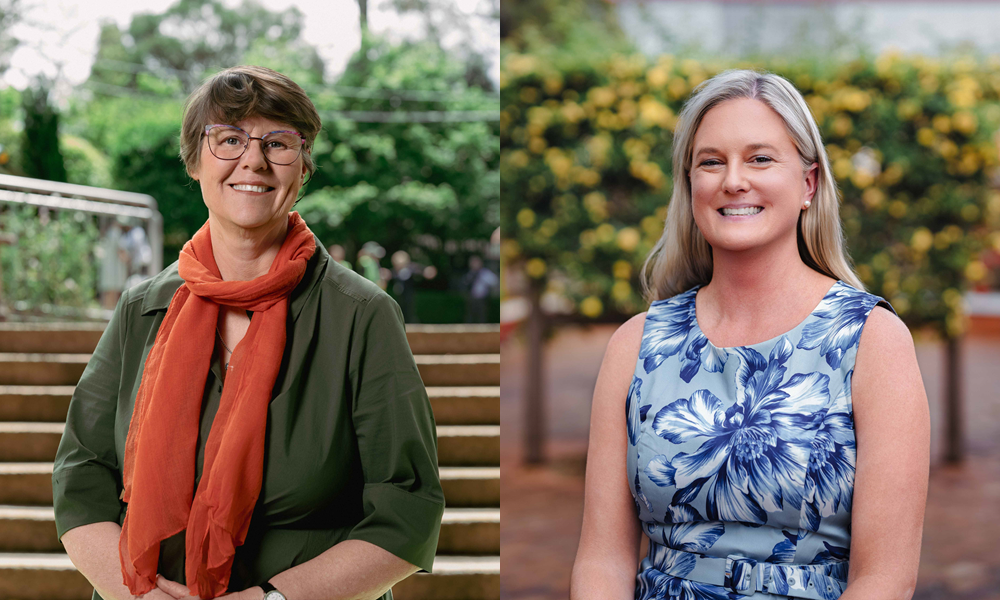
The winners of the 2026 Prime Minister’s Prizes for Excellence in Science Teaching have just been announced. The national award is presented to one primary and one secondary teacher, with each recipient receiving $250,000 in prize money.
The prizes were presented to the 2 teachers alongside 6 other recipients recognised for achievements and contributions in science, innovation and Aboriginal and Torres Strait Islander knowledge systems. The annual awards are recognised as Australia’s most prestigious science prizes.
Dr Gabrielle Oslington, STEM teacher at the Arden Anglican School – Junior School, Epping, New South Wales
The Prize for Excellence in Science Teaching in Primary Schools has been awarded to Dr Gabrielle Oslington from New South Wales.
She is recognised for her hands-on, inclusive teaching approaches, teacher mentorship activities and encouraging students to pursue STEM education beyond primary school.
‘Primary school STEM matters because we want to raise children possibly to be scientists, but more importantly to be critical analysers of information,’ she says.
‘As primary school teachers, we plant seeds, we nurture seedlings, and we don't have any ownership in the harvest. Sometimes we're fortunate enough to hear back from our young people as young adults or as secondary students and hear the impact that our lessons have had.’
Dr Oslington believes that every child is a natural scientist, and fosters this through designing tactile investigations that support children as young as 5 to formulate scientific hypotheses. She has also introduced statistical software into primary classrooms to enable students in years 2-6 to learn how to map, plot and analyse complex datasets from experiments they’ve conducted themselves.
In addition, Dr Oslington has developed inclusive approaches that support gifted and neurodiverse learners, and students from cultural and linguistically diverse backgrounds.
Students of Dr Oslington have submitted more than 100 entries to national STEM competitions and some former students of hers are now studying university degrees in STEM-related fields.
Nicolette Wheaton, STEM teacher at The Glennie School, Toowoomba, Queensland
Nicolette Wheaton’s inclusive teaching methods implemented at The Glennie School in Queensland have seen her recognised with the Prime Minister’s Prize for Excellence in Secondary Teaching.
Throughout her 20-year career in education so far, Wheaton has worked to remove barriers to STEM career pathways for girls and regional students, built school partnerships with NASA, CSIRO and Questacon, and trained thousands of regional pre-service teachers through her concurrent role as a university lecturer and unit coordinator.
‘It's been really important to me to make experiences accessible to teachers and students in rural and regional areas, because we don't always have access to sophisticated resources, and it's important that every student is able to have a way into science,’ she says.
‘I think it's very important that the girls can see someone like themselves, a female working in a STEM area. At The Glennie School, we have been involved in real world problems from NASA, and more recently we've looked at Varroa mite [a pest that attacks honeybee colonies], which has been more relevant to use being in regional Queensland. It has allowed our students to really see themselves as STEM professionals.’
Wheaton is also recognised for increasing STEM participation for girls and other underrepresented students and for supporting students in national STEM competitions.
Nominations for next year’s Prime Minister’s Prizes for Excellence in Science Teaching are now open and will close on 7 January 2027 at 5:00pm AEDT.