
It’s been a busy year for Teacher! We’ve published hundreds of articles, columns, infographics and podcasts in 2025. Here, we take a walk down memory lane and share some (we couldn’t possibly name them all!) of our highlight articles and infographics from the year.
We’re so thankful for all your support. We hope you’ve found our content useful, and we can’t wait to support you through the 2026 school year!
Term 1
At the beginning of 2025, we were delighted to welcome Professor Martin Westwell, Chief Executive of the South Australian Department for Education, as a Teacher columnist. His first column, The power of professional judgement, resonated deeply with our audience. In the piece, Martin spoke about the importance of teacher professional judgement in response to commentary on the divide between explicit direct instruction and other approaches to teaching.
This notion that teachers should either be directly instructing students or getting students to do the thinking and construct their understanding seems nonsensical to me. Teachers have a range of tools in their toolkit, the trick is using the tools in a combination of ways so that each learner has the teaching and support they need to effectively learn.
Reader Ian Macgowan left a comment on the column:
Excellent, thought-provoking, and accurate article. Acknowledgment that students each can learn differently and require alternative strategies is important to their acquisition of skills and understanding. Relationships between teacher and learner are key. Acceptance that there are other important skills beyond literacy and numeracy. Thank you for a great read.
It was also lovely to hear from Teacher Awards 2024 winners in our first podcast for 2025. They shared their top tips with us for starting the new school year, and it’s definitely worth re-listening to the episode as we head into the 2026 school year. Here’s a snippet of what Cathy Cook, Autism Inclusion Teacher, shared:
I ensure that each day I do daily check-ins. So as the children walk into the classroom, I greet them by name, let them know that I've seen them and ensure that they’re greeted with a smile. I also ask them how they’re feeling, so we do check-ins, and we also do a morning circle. So, this helps gauge where students are feeling emotionally, but also sets for positive tone for the day.
An infographic that’s stayed in our minds since Term 1 was: What made you decide to become a teacher? It was a US study that asked 2,800 pre-service teachers why they decided to pursue a teaching career. The findings were heartening – the majority said for altruistic reasons (58%) or intrinsic motivation (46%).

And finally for Term 1, another highlight piece looked at the power of ‘pruning’ – that is, redirecting resources in a school to what matters most. The article also shares tips for schools, questions for reflection, and the pruning process of Cranbourne East Primary School. Another fitting piece as we look ahead to the new school year.
Term 2
National Reconciliation Week is celebrated in in Term 2, between 27 May and 3 June each year. In the lead up to the week this year, we were delighted share a Q&A with Indigenous curriculum specialist Melissa Serrurier on the topic of culturally responsive teaching and integrating Indigenous perspectives in the classroom. The insights shared by Melissa are, of course, still relevant today and for future school years. For example, you can reflect on this pertinent point:
To move from tokenism to meaningful integration of Indigenous perspectives, schools must go beyond surface-level gestures like posters or art displays. True integration involves respectful, reciprocal relationships with local Elders and communities, where their voices actively shape curriculum and learning experiences. It also means using authentic resources – like books and oral histories – created by Indigenous people that reflect diverse perspectives. This work requires ongoing reflection, cultural competence and a genuine commitment to truth-telling and educational equity.
It was fascinating, too, to unpack the largest ever study on the job ambitions of 15-year-olds in late May. We published an article that outlined findings from the OECD report – including where Australia sits compared to the OECD average for things like participating in work placements and attending job fairs. In light of the OECD’s conclusion that ‘students who participate more in career development activities tend to have clearer career plans and better employment outcomes’, we spoke with a school Careers Advisor from New South Wales later in the term about how she supports students’ career development.
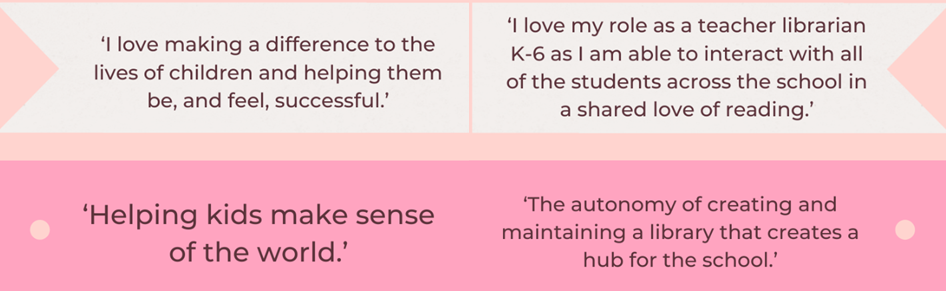
Another highlight for Term 2 was shining a spotlight on the work of teacher librarians. Many Teacher readers are teacher librarians, and through our annual reader survey, they’ve told us what they love most about their role. In an infographic, we shared some of their responses.
Term 3
AI has been a hot topic all year, and in August we were delighted to speak with the principal at Adelaide Botanic High School about how they’re embracing AI through the use of the South Australian Department for Education’s custom generative AI tool, EdChat. It was particularly interesting to hear about how staff at the school are using the tool to reduce or manage their workload. For example, one teacher is using it to support students with a language background other than English. Another has created an app to benefit careers counselling activities – collating university and TAFE information that would otherwise be contained in hardback guidebooks and need to be manually referred to.
We can’t forget that Term 3 2025 was when tens of thousands of 15-year-olds in Australia participated in PISA (the Programme for International Student Assessment). Teacher editor Jo Earp unpacked what’s new for the 2025 cycle of the assessment, how the skills assessed link to students’ ability to thrive beyond school, and how teachers and leaders can use PISA insights to inform their own practice and drive school improvement in this article. It’s a worthwhile read to give useful context in anticipation for the findings being released in 2026.
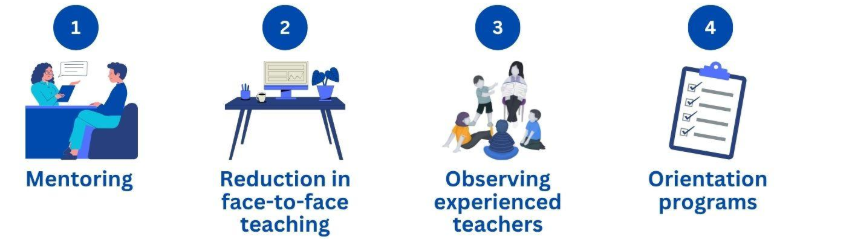
An infographic highlight that might get you thinking about your school context is Early career teacher induction activities, which explores findings in this area from AITSL data. It was interesting to see what respondents said were the 4 induction activities most useful to them: mentoring, reduction in face-to-face teaching, observing experienced teachers and orientation programs.
R U OK? Day falls towards the end of Term 3, and to mark the day, we published a podcast with Dr Hannah Brown – Education and Young People Manager at R U OK?. It was an important conversation with plenty of practical takeaways – from the signs that it might be time to have the conversation with a loved one and how to prepare, to the 4 simple steps of ask, listen, encourage action and check in.
Term 4
A standout piece for Term 4 was our interview with David Jeffery, a teacher aide from West End State School in Queensland. He was the mentor for a winning student team in the annual STEM Video Game Challenge – a free game development challenge that invites students in years 3-12 across Australia to design and develop a video game based on a given theme. We spoke with David about how the challenge is run at his school, the learning opportunities participation brings, and advice for staff wanting to get students involved in the challenge in 2026. It was his final words of wisdom that have stuck with us:
The STEM Video Game Challenge is one of the most rewarding things I’ve done as an educator. Seeing students grow is the main joy we get from our vocation, and the challenge is a greenhouse of the highest order. Add in the confidence that comes from genuine student self-expression and it’s truly wonderful.
Photo stories are a favourite for Teacher readers, and one of our highlights from this year is our latest iteration on designing a school playground, written by Anthony Hockey, principal at St Mary’s Catholic Primary School in Victoria. Again, it was Anthony’s advice for other schools that really stuck out. Here’s what he had to say:
My advice to other schools is to not just think about providing more sporting equipment. Generally, the sporty students are fine and will work out something to do with limited equipment. Think of the students who struggle, the ones who are alone, have sensory needs, find it hard to make friends. Give them something to do, somewhere to be, and somewhere to belong.
Another article contribution highlight looked at common eye-related behaviours for teachers to look out for in the classroom. It was written by optometrists Amanda Lea and Rebecca Dang, and they also included 2 infographics for readers to print and display to easily recall the behaviours to look out for and good visual habits to encourage. If you are keen to submit an article to us for publication in 2026, you can read our quick guide to reader submissions to find out what’s involved.
It's always a delight to speak with award-winning educators about the work they’ve been recognised for. In Term 4, we spoke with Dr Jennet Hansen from Sevenoaks Senior College in Western Australia, winner of the 2025 Director General’s Women of Achievement Award. She was recognised for her work with Aboriginal students to prepare them for their post-school pathways into either university, TAFE, training or employment, and it was wonderful to hear the impact of her work on student outcomes. Later in the term, we caught up with a familiar face at Teacher, mathematics teacher Holly Wedd. She’s been publishing videos on Teacher since 2019 that share engaging learning activities for maths teachers to use in their own classroom. In 2025, she was recognised with a Schools Plus Teaching Award and named recipient of a 2026 New South Wales Premier Teacher Scholarship. In this interview with deputy editor Rebecca Vukovic, Holly shared some great insights on how she works to boost confidence in students and reduce maths anxiety:
The first thing that I really try to do to tackle this is change the environment. We do a lot of our work standing up at whiteboards. We have whiteboards on all the walls of the classroom, and we work in small groups. So rather than working individually where it's only your work, you're working with other people, which means that the pressure's never just all on you.
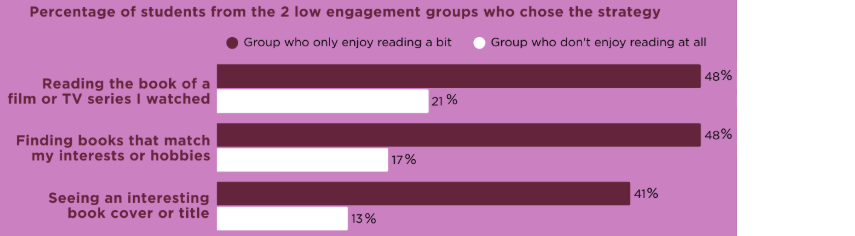
Finally, if you’re thinking about encouraging some summer reading for pleasure habits for students over the school holidays, you might get some ideas from this infographic we published in October. It presents findings from a survey of over 71,000 students in the UK who identified as only enjoying reading ‘a bit’ or ‘not at all’. They were asked what, if anything, would make them want to read for pleasure from a list of 13 suggestions. Here were the 3 most popular strategies chosen by the students:
Thank you for engaging with our content and sharing your insights in 2025. Keep an eye out for a special podcast episode dropping on 17 December where we share our highlight episodes from the year. After that, we’ll be taking a short break and will be back with fresh content in late January 2026!
What content are you looking for to help support your practice? We’re always keen to hear from our readers on topics they’d like us to cover. Simply leave a comment below to let us know what you’d like to see on Teacher in 2026!