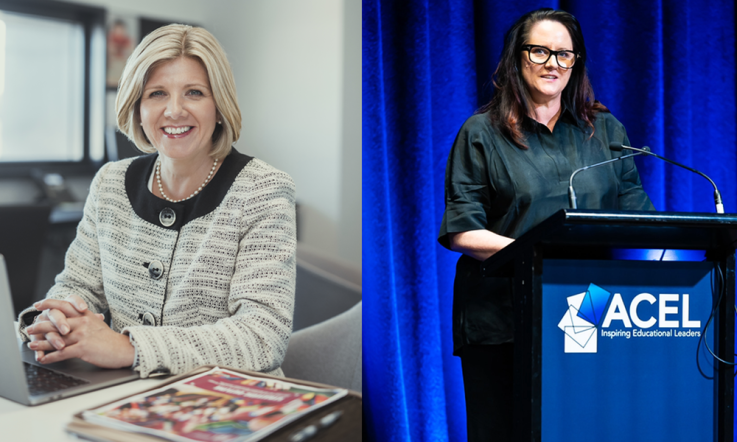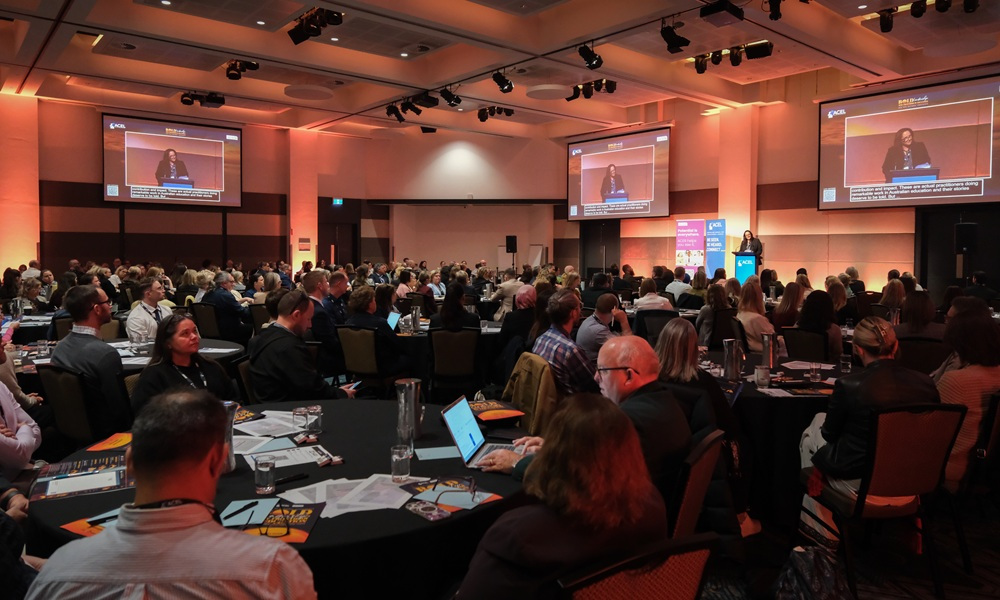
Day one of the Australian Council for Educational Leaders (ACEL) National Conference 2026 has kicked off in Perth with keynotes and presentations on the theme of Bold Leadership: New Frontiers in Education.
Presented in partnership with the Australian Council for Educational Research (ACER), the conference has drawn delegates from around the world to explore complex leadership, the future of learning and the evolving role of educators.
Be seen. Be heard. Connect.
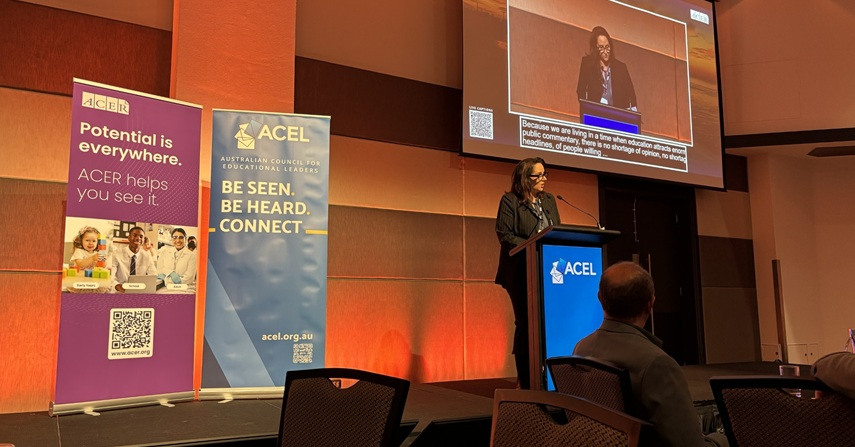
ACEL CEO Lisa Newland opened the 3-day event with a simple message – Be seen. Be heard. Connect. She acknowledged the enormous public commentary that education attracts. ‘There is no shortage of opinion, no shortage of headlines, of people willing to tell educators what is wrong with education and what we should do about it. And increasingly that conversation can be driven by populism, clickbait and simple answers to extraordinarily complex questions.
‘But education is not simple, it is a deeply human endeavour and those of us who work within it understand that. We understand the students, the communities, teaching and learning, and we understand leadership.’
Courage and school leadership
Expanding on the conference theme in her opening address, ACER CEO Lisa Rodgers said bold leadership is often misunderstood.
‘So, it’s not about being the loud person in the room, it’s not about certainty, it’s not about having all the answers but it is about making the decisions when the evidence is incomplete. It’s about acting for equity when it’s difficult, it’s about facing and confronting some really difficult truths, and changing course when the evidence tells us that actually what we’re doing isn’t quite working; and having the courage to think differently.’
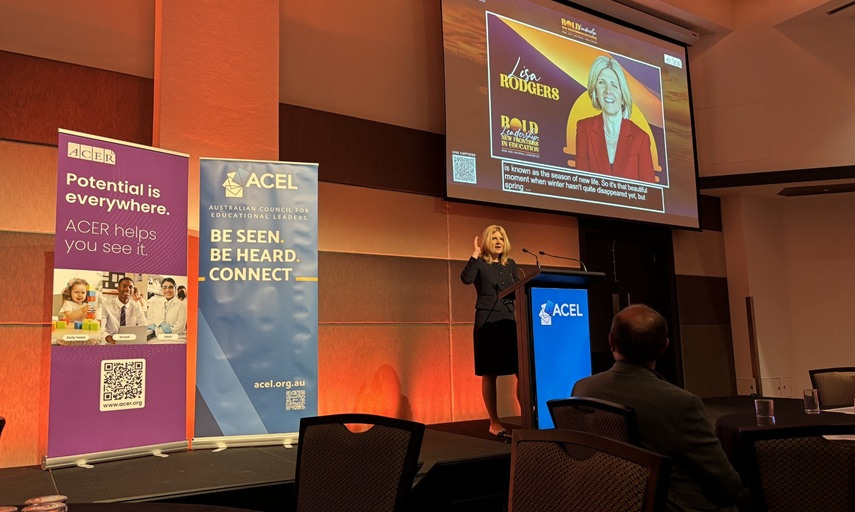
She closed her address by encouraging attendees to take what they learn back to their own schools.
‘The true measure of leadership isn’t what we know, it’s what we change because of what we know. And the true measure of this conference will not be the conversations that we have here today but the actions that we take when we leave.’
Making meaningful progress
The opening keynote, titled Venture – Beyond the Default, was delivered was Dr Jason Fox, a ‘wizard-philosopher’, complexity practitioner and leadership advisor.
Zeroing in on the conference theme, he said that bold leadership could sometimes look like subversive leadership. ‘And by subversive leadership I mean “let’s be realistic here, we’re all in the system together … we’re doing the best that we can, we’re all human ourselves.
‘But, for us there is an opportunity sometimes just to know where can we nudge things a little bit, where can we look for the leaks, the little opportunities on the side...’
He told the audience: ‘Our motivation, our focus, our attention, our behaviour will naturally gravitate to the things that provide the richest sense of progress.
‘The question that all leaders need to ask is “is this meaningful progress…?”
‘And it could well be that some of the things that we’re doing, of course when we’re educating young folks, of course it’s meaningful progress but it could also be that a lot of the things we do are a rich delusion of progress. It might have made sense in a previous context; it doesn’t make sense now.’
Digital Literacy Standards for AI readiness
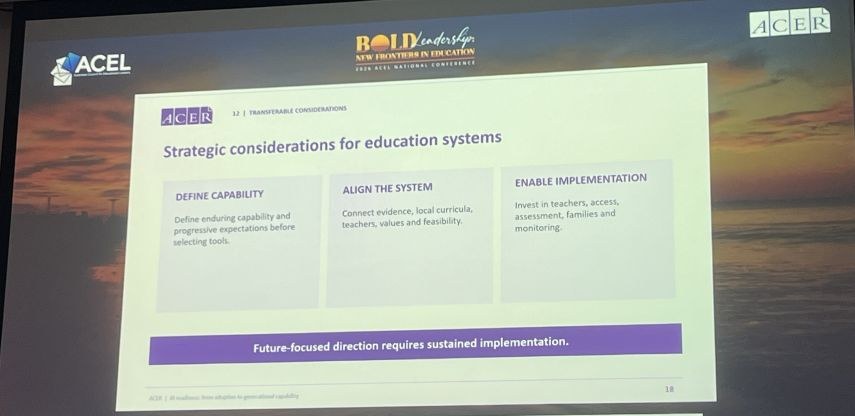
There were 3 conference sub-themes for 2026: Boldness, Leadership and New Frontiers. On New Frontiers, the session AI Ready Curriculum: Lessons from Brunei Darussalam shared details of the country’s national Digital Literacy Standards project, which is developing a clear progression of what learners should know, be able to do, and value.
Opening the session Kris Sundarsagar, Country Manager, ACER Malaysia, said ‘technology excess alone is not the same as learner readiness’.
ACER’s Dr Wagheeh Shukry Hassan explained how the project is drawing on international standards, nationally anchored in Brunei Darussalam’s curriculum and with teacher consultation as a key part of the design.
There were also practical takeaways for school leaders and systems on how to move from simply experimenting with AI tools and products to sustainable, values-led implementation.
Bringing a strategic plan to life through distributed leadership
Where is your strategic plan located in your school, what does it say about your school priorities, and is it driving the school improvement? Attendees at a packed presentation by Sandra Darley, Principal at Saint Francis Xavier in the ACT, and Dr Judith Norris of Australian Catholic University were asked to reflect on these questions.
The co-presenters shared the story of how they are working together as critical friends to help Darley activate the school's strategic plan by distributing leadership across 4 portfolios led by Assistant Principals.
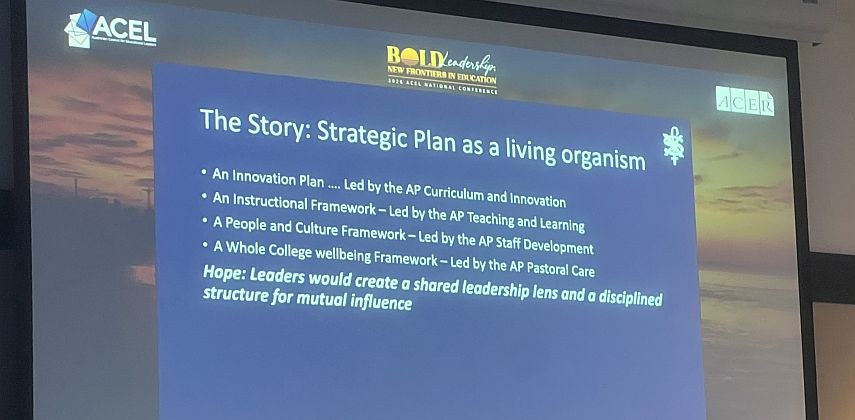
Research has been a key driver of the project, which Darley says is ‘an evolving story’. The presenters will be sharing more on their journey, reflections and learning through Teacher.
Flexible Fridays – bold change
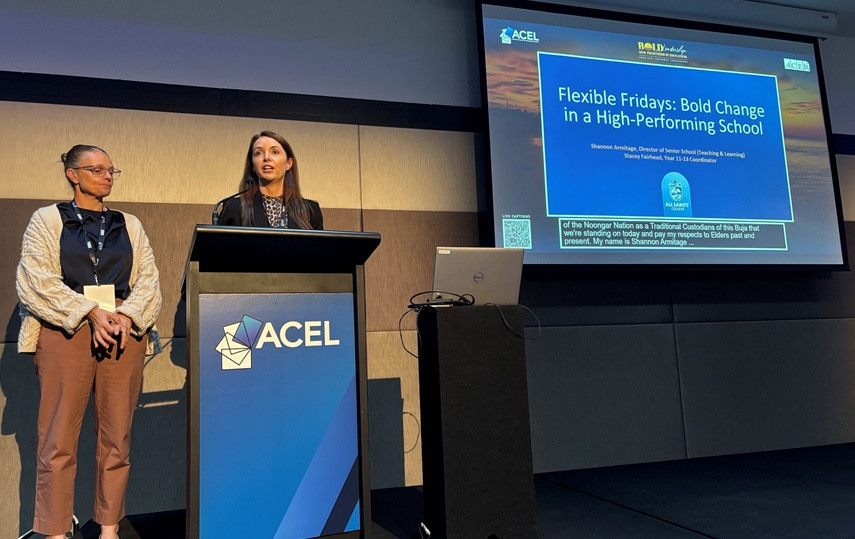
In a day one concurrent session, Shannon Armitage and Stacey Fairhead from All Saints' College in Western Australia, shared their school’s story of how they chose to redesign their senior school timetable to introduce ‘Flexible Fridays’.
They said that navigating the complexity of timetable redesign required them to challenge long-held assumptions about time, structure, and control, while engaging staff, students and families in the evolving model.
Armitage explained that they conducted a survey in week 5 of term 1 to gauge how the changes were being received by students in year 11 and 12, parents and staff.
‘Overwhelmingly the feedback was positive. Overall, 88% of students agree that the flexibility supports their learning, and that was our key goal really – to have an opportunity for them to have flexibility in a way that benefits and balances the academics with the agency and the flexibility.’
Reimagining early years assessment
We rounded off day one with a session from ACER Senior Research Fellow Dr Dan Cloney titled: What Happens in Preschool Doesn't Stay in Preschool: Reimagining Early Years Assessment to Support Connected Learning Pathways.
He acknowledged that children arrive at preschool with a diverse range of capabilities in areas that are critical to early development and future learning, and introduced the audience to a range of national preschool assessment and lessons learned from international early childhood assessments.
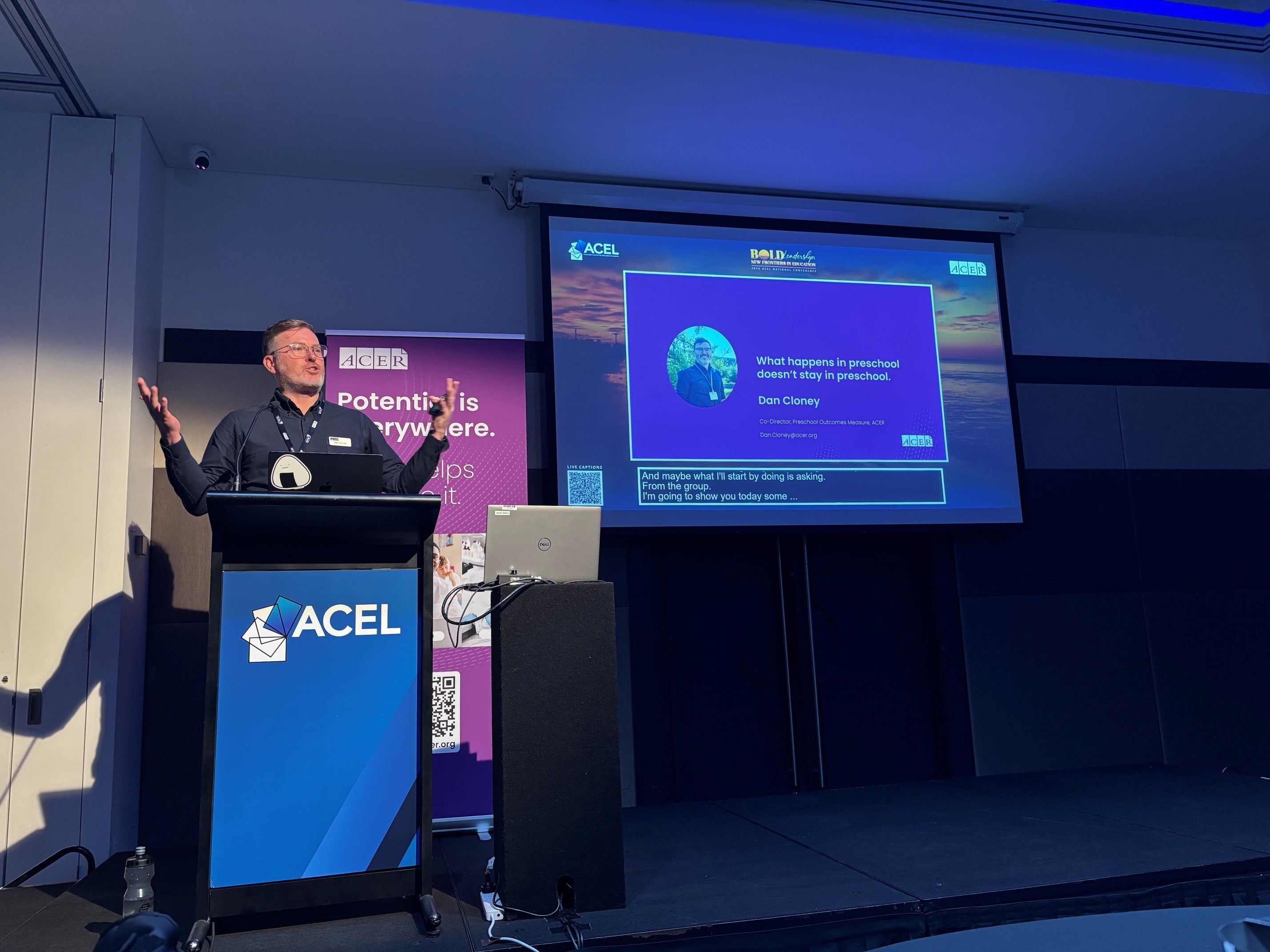
‘I think this isn't about developing one assessment for all children but it's about building a common language about how we talk about learning so that we can talk about children's learning no matter which system they're coming from,’ he said.
‘I think most importantly we need to meet all children where they are at and be able to describe the progress that they make.’
Opening day panel discussions included Dr Goran Lazendic, Dr Tim Friedman, Dr Eveline Gebhardt, Dr Dan Cloney and Dr Dan Edwards coming together to share how insights from international large-scale surveys and assessments can help leader shape the future of education.