Hello and welcome to this podcast from Teacher magazine, the resource for K-12 educators published by ACER, the Australian Council for Educational Research. I'm Rebecca Vukovic, Teacher’s Deputy Editor.
At All Saints' College in Perth, Western Australia, staff have reimagined the senior school timetable through an initiative known as Flexible Fridays. Rather than following a traditional 5-day timetable, year 11 and 12 students complete their regular classes from Monday to Thursday, and Fridays are then dedicated to a combination of independent study, wellbeing programs, sport, teacher-supported learning opportunities and other experiences designed to foster greater student independence and agency.
The model challenges some long-held assumptions about how senior schooling should be structured, while maintaining a strong focus on academic achievement.
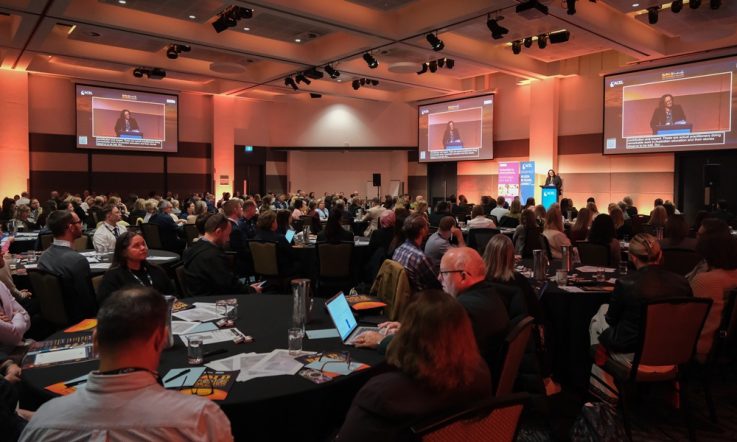
In today's School Improvement episode, I'm joined by Shannon Armitage, Director of Senior School (Teaching and Learning), and Stacey Fairhead, Year 11-13 Coordinator at All Saints' College. I first met Shannon and Stacey earlier this year when they presented on Flexible Fridays at the Australian Council for Educational Leaders National Conference in Perth, and it was great to reconnect with them for this conversation.
In this episode, we unpack how Flexible Fridays work in practice, the collaborative consultation process that helped bring the model to life, and the lessons they've learned along the way. We also explore the concept of 'flearning' or learning through failure, a mindset that has guided both the implementation and ongoing refinement of the initiative. Let's get started.
Rebecca Vukovic: Shannon Armitage and Stacey Fairhead, thank you for joining me today on the Teacher magazine podcast.
Shannon Armitage: Thank you very much for having us.
Stacey Fairhead: Thanks, Rebecca. It's a pleasure to be here.
RV: Before we get into our discussion about Flexible Fridays, can you tell listeners a little bit about All Saints’ College and the context of your senior school?
SA: Yeah, great. I'll take that question. Thanks, Rebecca. All Saints’ College was Western Australia's first co-educational Anglican school. So, we're about 45 years old. We are situated about 12 kilometres south of Perth on our Bull Creek campus, which is about 19 hectares; so it just gives you a bit of an idea of visually what the school's like. We do have approximately 1,500 students ranging right through from Little Saints, which is our childcare centre, through to year 12s on our main campus, our senior school. And we also have the Studio School campus down in Fremantle, which is our micro-school. And I just share that because I think one of the interesting things about All Saints’ is a strong history of academic success and tradition, but also a real culture of innovation and trying new things, and I think the Studio School is a good example of that.
RV: Yeah, fantastic. And the decision to redesign your senior school timetable was certainly a bold one. Can you take me back to the beginning? What problem were you trying to solve? And then when did these conversations first begin?
SA: It certainly is a bold change in any school, I think, looking at a senior school timetable and deciding to make that change. But one of the fantastic things for us was it was actually driven from our staff. So, the conversation began in 2023 as part of a strategic planning workshop with Louka Parry, actually, who'd visited the school and did some blue sky thinking, asking our staff: If you could change one thing, what would it be? And it was very clearly the senior school timetable.
So that gave us a really strong impetus for change, but it wasn't one particular problem that we were trying to solve. I'm sure lots of teachers and school leaders would agree that school calendaring is a really big challenge. So having students participating in the world – be it through vocational education and training or excursions or sporting activities – then being absent from classes is a real challenge. And for us, that was exacerbated by our double period structure for our students. So having blocks of 110-minute periods meant that when students were off campus, they were missing a substantial amount of academic time. So that was one problem we wanted to address, both the double periods and the calendar.
And the other was just a reflection that with our philosophy towards education – so you might recall us mentioning at ACEL conference, we are part of Melbourne University's New Metrics for Success project. So, we really believe in equipping our young people with transferable learning competencies and the traditional timetable model that we had really wasn't enabling our young people to foster those competencies.
So those 2 things were really significant drivers for us – the actual problems but also our vision for what education could be. So, it wasn't really a question for us about how do we simply rearrange periods in the schedule, but it was about if we were designing the ideal learning environment for senior school students, what would it actually look like and how could we reimagine time?
RV: Yeah, and that's exactly what I want to ask you about now, that reimagining time. Because I'm imagining for listeners perhaps picturing a fairly conventional year 11 and 12 timetable, can you explain what the model looked like before and then what it looks like now?
SF: Thanks, Rebecca. I'll take that one. So, it looked, to be honest, probably like most other secondary schools. We had a 5-day timetable from Monday to Friday, 6 periods a day and each subject had 4 periods a week. As Shannon mentioned, a double period and then 2 single periods. And our upper school year 11 and 12 students had a couple of periods a week for sport and a couple of periods for a period that we called ‘personal enrichment’ or PEP for short. It now looks quite different, so we still have 4 periods for our subjects, but that's Monday through to Thursday and they're all now in single periods for our year 11s and 12s. And then our Fridays are the day for flexible learning. And so we've got a number of different things that we do on a Friday, but it sort of largely can be grouped into: period 1 and 2 study, period 3 and 4 wellbeing/sport offerings, and then period 5 and 6 sort of study.
RV: Yep, fantastic. So, I want to really go into that in a little bit more detail and focus on the Fridays specifically. I'm imagining I'm a year 12 student at All Saints’. What does a Flexible Friday actually look like for me in practice? What choices are available to me and how might I spend my day?
SF: Yeah, so I've had the really great pleasure of doing that sort of organisational work this year and it's been a fantastic opportunity to grow and develop the new timetable for our year 11s and 12s and I've had a lot of fun doing it. On our odd weeks, our year 12 students are rostered on campus and there's a diverse sort of range of things they can engage with during this time. So largely periods 1, 2, 5 and 6 have a more curriculum academic focus. So, they're provided with structured opportunities to study independently. Perhaps they meet with teachers, they collaborate with their peers or take part in scheduled workshops. So, we've run things like practical-based lessons in science to help the students with their lab work, examination prep, workshops and revision sessions, and some leadership development sessions, for example. We also have assemblies and other activities to support students' academic and personal development during those times.
And the idea of this is to just give them the opportunity to develop their agency skills. And we know obviously that the skills that they can develop as lifelong learners are going to be increasingly important. This aligns with the OECD's Learning Compass 2030 which identifies student agency as a key outcome of education and emphasises the importance of their capacity to make informed decisions and take responsibility for their own learning. So those periods are specifically designed to help students develop and practice these capabilities while building their independence and self-management skills. It also, as Shannon mentioned, heavily aligns with our work in the Australian Learner Competency Credential partnership that we have with the University of Melbourne and is helping us to develop a broader focus on recognising the students’ individual capabilities beyond just academic attainment. So that's what periods 1, 2, 5 and 6 are largely concentrated on.
Periods 3 and 4 focus on the students’ physical and emotional wellbeing with offerings typically centred around sport, recreation. Our year 11s have the opportunity to complete some qualifications such as first aid. But we also then use that time to develop their skills in terms of relating to one another, healthy relationships, the keeping safe curriculum, consent and all of those types of things. It also gives us an opportunity – we have a couple of year 12s next year who are going to be participating in the University of Western Australia Uni Pathway Program which happens on a Friday, so it's opened up that opportunity for those students where perhaps we wouldn't ordinarily have been able to accommodate that. We also have approximately 15% of our ATAR students that undertake an external certificate qualification, and much of that also happens off campus on a Friday. So, a fairly rich and varied program, Rebecca.
RV: Yeah, it certainly sounds like that. And the message I got from it was that you're essentially giving these senior students more independence and more flexibility. But I'm wondering what gave you the confidence that they were ready for this kind of responsibility?
SF: So, All Saints’ has been trying to be innovative in this space over a long period of time and it reflects a broader commitment that the college has set to developing student agency across the school. So, it's something we're doing from as early as year 7 with different subjects and programs that we have. So, we were pretty confident that they were going to be ready to take the challenge up, and I have to say they've proved us right.
RV: Yeah, that's fantastic. Because I also imagine one of the first questions a school leader listening would ask is, how did parents respond to this new model and were there concerns about moving away from those formal lessons on a Friday? And also how you went about building that confidence across the school?
SA: I think that's a really interesting question, Rebecca. One of the first things we did when we decided to go ahead with the timetable review was to notify families. So, we did that way back in 2024, just to say, ‘hey, we are actually looking at this’ – because our parents are such an integral part of our community that including them in that change process is incredibly important. And we wanted to also be really transparent with everybody involved, so I think communicating early and communicating often actually gave us some confidence to move forward.
So, we initially surveyed parents in the senior school; we opened that up to all year 8-12 families. Following on from that, we involved interested parents in small focus groups. And we actually had them in the room sharing some research that we'd found and different school sample models so that we could hear directly from parents what they thought were the strengths and potential challenges of different models. And I guess through that process, obviously we were also bringing along students and parents.
But that's not to say everything is always smooth sailing and I think part of a challenge in leadership is about being courageous and understanding that you may not please everybody but it's being really true to what your purpose is. So, for us, we knew that we could provide a better timetable offering for our young people – so being really clear about that purpose but also being really open to communication and feedback from families. So, any families who had raised concerns – and to be transparent, most of the concerns were around change rather than the model itself, just a nervousness – so we actually invited those families in individually and took the time to meet with them, listen to their concerns and address them on a very personal level.
And then once we came to implementing, we made a commitment that we would review the project after 6 months, so we continued to listen after implementation. We conducted a full parent survey again at the end of semester one, after 6 months in, and what was really clear from that survey is overwhelmingly positive feedback on the intent of the program with some constructive feedback about things that we could do better, particularly within the Flexi Friday program. And Stacey and I actually really enjoyed receiving that feedback because there were some great quick wins that we could adopt and make changes for semester 2, so we're able to do that really well. And I think for us, the question we kept coming back to is just: What is going to provide the greatest benefit for our students? And then being willing to have the conversations and receive feedback, albeit challenging at times, because we knew what we were doing was in the best interest of our young people.
RV: Can you give me just a little bit of a sense of what some of those quick wins were at the time?
SA: I think some of the quick wins were things that we probably hadn't foreseen in the sense that students and families said, ‘hey, can we please have some more silent study spaces available?’ That's super easy to make happen. ‘Can our year 12 students have access to their common room so they can make themselves a tea or coffee during the day?’ And we said, ‘yeah, absolutely’. Some of the other feedback came around wanting specific subject help or workshops from specific staff or exam preparation. And we use that feedback to go to the staff to say, ‘this is what people would like, is there any appetite in taking it up?’ And our teachers in particular responded really positively to that because they want to do the best for our young people. And so having very clear guidelines around what is wanted was really well received by staff.
RV: Yeah, fantastic. And it just goes to show how important it is to listen to those around you and to take that feedback on board. I know we've spoken a little bit about the families, but I'm also keen to hear more about the staff and students. Were there any pieces of feedback that genuinely changed the direction of the model?
SA: I think we sort of began with research, so working really closely with our timetabler, John Warwick, and going out and visiting schools, looking at the latest literature, and I would just, huge shout out to the schools that were open to us coming in and meeting and being, really helpful. I think that is really special that schools are willing to help one another. And then what we actually did is we presented back to our staff about 6 different models based on their surveys that we thought those models most closely reflected the feedback they'd already provided. And then we ran some workshops to say, ‘okay, which of these works? Again, what are the strengths of these? What would be some foreseeable challenges?’
And interestingly, it was very clear after one of those workshops that one model was the preferred model. And that one model was really an iteration of this Flexi Friday model that we have with no structured classes on a Friday. So that sort of was easy in the sense that it gave us a starting point to work with. And then as we were developing the timetable, we kept going back to our staff with feedback and our curriculum leaders really took a strong role in leading that with their teams. And we were able to achieve all but one goal with our staff. And the one that we weren't able to achieve was (for 2026 anyway) collaborative preparation time for departments. But I'm really pleased to say that we are on track to make that happen for 2027, so we continue to refine that process.
RV: Yeah, brilliant. And of course, one of the goals for this year was to create more space for student agency while maintaining that academic rigour. I'm wondering, can you share with me what that actually looks like in practice and then how do you ensure that flexibility doesn't simply become free time?
SF: Yeah, so to ensure that the flexibility was going to remain meaningful and give students the opportunity to develop agency, we decided to put several safeguards in place. Essentially our key objective is to make sure that the students are doing what they should be doing and trying to balance their academics and wellbeing without it just becoming a sort of waste of time, I guess. So, our expectations remain very clear and deadlines remain unchanged; our year 11s and 12s are still expected to complete all of the assigned work and keep on top of the academic aspect of their schooling.
Our year 12s were initially provided with a structured framework to guide their learning at home days. So, our year 12s have every second week off campus where they can learn from home. And whilst we have a handful of students that still come into campus on those days, the majority of them take that opportunity up to study from home. So just giving them a bit of a clear framework, I think, helped to guide their study while they weren't on campus.
And our year 11s were provided with really clear scaffolded small tasks by their classroom teachers to just help in the initial stages to facilitate their learning while they were on campus. The idea of this sort of level of scaffolding, we're hoping we can sort of start to slowly reduce over time because the long-term goal really is to make sure that our students are actually, you know, directing their own learning and being really proactive in that space.
We also monitor their attendance and their academic performance in general to make sure that they're engaged and attending regularly when they should be. All of our parents were informed of the expectations and the year 12 parents were required to give parental consent should they be okay with their child studying from home on alternate weeks. And we've also had a lot of parent communication should we have been alerted to any students that appear to be falling behind in their academics or not keeping up with the attendance requirements and the sort of broader commitments of the program. So, all of that's sort of been designed to make sure that they're getting the most out of the Fridays and it's meaningful whilst also balancing their opportunities to direct their own study and develop those agency skills.
RV: Yeah. And at the ACEL conference, I was really struck by the use of the term ‘flearning’ and the idea of taking purposeful action in uncertainty. I'm wondering if you could explain a little bit more about the term ‘flearning’ and how that mindset has shaped the way you've implemented and also refined Flexible Fridays.
SA: ‘Flearning’ or learning through failure is really cultural infrastructure here at All Saints’. Sometimes it's referred to building the plane as you fly it. But for us it's really about holding tightly to purpose but loosely to the model. And I think it's important to iterate that doesn't mean being reckless but it's about accepting that we need to be responsive to the needs of young people and we can't always wait for perfect certainty before we act. We talk about preparing young people for a VUCA world – so one that's volatile, uncertain, complex and ambiguous – and I think schools need to model that to our young people as well, that we are part of that real world and that experience.
And one of the messages that stayed with me from the ACEL conference was ‘no one else is coming’. If we believe something needs to change, in order to provide a better experience for our young people, we can't wait for somebody else to make that change happen. As leaders we need to research, consult, be thoughtful and then be courageous enough to take that action.
And I think that's how we've really approached Flexi Fridays. We never expected the first version to be the final version or to be the perfect version. We've implemented, we've listened, we've learned, we've refined. Sometimes that has meant adding more – so the silent study rooms or things like that. It's also meant removing, so Stacey can attest to this. We had this amazing program, and we implemented all of these workshops, and we scheduled these guest speakers. And our students said, ‘please don't. We actually really want our own time. We want our own agency, and we just want to do our own thing’. And so that flearning is about acknowledging we're not always perfect. We've heard what the students said and been willing to change that.
And there's been some really incredible things come out of the program as a consequence. I think one of the beautiful things is that every second Friday when the year 12s are on campus, the final period of the day seems to have turned into a year 11 versus year 12 basketball match. And that might sound frivolous to some, but for us it's been a beautiful cross-cohort activity. The entire thing was driven by the students, and it's actually become a real community building event. And I think that's the beautiful thing about being open to whatever arises and responding to that feedback. So, the Flexi Friday program has also enabled us to rethink other things we do, particularly in the year 12 space – so our end of year program for year 12s will look a little bit different next year as a result of some of the learnings from this year as well.
So, it's really, I guess for me, about purposeful action in uncertainty about holding tightly to your ‘why’ but being prepared to learn your way towards the ‘how’.
RV: That’s a really powerful message. So now that you've been running Flexible Fridays for a while, what evidence tells you it's working? What changes have you seen in students that gives you that confidence that you're achieving what you set out to achieve?
SF: Yeah, so perhaps the strongest indicator that it's working is the level of trust that the students have demonstrated. So, the vast majority of our year 11 and 12 students understand that Flexible Friday is a privilege that's linked to responsibility. So, most of our students continue to meet expectations, complete the work that they're required to do and use the time appropriately in the way that they best see that suits them at that particular point in time. And all of this reinforces our belief that when young people are given clear expectations and genuine responsibility, that they're often capable of a lot more than sometimes I think we assume.
And whilst we continue to refine the program, I think the evidence so far suggests we're achieving the balance that we hoped for – maintaining high academic expectations whilst helping students develop independence and decision-making skills and just facilitating the opportunities on Fridays and elsewhere that they get to develop those skills. And the ultimate measure, I think, of the success of this program is not simply just do they complete the work on a Friday, but are they becoming more capable, self-directed learners who are prepared for the demands of life after school? And hopefully in the long term, that is what we start to see more of.
RV: Fantastic. And finally, for school leaders who are listening, who are perhaps intrigued by the idea, but wondering whether a change of this scale is even possible in their context, what's the biggest lesson you've learned from the journey so far?
SA: For me, the biggest lesson is starting with a clear ‘why’ but then being optimistic about what's possible. I genuinely believe anything is possible, it just depends how hard you're willing to work to get there. That's not to say change is easy. I think changing something as complex as a senior school timetable takes enormous amounts of planning, problem solving and persistence. But sometimes the barriers become our starting point for thinking. You know, it would have been very easy for us to say, ‘we can't do that because of staffing. How would we timetable that? What about the minutes of instruction or what about the calendar or what about assessment?’ And I think if we start there, it's very easy to convince ourselves that the change isn't possible.
And this goes back to what I mentioned earlier about courage in leadership. And I think it really matters to be willing to lead a change, even when we don't have absolute certainty about every part of the journey that we're about to commence. If we believe there's a better way of doing something, then being prepared to take that step forward. That being said, I do think we need to balance it with integrity. And for us, as we've mentioned, that's continually coming back to our ‘why’, keeping our students at the centre of our decision making. And not making a change simply to be seen as innovative or different or as a marketing tool – but actually making that change because it's the best thing for our people at All Saints’ College.
And I think I'm going to cheat and add a second one. You know, another key learning is that I don't think you can ever over-communicate this type of change. And for us, it was about being really transparent, bringing all the stakeholder groups along. We haven't spoken about this yet, but I think for us, a really big win was getting our Board on the same page so that everybody in the community understood the ‘why’ and was able to speak to that and address that whenever any issues arose. And genuinely listening to feedback. And as we said, the flearning piece – being willing to accept that what we thought might be the path forward perhaps isn't and making changes as we go. It shows that you're responsive to the community. It shows that your best intentions are there. But again, being really clear on your ‘why’. And I think for me, it ultimately comes down to: don't let what's difficult get in the way of what you know could be better for young people.
RV: And that courage certainly shines through. And thank you so much for sharing your story with our listeners. Shannon Armitage and Stacey Fairhead, thank you for sharing your insights and your work with Teacher magazine.
SA: Thank you very much, Rebecca. It's been an absolute pleasure.
SF: Thanks, Rebecca. We really appreciate the opportunity to chat.
That's all for this episode. Thanks for listening. If you loved this episode, please take a quick moment to hit follow on your podcast app and leave us a review. Both of those things help more people like you to find our podcasts and they're a really big support for the Teacher team. We'll be back with a new episode very soon.
Teacher magazine is published by the Australian Council for Educational Research.
The leaders at All Saints’ College began by identifying challenges and asking what an ideal learning environment could look like. What aspects of your school's structures, routines or timetable would you rethink if you were designing learning with today's students in mind?
The concept of ‘flearning’ encourages purposeful action, reflection and refinement. When have you adapted your teaching after something didn't work as planned? What did that experience teach you about improving practice?