Filter by category
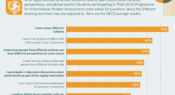
What opportunities do school students have to learn about other cultures, perspectives, and global events? Students participating in PISA 2018 were asked 10 questions about the different learning activities they are exposed to. Today’s infographic looks at the OECD average results.
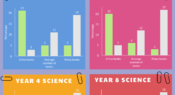
The Trends in International Mathematics and Science Study (TIMSS) measures how well Year 4 and Year 8 students perform in maths and science. The latest study data from Australia compares student performance with the number of books in their home. Here, we look at how the number of books correlates with performance.
Yoga is an ancient practice and meditation, focused around a group of physical, mental, and spiritual disciplines. Dr Marc Cohen has been studying integrative and holistic medicine for decades. In today’s article he discusses why yoga improves your health and lifestyle choices, and shares tips to get started.
What do you understand by the term ‘leadership’? Who do you consider to be a good leader and what are the attributes that make them so? Researchers asked Middle Years school students in Australia these questions. Find out what they said in today’s article.
In yesterday’s reader submission, Michelle Lucas looked at some of the misconceptions around gifted and high-achieving students. In this follow-up article she shares four interventions to address underachievement and meet the needs of gifted students.
‘The underachievement of gifted and high-achieving students is, in part, propagated by the dangerous myth that they will succeed regardless.’ In this reader submission, Gifted and Talented Coordinator Michelle Lucas looks at some of the misconceptions.
Teacher caught up with Andreas Schleicher, Director for Education and Skills at the OECD, to talk about how schools have coped with the challenges of 2020. In this video, he shares how different countries around the world ensured teaching and learning continued during COVID-19.
Teacher recently caught up with Andreas Schleicher, Director for Education and Skills at the OECD, to talk about how schools have coped with the challenges of 2020. In this video, he reflects on how the role of teaching has fundamentally changed.
We’ve collected the details of significant themes and events which might help inspire some of your upcoming lessons for 2021. Here, find out about STEM and literacy events that are scheduled, as well as themes of global significance which you might find relevant.
What should Australian schools and teachers focus on in order to improve students’ general understanding of mathematics and science? In her final Teacher column of the year, Dr Sue Thomson explores newly released TIMSS 2019 data to highlight some of the strengths and weaknesses of Australian students at the national level.
Facebook
YouTube
SoundCloud
Apple Podcasts
Spotify
RSS feed
Linkedin