Filter by category
As a teacher, how has work impacted your wellbeing during the pandemic? What wellbeing initiatives are offered at your school, and how can they be improved to better support teachers? In this article, we outline five further readings which explore educator wellbeing in Australia and internationally.
How can we support reading aloud in the early years, at school and at home? And how does reading aloud affect our lives in the long term? Today, we’ll be speaking with Professor Emerita Rosemary Johnston AM, who shares some of the research on the benefits and joys of reading aloud and how we can continue to support reading aloud at school and at home.
A new framework for learning through play has been developed to support teachers in the classroom and help guide policy and practice in the early years of schooling. The Australian Council for Educational Research (ACER) and the LEGO Foundation have worked together to develop the framework.
Student engagement in Maths is becoming increasingly important in Australia with the demand for skilled graduates in STEM industries growing. Here we speak to researcher Dr Maaike Wienk about new data showing a decline in Year 12 Maths participation, and what schools can do about it.
As a school leader, how do you apply research in education to your practice? How does it inform the goals and progress of your school? This month at Teacher, we’ve been digging into the research to bring you updates from Australia and abroad. Catch up on these stories in today’s podcast.
When you last received feedback on your practice, were you given actionable steps to help you improve? A new large-scale study which analysed written feedback provided to early-career teachers in the US has found that receiving goal-setting and actionable feedback is rare.
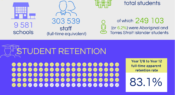
How many students were enrolled in how many schools across Australia throughout 2021? How many full-time equivalent staff members? What was the average student-teacher ratio? Find out what schools looked like in 2021 in today’s infographic.
How effectively are you acting on feedback given to you by students? In this episode of School Improvement, we speak with Dr Ilana Finefter-Rosenbluh about her recent research into the impact of student perception surveys on teachers’ practice, and she shares some strategies teachers and schools can employ in order to improve their practice in this area.
Students have a diverse range of personal and contextual factors that influence their access to and achievement in their education. A new global study calls for a re-evaluation of education systems to promote personalised education.
Home support of children’s literacy skills in the early years is a well-known indicator of their reading progress at the start of school. A new study has explored how different reading experiences at home have an impact on children’s continued reading development at school.
Facebook
YouTube
SoundCloud
Apple Podcasts
Spotify
RSS feed
Linkedin