Filter by category
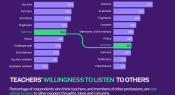
The third annual Australian Beliefs and Attitudes Towards Science survey asked 1,255 adult respondents about their beliefs and attitudes towards science and various professions, including teachers. Here, we share some of their responses.
Recorded live at the National Education Summit in Melbourne, Dominique Beech sits down with Professor Miriam Tanti from La Trobe University to find out about the research she and her colleagues have been conducting into the science of learning and Generative AI which has culminated in a free, practical guide for secondary school teachers.
Our 2026 reader survey opened today! Take a few moments to let us know your feedback on Teacher magazine and what you’d like to see from us in the future. If you’re based in Australia, you’ll also go into the draw to win a $550 book bundle from Amba Press.
‘The most formidable change we have seen so far is consistency in AI use. Along with staff, students from years 5 to 12 are now working off the same scale and AI use is thought about before a task is set, not discussed after.’ In this article, Jill Fitzsimons, Director of Teaching and Learning at Loreto Toorak shares how staff and students have been supported to use AI, and how the impact of AI is shaping assessment.
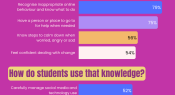
A survey of over 70,000 secondary school students across 313 schools in Australia has uncovered a gap between knowing what tools and skills can support their wellbeing, and taking action and using those skills in practice.
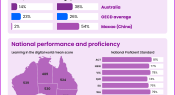
The Programme for International Student Assessment (PISA) shows how well 15-year-olds can apply their knowledge and skills in science, reading and mathematics to real-world situations. In addition to the 3 core domains, an innovative domain important in modern societies is included in each test cycle. In 2025 the innovative domain was ‘Learning in the digital world’. This infographic shares Australia’s performance in an international context.
In case you missed it, the PISA 2025 results were recently released. As is always the case, there is plenty to digest. This month at Teacher, we’ve shared insights from many experts to begin to unpack the results. In this episode of Teacher Staffroom, we catch you up.
Following the release of the PISA 2025 results last week, Dominique Beech is joined by Dr Jonas Bertling, Research Director of ACER Implementation and Reporting and co-author of the report sharing Australia’s PISA 2025 results, to unpack the 2025 findings and the implications for educators.
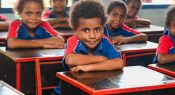
‘PILNA helps countries see not only whether students are meeting expected levels, but also the conditions that support or constrain learning.’ The latest results from the Pacific’s largest regional education assessment point to encouraging signs of recovery in student learning, while also identifying key areas where further improvement is needed.
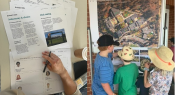
‘Our research shows aspirations for school community engagement in the design of school outdoor spaces are high. … And yet, for many re-designs to schoolyards, engagement does not happen.’ In this article, Hannah Richardson from the University of Canberra shares 3 simple activities for engaging students in schoolyard design.
Facebook
YouTube
SoundCloud
Apple Podcasts
Spotify
RSS feed
Linkedin