Filter by category
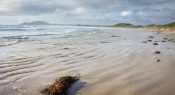
Few classrooms can match the Great Barrier Reef. As one of the world’s most remarkable natural environments, it offers students the chance to learn through experience, discovery and connection. A new Australian Government program is subsidising school excursions to this iconic destination, making it possible for more students to visit the Reef and experience its educational benefits firsthand.
The latest OECD Programme for International Student Assessment (PISA) results have just been released. In his latest Teacher column, OECD Director of Education and Skills Andreas Schleicher shares some of the early data and insights, including the changing landscape of reading performance and translating scientific talent into scientific ambition.
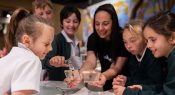
It’s National Science Week – a time to celebrate curiosity, inquiry and shared learning. In today’s article, we learn more about the Victorian Space Science Education Centre and how its immersive STEM experiences contribute to knowledge acquisition, but also to the development of teamwork, communication, resilience, and connection.
A new insights report on the latest assessment cycle of the Trends in International Mathematics and Science Study (TIMSS) investigates how much curriculum content is actually covered in classrooms, and whether differences are linked to student achievement.
St Theresa’s Primary School Albion in Melbourne’s west is strengthening science learning through a knowledge-rich curriculum focused on Australia’s Great Southern Reef. In today’s article Literacy Leader Jackie O'Connor-Croydon shares more about the P-6 program that integrates field experiences, expert-led learning and sequenced content, to deepen students’ scientific understanding.
In today’s episode Dominique Russell speaks with the 2 recipients of the 2025 Prime Minister’s Prizes for Excellence in Science Teaching – Paula Taylor from the ACT and Matt Dodds from NSW. They share the lesson activities that are a hit in their science classrooms, the teachers that had an impact on them, and how they’re sharing their knowledge with other educators.
The winners of the 2025 Prime Minister’s Prizes for Excellence in Science Teaching have just been announced. The national award includes prize money of $250,000 and is presented to one primary and one secondary teacher in Australia. Find out more about the 2025 winners in this article.
Discover the wide range of curriculum-aligned programs and resources on offer at the Australian Museum and book a world-class outing that draws upon the museum’s vast collections. Crafted by a team of education specialists, the suite of programs provide students with innovative and engaging learning opportunities across primary and secondary learning stages.
We know the global teacher shortage is impacting many different school contexts, and that encouraging young people to consider a career in teaching is an important part of the long-term picture. Dr Tracy Woodroffe joins us to discuss her 12-month research project that gathered perspectives from Aboriginal students and teachers. These perspectives informed recommendations to encourage more Aboriginal young people in the Northern Territory to consider teaching.
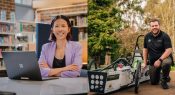
Last term, the 2024 recipients of the Prime Minister’s Prizes for Excellence in Science Teaching were announced. In this episode, Alice Leung and Daniel Edwards join us to share some of their favourite learning activities to run in the classroom, discuss why STEM is for everyone, and share how they use social media to connect with experts.
Facebook
YouTube
SoundCloud
Apple Podcasts
Spotify
RSS feed
Linkedin