Filter by category
The two most recent winners of the Prime Minister’s Prizes for Excellence in Science Teaching join us in this podcast. They each share how they’re improving student outcomes in their own school settings and their top tips for other Science teachers across the country.
If you’re in a co-education school, look at student enrolments for STEM subjects and participation in STEM-related clubs and extracurricular activities – is there a gender imbalance? A new report shares global examples of effective interventions from primary and secondary education settings.
Our guest on episode 72 of The Research Files is Professor Joseph Ciarrochi from Australian Catholic University’s Institute for Positive Psychology and Education. He’s the lead researcher for projectHOPE – a program that’s notched up success in re-engaging at-risk secondary students with their schooling.
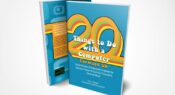
Twenty Things to Do with a Computer Forward 50, edited by Dr Gary Stager, celebrates the vision of Cynthia Solomon and Seymour Papert in their seminal 1971 paper. In this exclusive extract, Martin Levins shares ‘Some Modern Things to Do with a Computer’, with examples from Australian schools.
‘Considerable momentum is building around the belief that education will increasingly benefit from teachers becoming more ‘research-engaged”…’ Our latest reader submission discusses the phenomenon of Research-Invested Schools and shares examples of what’s happening in Australia.
After many educators experienced lengthy periods of remote learning once again this year, the challenges of switching off from work might be even greater these holidays. In this article, we’re joined by Dr Joanne Beames from the Black Dog Institute, who shares some evidence-based strategies educators can use to switch off and put their wellbeing first.
In a three-part series, we are delving into the Civics and Citizenship learning area of the Australian Curriculum, and some aspects of the Australian Curriculum: History to explore students’ misconceptions, and to share some lesson activities to help your planning for 2022. This final article focuses on ‘Australian history’ and ‘Civics and citizenship and history skills’.
Several states have banned financial institutions from delivering banking and branded education programs in schools, paving the way for school-led programs free from commercial interests. In today’s reader submission Carly Sawatzki, Jill Brown, and Peter Saffin outline some guiding criteria to help schools consider ways to strengthen their financial education programs.
A primary teacher from Queensland and a secondary teacher from Sydney were last night recognised for their contribution to STEM and agricultural science education by being named winners of the Prime Minister’s Prize for Excellence in Science Teaching. Here, we share details of the work they’re doing in their schools.
As Australia marks World Teachers’ Day, a new survey report released to coincide with the celebrations shines a light on school educators’ passion for and dedication to the profession and lifelong learning. But it also reveals how the job is taking a toll on their wellbeing.
Facebook
YouTube
SoundCloud
Apple Podcasts
Spotify
RSS feed
Linkedin