The latest OECD Programme for International Student Assessment (PISA) results have just been released. In his latest Teacher column, OECD Director of Education and Skills Andreas Schleicher shares some of the early data and insights, including the changing landscape of reading performance and translating scientific talent into scientific ambition.
The release of the results of the latest cycle of the Programme for International Student Assessment (PISA) made headlines around the world. More than 760,000 students assessed internationally, representing around 33 million 15-year-olds from 91 countries and economies. But the initial data are just the beginning.
Australia’s 15-year-old students continue to perform above the OECD average across science, reading, and mathematics, the latest OECD Programme for International Student Assessment (PISA) results show. In today’s article we share more about Australia’s performance and explore how it compares internationally.
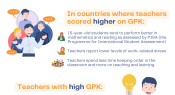
Part of the OECD’s Teaching and Learning International Survey (TALIS) 2024, the Teacher Knowledge Survey is the first large-scale study providing internationally comparable measures of general pedagogical knowledge (GPK). Findings suggest it may contribute to improving students’ and teachers’ outcomes.
Research involving over 110,000 children and young people has examined their audiobook listening habits in their spare time. Findings suggest that audiobooks can be a potential pathway into reading for students. We speak to the report’s lead author to find out more.
New research has found that 36% of children and young people said they enjoyed reading in their free time either ‘very much’ or ‘quite a lot’. Participants were also asked if they agree with various statements about how reading in their free time helps them. We share the results in this infographic.
Spending time outside supports student wellbeing and physical health. New research has examined teachers’ experiences of enabling outdoor play during the school day with the aim to understand how their autonomy, competence, and relatedness interact to shape decision making. We speak to researcher Dr Brendon Hyndman to find out more.
New research involving almost 4,000 students aged 13-18 in the UK has found many are divided over appropriate use of AI in their homework and a majority would like to see their teachers use AI in the classroom. The research also asked students and their teachers what support they would like to receive on AI. Find out more in this article.
A UK study involving over 125,000 children and young people has shown an uptick in enjoyment of reading and daily reading habits. Latest findings also include gender differences for reading habits, and insights into what encourages young people to read for pleasure.
Absent students miss more than just lesson content; they miss the opportunities to build the habits and skills to succeed at school and in life. New OECD research shows ‘school attendance problems are no longer a marginal issue; they have become a challenge affecting classrooms in nearly every country’.
Facebook
YouTube
SoundCloud
Apple Podcasts
Spotify
RSS feed
Linkedin