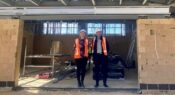
In this second episode of our new podcast series School Assembly, we speak with Principal Ray Boyd and Associate Principal Rachael Lehr about setting short- and long-term goals in the lead up to the opening of Dayton Primary School in Western Australia next year.
While teaching is a highly rewarding career, it can also be very stressful. In this Q&A, Claire Goodall, Young People and Education Manager at R U OK? shares how schools can build a positive help seeking culture, how staff can support their colleagues, and how to ask for help if you need it, in the lead up to R U OK?Day this week.
Last year, we heard about an action research project which was occurring at Queenwood School for Girls in Sydney to build a culture of reading for pleasure across the school. The research project has concluded, and in this article, we get an update on the project’s impact on student outcomes and wellbeing.
Student welfare has come sharply into focus over the past few years as the pandemic poses unprecedented challenges for students and teachers alike. There’s a lot to explore around student welfare in the Teacher archives, and this month we’re bringing you some recent examples.
Welcome to the very first episode of our new podcast series, School Assembly. In this series, we dive into what it’s like to build a school community from scratch, following Principal Ray Boyd and Associate Principal Rachael Lehr as they prepare for the 2023 opening of their new primary school in Western Australia.
It’s well-known that teaching is a stressful career. Finding the time to discuss challenging matters and to reflect on your practice might seem impossible. New research shows a reflective circles peer support model has a positive impact on educators. We speak with lead researcher Fiona Gardner in this article to find out more.
Findings from a cross-sectional survey looking into young Australian women’s experiences of menstruation and dysmenorrhea indicate the need for better menstrual health education in Australian schools. Find out more about the survey responses in relation to menstrual health in Australian Health and Physical Education in today’s infographic.
For the past 7 months, Principal Ray Boyd and Associate Principal Rachael Lehr have been growing the school community for their new school, West Swan (Dayton) Primary School (planning name), as it’s built in Perth, Western Australia. In today’s photo story, we share some of the key moments from their journey so far.
‘They’re concerned that adults don’t listen to them … adults also tend to be dismissive of their ideas and insights.’ In this Q&A we speak to Helen Connolly, South Australian Commissioner for Children and Young People, about the Student Voice Postcard initiative.
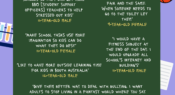
Over 8,300 children aged between 8 and 12 answered the question, 'what would make things better for kids in South Australia?' as part of an engagement project by the state’s Commissioner for Children and Young People. Here, we share some of their responses related to school.
Facebook
YouTube
SoundCloud
Apple Podcasts
Spotify
RSS feed
Linkedin