Filter by category
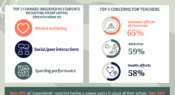
New research assesses the nature and consequences of student vaping in primary and secondary schools in Australia. In this infographic, we explore the responses from a national sample of 196 school staff, surveyed about their perceptions of students’ e-cigarette use.
‘Ultimately, our pilot … has transformed the way we meet the needs of our students and staff, particularly in a post-pandemic landscape.’ In this reader submission, Bridget Garing shares the details of a pilot Pittwater House in New South Wales undertook earlier this year to encourage staff to work collaboratively to support students.
Recent research has shown that participants in a cooking class have experienced not only an increase in their cooking confidence, but also improved mental health. Here, we speak to a member of the research team, Jo Rees from Edith Cowan University, to find out more.
‘There is not a set seating plan. Students choose where to sit according to the task, their learning needs and preferences at any point in time.’ In this reader submission, teachers Heath Henwood and Emily Hales share how they transformed a Year 6 classroom from the traditional rows of desk layout to flexible seating.
In this episode in our Behaviour Management series, Dr Erin Leif and Russell Fox from Monash University join us to answer questions submitted by Teacher readers on trauma-informed practice, strategies for casual relief teachers, and the links between positive behaviour support and academic outcomes.
When we think of transitions in education, often what comes to mind are the ‘macro’ transitions from home to early childhood settings, and then into school and beyond. But just as important are the everyday ‘micro’ transitions between spaces, activities and people. Here, we speak with Dr Loraine Fordham about why these transitions are important, and tips for educators to handle them sensitively.
How can a student’s social-emotional motivation at school impact their behaviour and achievement? In what ways can we support students’ social-emotional development? These are some of the questions explored in Dr Rebecca Collie’s study into the role of prosocial motivation in the classroom.
Students miss school for a whole range of different reasons, such as illness, suspension, or family holidays. Today, we’ll be speaking with Kirsten Hancock, Honorary Research Associate from Telethon Kids Institute in Western Australia about how different types of absences affect student outcomes, and what families and schools can do to tailor their support to students who are missing school.
In the second part of our Q&A, author-educator Vanessa Hamilton discusses what consent education is (and some of the misconceptions), examples of what it looks like for students in primary and secondary, best practice for schools, and some of the challenges faced by teachers and leaders.
Age-appropriate consent education will be mandatory in all Australian schools from 2023. Kit and Arlo Find a Way: Teaching consent to 8-12 year olds is a fictional chapter book created for use in primary classrooms. In the first instalment of a two-part Q&A with author-educators Ingrid Laguna and Vanessa Hamilton, we find out more about the resource and research about the impact of consent education in schools.
Facebook
YouTube
SoundCloud
Apple Podcasts
Spotify
RSS feed
Linkedin