Filter by category
More than 900 students aged 13 and above were surveyed about ‘the prevalence of peer-on-peer sexual harassment and sexual violence, including online, in their lives and the lives of their peers’ as part of a rapid review in the UK. Here, we share how boys and girls responded, which shows boys were much less likely to think these things occurred.
Sexual harassment, including online sexual abuse, has become ‘normalised’ for children and young people and so commonplace for some that they see no point in reporting it to teachers and school staff, according to the findings of a review in England.
Research has found that educators working in primary schools in Australia lack the confidence and competence to address racial issues in the classroom. As well as this, white normative teaching and the belief that minimising discussions about racism is better than drawing attention to them are common behaviours. In this podcast, we discuss the role of school leaders in addressing these behaviours, and how teachers can confront their own biases.
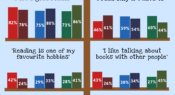
The most recent Programme for International Student Assessment (PISA) survey measured the attitudes held by 15-year-olds on reading. An Australian Council for Educational Research (ACER) Snapshot report has analysed these attitudes, and looked at how they differ between girls and boys, Indigenous and non-Indigenous students, and most disadvantaged and least disadvantaged students.
The research-based reading group #edureading brings teachers and academics together on Twitter to engage with research. In today’s article, Victorian teacher Steven Kolber and researchers Dr Keith Heggart and Dr Sandy Nicoll explain why the group was formed, and how it has helped educators contribute to educational research in a meaningful way.
In this Teaching Methods episode, we speak to education consultant Michael Minas about a study he conducted to measure primary school students’ attitudes towards completing challenging problem solving tasks in maths. Michael shares details of the lesson structure he utilised, and why students responded to it so positively.
‘Commitment to the teaching profession refers to teachers’ sense of connection and investment in the occupation.’ Rebecca Collie, of the University of New South Wales, shares findings of a new study into job supports that appear to help boost teacher commitment.
A new study by researchers at the University of Canberra has seen three- and four-year olds increase their daily total physical activity by 28 minutes, and moderate-to-vigorous physical activity by 16 minutes. In today’s Q&A, Dr Rohan Telford and Professor Dick Telford discuss the key findings and the importance of physical literacy in developing primary school readiness.
‘An important factor in improving enrolments in STEM is ensuring the development of positive attitudes towards mathematics and science.’ In her new column for Teacher, Dr Sue Thomson discusses the results of the 2019 Trends in International Mathematics and Science Study (TIMSS), students’ general attitudes to mathematics and science, and their aspirations post-school.
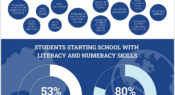
In the Trends in International Mathematics and Science Study (TIMSS) 2019, Year 4 principals were asked to report how many students in their school could do foundational literacy and numeracy skills such as ‘write their names’ and ‘recognise written numbers from 1 to 10’ when they began their first year of primary school. Find out how Australian data compare to the international average in this infographic.
Facebook
YouTube
SoundCloud
Apple Podcasts
Spotify
RSS feed
Linkedin