Filter by category
A majority of teachers have now had experience with online teaching thanks to the pandemic. But, what can we learn from schools who were teaching online long before COVID-19 restrictions? Jeremy Kwok and Su Temlett from Australian Christian College join Teacher to share the advantages.
Our guest on episode 72 of The Research Files is Professor Joseph Ciarrochi from Australian Catholic University’s Institute for Positive Psychology and Education. He’s the lead researcher for projectHOPE – a program that’s notched up success in re-engaging at-risk secondary students with their schooling.
Coping with stress, mental health, and school and study problems were the top three concerns of young people last year, according to the most recent findings from a large study. In this Q&A, two of the report’s co-authors explain how educators can support their students in these areas.
In his first Teacher column of the year, OECD Director for Education and Skills Andreas Schleicher discusses the Trends Shaping Education report, which examines the major economic, political, social and technological trends affecting education.
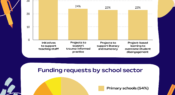
Philanthropic funding is one way school leaders can access support to implement and enhance initiatives and projects. Australian charity Schools Plus recently published details of applications for its latest round of grants. The requests from schools provide a snapshot of the initiatives and projects educators are seeking funding for.
An overwhelming majority of teachers don’t get enough time to prepare for effective classroom practice or high-quality lesson planning, according to new Australian research. The Grattan Institute report says teaching quality is suffering and students are losing out.
School playgroups benefit children, their families, schools and communities. New Australian research has identified six key features of high-performing school playgroups.
In the first of two articles on data-driven school improvement, Patrick Sanders (Associate Head of the Crowther Centre, Curriculum and Assessment at Brighton Grammar School) shares the steps that have been taken to capture better quality, and more actionable, data to inform decision-making.
In this special podcast episode, we’ve gathered a panel of experienced teachers and leaders, who will be sharing their priorities, strategies and tips for the first few weeks of term and for a successful year. Topics include classroom displays, professional learning and positive behaviour management.
With Term 1 just around the corner in Australia, it’s a great time to start brainstorming events and themes to tie in to your lesson planning for the new school year. We’ve rounded up some of the key dates in each term to help get you started.
Facebook
YouTube
SoundCloud
Apple Podcasts
Spotify
RSS feed
Linkedin