Filter by category
Australia’s year 4 students have achieved the country’s best-ever result in a major international mathematics and science assessment, overcoming the challenges and disruption of pandemic learning in the early years of their schooling. The TIMSS 2023 results have just been released – here’s an overview of the international data and key findings for Australia.
If your students don’t ask questions or seek clarification in class, does it mean they understand, or that they’re not comfortable speaking up when they’re unsure about something being taught? The latest PISA 2022 international insights report explores student use of learning strategies, motivation for learning and self-confidence.
The latest Global Education Monitoring (GEM) Report from UNESCO is out. This year, the focus is leadership in education. In today’s article, we look at some of the report’s key findings exploring the role and responsibilities of a school leader, and how this differs around the world.
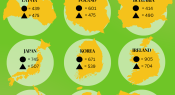
How many hours do you spend teaching each year? How do you think it compares to your peers in Poland, Korea, or New Zealand? In today’s infographic, we share the annual teaching hours of primary and upper secondary teachers in Australia and around the world.
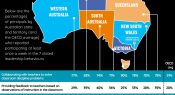
The OECD’s Programme for International Student Assessment (PISA) includes a principal questionnaire. Today’s infographic looks at the percentages of principals by Australian state and territory (and the OECD average) who reported participating at least once a week in 7 stated educational and instructional leadership behaviours.
In this episode of our Global Education podcast, Teacher Editor Jo Earp talks to Soukdalone Phommathep – Foundation Principal of Lab Langban in Laos – about its growth from humble beginnings, learning while having fun, the importance of student voice, and a playful design touch that’s enjoyed by adults just as much as the children.
In yesterday’s reader submission, Dr Sunaina Sharma and Wendy Lang discussed their high school students’ anxiety over oral presentations. In this second article, the Ontario teachers share 4 strategies they’ve implemented to build the same speaking and listening skills while reducing the stress level.
After noticing their secondary English students were stressed by oral presentations (and coming up with ways to avoid them all together), Ontario educators Dr Sunaina Sharma and Wendy Lang gathered their feedback to find out more, then set about adjusting their teaching, based on a trauma-informed approach.
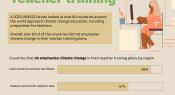
Climate change education provides students with the knowledge required to understand and practice climate action. Several UNESCO studies offer international insights into what students know, how confident teachers are on the topic, teacher training plans and current curriculum content. Find out more in this infographic.
Each year, the International Mathematical Modeling Challenge gives students an opportunity to team up on a complex task that connects their mathematical learning with a real-world situation. Teacher spoke to members of an Australian team judged among the best globally, about how they approached this year’s challenge.
Facebook
YouTube
SoundCloud
Apple Podcasts
Spotify
RSS feed
Linkedin