Filter by category
‘Learning does not happen when the machine does the thinking for you.’ With generative AI reshaping the educational landscape, Teacher columnist and OECD Director of Education and Skills Andreas Schleicher discusses the importance of guardrails, data protection and human judgement to ensure GenAI becomes a scaffold for learning, not a crutch.
Media and Artificial Intelligence Literacy (MAIL) has been announced as the innovative domain for PISA 2029. The OECD has already released the first draft framework, offering an early understanding of how media literacy and AI literacy intersect and link to other curriculum areas, the key concepts and big ideas, and how to nurture the related competences.
‘If we equip the next generation with the foundational literacies to understand how AI works, the creative confidence to build with it, and the critical judgement to know when and how it should be used, the possibilities are extraordinary.’ In this Q&A, Andrew Sliwinski, Vice President and Head of Product Experience at LEGO® Education, answers questions about computer science and artificial intelligence instruction in the classroom, and what we can do now to empower student agency in a changing world.
In our latest reader submission, Dr Aylie Davidson, Lecturer in Mathematics Education at Deakin University, explains that planning for learning necessitates intellectual and collaborative effort, and outlines what an effective planning meeting for maths looks like in practice.
To address staffing concerns and improve language provision in primary schools, an innovative program known as TCL (Teachers as Co-Learners) supports the provision of languages through daily allocation of 15-minute chunks during the school day, run by a classroom teacher with the support of a language assistant.
In today’s article Samantha Ephraims from Kalkie State School in Queensland uses the teen fandoms of Taylor Swift and television show Stranger Things as examples of students mirroring the scientific process, and suggests that the fandoms can be used to address a decline in scientific engagement in students.
In today’s podcast, CEO of the Dyslexia-SPELD Foundation and Educational and Developmental Psychologist, Mandy Nayton, joins Teacher’s Dominique Beech to share frameworks to support all students to read successfully. We cover essential phonics knowledge, morphology, vocabulary and word study, and also discuss how to support older students’ literacy skills.
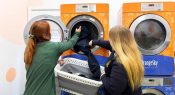
For some students, the difference between walking through the school gate or staying home is as simple – and as heavy – as a clean uniform. Not-for-profit Orange Sky Australia is now partnering with schools to install free, on-campus washing machines and dryers, guided by a simple belief: access to laundry should never be a barrier to education.
Earlier this week, the world celebrated International Women’s Day – an important call to action for advancing gender equality. In this edition of 5 further readings, we share 5 resources on the topic of gender equity in education.
Recent data show that improving students’ critical thinking and problem‑solving skills is the most desired professional learning topic for both year 4 and year 8 teachers in Australia. In today’s expert Q&A we speak to Renee Ladner, Education Consultant at the Mathematical Association of Victoria about the PD needs of maths teachers.
Facebook
YouTube
SoundCloud
Apple Podcasts
Spotify
RSS feed
Linkedin